SpaceX’s Starship Revolution Toward Reusable Spaceflight
On October 13, 2024, SpaceX marked a significant milestone with its fifth Starship test flight. This mission successfully demonstrated the retrieval of the Super Heavy booster using a cutting-edge "chopstick" catching system, a critical development in the pursuit of fully reusable spacecraft. The success of this system, alongside advanced reentry technologies, brings humanity closer to affordable, frequent space travel, setting the stage for future exploration missions to the Moon, Mars, and bey

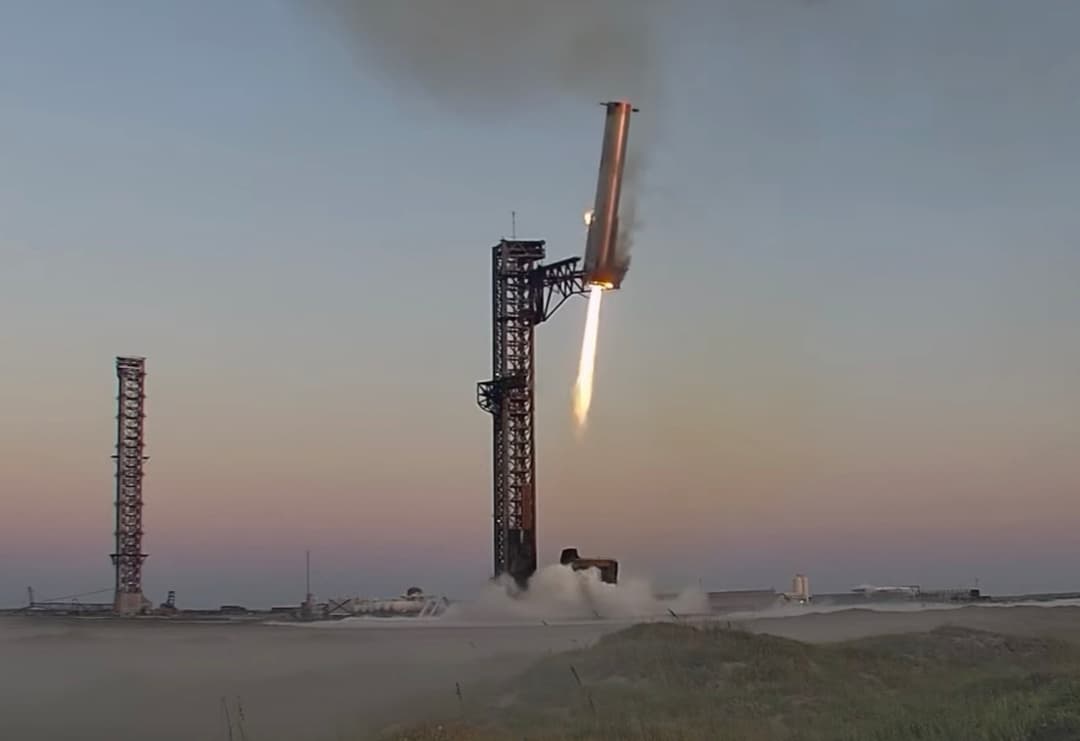
On October 13, 2024, SpaceX marked a significant milestone with its fifth Starship test flight. This mission successfully demonstrated the retrieval of the Super Heavy booster using a cutting-edge "chopstick" catching system, a critical development in the pursuit of fully reusable spacecraft. The success of this system, alongside advanced reentry technologies, brings humanity closer to affordable, frequent space travel, setting the stage for future exploration missions to the Moon, Mars, and beyond.
Starship’s Reusability Revolution
SpaceX’s bold vision for reusable spaceflight is centered on Starship, a spacecraft designed to reduce the costs and logistical barriers associated with space exploration. Unlike traditional rockets, Starship’s focus is on full reusability, meaning both its booster and second stage are capable of being recovered, refurbished, and relaunched.
One of the key breakthroughs in this endeavor is the development of SpaceX’s Raptor engines. These engines are engineered to withstand the repeated stresses of multiple flights, thanks to advanced materials and real-time telemetry monitoring that helps detect and mitigate potential failures. The Raptor’s ability to handle extreme conditions while maintaining high performance is pivotal to SpaceX’s goal of frequent launches with minimal downtime.
The Super Heavy booster catch, using the mechanical arms on the launch tower—nicknamed "chopsticks"—represents a leap forward in reducing wear and tear caused by hard landings or splashdowns. This precision landing system is not only a technical triumph but also a cornerstone in SpaceX’s ambition for rapid reusability, drastically cutting refurbishment time and costs between missions.
Thermal Protection and Reentry Technology
A significant challenge for reusable spacecraft like Starship is surviving the extreme conditions of atmospheric reentry. During reentry, spacecraft face immense thermal stress, with temperatures reaching thousands of degrees. To address this, SpaceX has developed advanced thermal protection systems. These include cutting-edge heat-shield materials that can withstand multiple reentries without significant degradation.
One of the major advancements in this area is the use of gradient alloy systems and high-temperature-resistant materials that help the spacecraft endure the intense heat while maintaining structural integrity. SpaceX's focus on improving the heat shield tiles and implementing new ablative layers has enabled Starship to survive these conditions, making the spacecraft more reliable over repeated flights.
Moreover, material science innovations, such as the development of alloys like Inconel 625, play a critical role in enhancing durability. These materials, combined with improvements in the spacecraft’s design, ensure that Starship’s heat shields can handle the rigors of atmospheric reentry with minimal need for post-flight refurbishment, further bolstering its reusability.
Additive Manufacturing for Rocket Engines
Additive manufacturing (AM), commonly known as 3D printing, is transforming the aerospace industry, and SpaceX is at the forefront of this revolution. For the Raptor engines, which power Starship, AM allows the creation of complex components that are lighter, stronger, and more efficient than traditionally manufactured parts.
Key parts of the Raptor engines, such as the combustion chambers and nozzles, are produced using metal additive manufacturing techniques like Directed Energy Deposition (DED) and Laser Powder Bed Fusion (LPBF). These techniques enable the creation of intricate internal geometries that improve fuel efficiency and thermal management, crucial for withstanding the high temperatures and stresses during launch and reentry.
The benefits of AM extend beyond performance enhancements. The ability to rapidly produce and customize parts is a game changer for reducing costs and speeding up development timelines. SpaceX is not alone in embracing this technology—industry leaders like General Electric and Pratt & Whitney have also adopted AM for aerospace components, underscoring its transformative potential.
Aerodynamic Challenges and Solutions in Reentry
Reentering Earth's atmosphere is one of the most technically challenging aspects of spaceflight. Spacecraft must decelerate from orbital velocities without exceeding the thermal and mechanical limits of their structure. Starship addresses this challenge with an innovative aerodynamic design that minimizes the heat load during reentry.
A crucial aspect of Starship’s design is its low ballistic coefficient, which allows the spacecraft to slow down in the upper atmosphere, reducing the intensity of the thermal and mechanical forces it encounters. By controlling the spacecraft's angle of attack (AoA) during reentry, SpaceX ensures that heat is distributed more evenly across the vehicle, protecting its heat shields and structure.
This approach contrasts with other spacecraft, such as NASA’s Orion or Blue Origin’s New Glenn, which use more traditional methods for deceleration and heat management. Starship’s focus on minimizing aerodynamic drag and maximizing control during reentry showcases the innovative thinking behind SpaceX’s reusable spacecraft program.
Strategic Flexibility and Incremental Achievements
SpaceX’s approach to developing Starship has been methodical and strategic. By focusing first on cargo missions, the company can test and refine its technology without the added risks associated with human spaceflight. These early missions serve as vital testbeds for the spacecraft’s systems, allowing SpaceX to gather data, address challenges, and improve reliability.
Once the spacecraft proves its capabilities with cargo, SpaceX plans to transition to crewed missions, including its role in NASA’s Artemis program, which aims to return humans to the Moon. Achieving human-rated certification requires stringent safety standards, and the success of these early flights will be critical in building the confidence needed for long-duration missions to Mars and beyond.
Broader Implications for Space Exploration
The success of SpaceX’s reusable Starship has far-reaching implications for the future of space exploration. By reducing the cost of launching payloads into orbit, Starship opens up new possibilities for scientific research, commercial satellite deployment, and the creation of space-based infrastructure. Its ability to carry larger payloads and land safely on other planets could revolutionize missions to Mars, enabling sustained human presence.
In addition to its scientific and exploration potential, Starship’s reusability promises to lower the economic barriers to space. This could lead to a new era of space commercialization, where more organizations have access to affordable launches, fueling innovation across industries.
At the same time, SpaceX is committed to minimizing the environmental impact of its launches. The company works closely with regulatory bodies, including the FAA, to ensure that its operations comply with environmental standards, even as it scales up its activities for future missions.
Continue this reporting
Reporting on the same issue
Related coverage selected from the article's desk, topics and newsroom relationships.
 NewsOct 19, 2026
What an Accurate Rainfall Forecast Can Still Miss
AI weather forecasts can capture where rain will fall while underestimating i...
 NewsOct 7, 2026
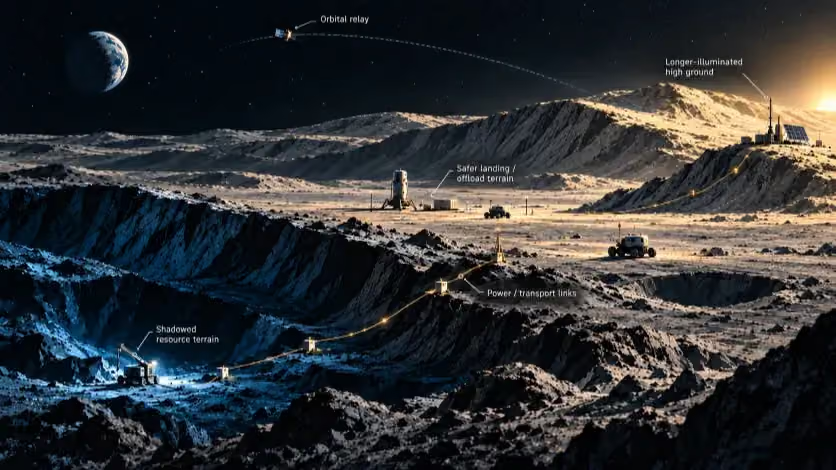
The Moon’s Industrial Future Begins With What Missions No Longer Need to Carry
Water, sunlight, safe landing terrain, communications and power do not natura...
 NewsOct 2, 2026
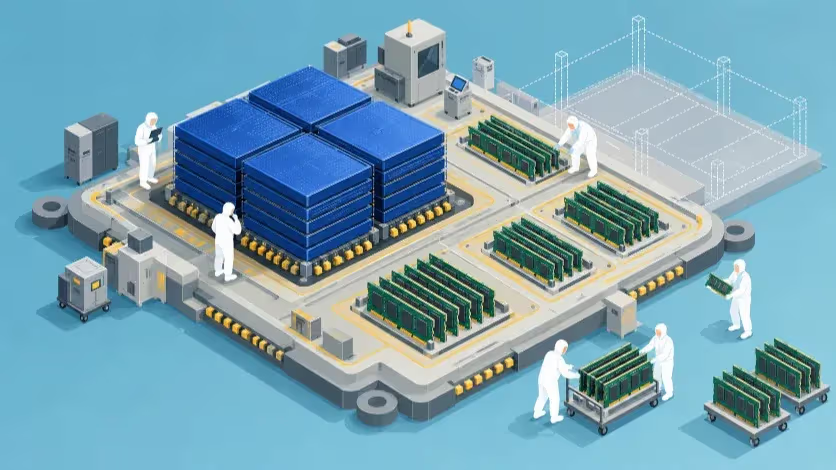
AI Is Reallocating the World’s Memory Factories
AI demand is forcing memory makers to decide how scarce DRAM capacity is divi...
More from the author
More from this byline
Stay with the same line of reporting through more work from this byline.
 NewsOct 9, 2026
Why “Busan Is Good” Falls Short as a City Brand
 NewsSep 18, 2026
The Other AI Race Is for the Freedom to Change Course
Reader Signal
Community readWhat did this report leave you with?
Choose the signal that best reflects your reading. Select it again to remove it.
One response per article
No response selected
A moderated conversation about the reporting.
One-level replies and newsroom moderation keep the conversation anchored to this article.
Discussion Status
Open
Please sign in to join the discussion.
Newsletter
Weekly reporting and context from Busan and Korea.