Korea's Supercomputing Crisis: Budget Cuts Threaten 35-Year Legacy
Seoul - A looming energy crisis has shaken Korea's scientific and technological community. Despite celebrating the 35th anniversary of supercomputing's introduction in Korea, recent budget cuts threaten to jeopardize its future. The Korea Institute of Science and Technology Information (KISTI) revealed that due to increased electricity costs and a reduced R&D budget, it would be operating the Large Data Hub Center (GSDC) at half capacity by the end of August. Supercomputing: A Glimpse into Kor
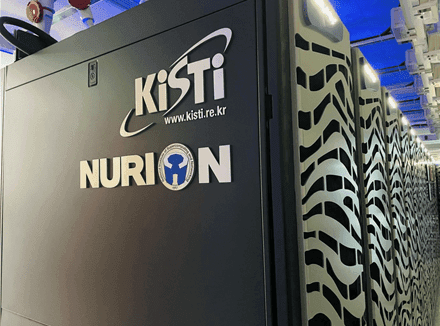
Seoul - A looming energy crisis has shaken Korea's scientific and technological community. Despite celebrating the 35th anniversary of supercomputing's introduction in Korea, recent budget cuts threaten to jeopardize its future. The Korea Institute of Science and Technology Information (KISTI) revealed that due to increased electricity costs and a reduced R&D budget, it would be operating the Large Data Hub Center (GSDC) at half capacity by the end of August.
Supercomputing: A Glimpse into Korea's Technological Legacy
Since its introduction in 1988, supercomputing has been regarded as a yardstick for gauging Korea's technological competitiveness. Initially used primarily for scientific research and weather forecasting, these supercomputers are now poised to spearhead major research in future growth areas such as quantum communication, artificial intelligence (AI), and nuclear fusion.
KISTI, a pioneering force behind Korea's supercomputing introduction, recently showcased the potential of the upcoming 6th generation supercomputer, a massive 600 petaflops machine expected to be 70 times more potent than its predecessor, 'Nurion'. This formidable machine has the potential to handle simulations essential for nuclear fusion research, a field wherein simulations can generate hundreds of gigabytes of data per second. A simulation program, the 'Virtual KSTAR (V-KSTAR)', developed by Kwon Research Team, is touted as the most advanced of its kind globally.
Supercomputers and Weather Forecasting: A Legacy of Excellence
Supercomputers play a pivotal role in weather forecasting, especially as extreme weather events like floods and heatwaves become more frequent. Since 1991, Korea's Meteorological Administration has utilized the first generation of supercomputers for developing Korea's initial numerical weather prediction models, 'ALAM' and 'FLAM'. Their continual deployment has facilitated ongoing improvements in weather forecasting models.
By 2020, Korea became the ninth country globally to possess its numerical weather prediction model, largely attributed to the national meteorological supercomputers. Jang Geun-il, the head of the National Meteorological Supercomputer Center, noted the model's significant contribution to public safety by offering forecasts tailored to Korea's unique climatic and environmental conditions.
Challenges Ahead
However, the recent decision to reduce the operating capacity of the GSDC, which serves as a shared analysis platform for large-scale research data, underscores the challenges ahead. Such drastic measures, triggered by increased electricity costs and budget cuts, have not been taken since the supercomputers' inception.
The future remains uncertain. Next year's budget is set to decrease, with the government planning a 10.8% cut for research institutions. It raises concerns about the full operational funding for the 6th supercomputer being entirely slashed.
Seoung-lae Jo, a member of the National Assembly's Science, Technology, Information, Broadcasting, and Communications Committee, criticized the current administration for jeopardizing Korea's R&D future. He warned that the situation might lead to more shutdowns of supercomputing facilities if left unchecked.
As Korea stands at the crossroads of technological advancement and budgetary constraints, the nation's commitment to science and innovation will determine its place in the global technological hierarchy.
Continue this reporting
Reporting on the same issue
Related coverage selected from the article's desk, topics and newsroom relationships.
 NewsOct 19, 2026
What an Accurate Rainfall Forecast Can Still Miss
AI weather forecasts can capture where rain will fall while underestimating i...
 NewsOct 7, 2026
The Moon’s Industrial Future Begins With What Missions No Longer Need to Carry
Water, sunlight, safe landing terrain, communications and power do not natura...
 NewsOct 2, 2026
AI Is Reallocating the World’s Memory Factories
AI demand is forcing memory makers to decide how scarce DRAM capacity is divi...
More from the author
More from this byline
Stay with the same line of reporting through more work from this byline.
 NewsOct 9, 2026
Why “Busan Is Good” Falls Short as a City Brand
 NewsSep 18, 2026
The Other AI Race Is for the Freedom to Change Course
Reader Signal
Community readWhat did this report leave you with?
Choose the signal that best reflects your reading. Select it again to remove it.
One response per article
No response selected
A moderated conversation about the reporting.
One-level replies and newsroom moderation keep the conversation anchored to this article.
Discussion Status
Open
Please sign in to join the discussion.
Newsletter
Weekly reporting and context from Busan and Korea.