KOGAS and DNV Assess Hydrogen Blending for South Korea's Energy Transition
KOGAS, the world’s leading importer of liquefied natural gas (LNG), is set to explore the possibility of blending hydrogen with natural gas in its expansive gas pipeline network. The two-year project, which is a joint effort with DNV, will examine the suitability of KOGAS’ 5,000-kilometre-long transmission network for hydrogen blending. DNV will provide technical support and advisory services to KOGAS on the project, including assistance in meeting the requirements of South Korea’s regulatory au

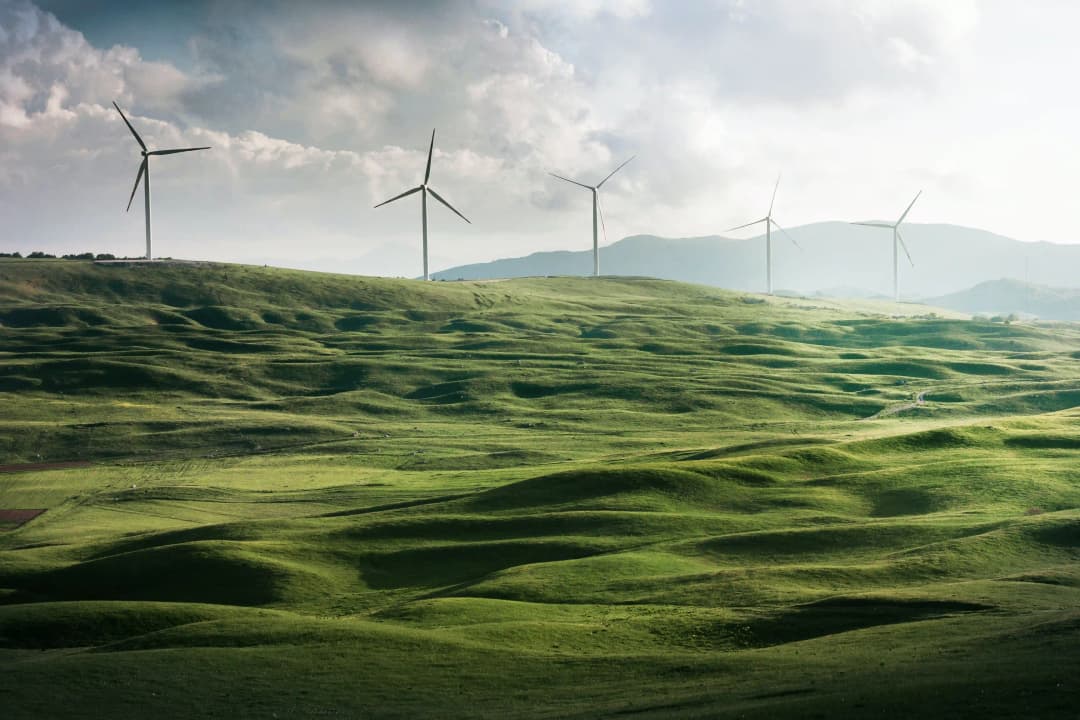
KOGAS, the world’s leading importer of liquefied natural gas (LNG), is set to explore the possibility of blending hydrogen with natural gas in its expansive gas pipeline network. The two-year project, which is a joint effort with DNV, will examine the suitability of KOGAS’ 5,000-kilometre-long transmission network for hydrogen blending. DNV will provide technical support and advisory services to KOGAS on the project, including assistance in meeting the requirements of South Korea’s regulatory authorities on hydrogen’s uptake and integration.
DNV, a global provider of technical assurance, advisory and risk management services, has been collaborating with several gas pipeline companies worldwide to enable safe repurposing of gas transmission and distribution networks for blended and 100% hydrogen gas integration. DNV’s Spadeadam research facility in the UK is also engaged in the full-scale testing of safe hydrogen transportation through gas networks to homes’ appliances.
Dr. Lim Dong Ho, Energy Systems’ South Korea Market Area Manager at DNV, said, “DNV’s global technical expertise across the entire hydrogen value chain, from production to end use, means we are uniquely placed to support the world’s largest LNG importer KOGAS in creating value from hydrogen while also helping South Korea transition to a decarbonized energy future.” Meanwhile, Brice Le Gallo, Vice President and Regional Director APAC, Energy Systems at DNV, added that the firm’s global hydrogen network of multidisciplinary experts, which grew in Asia through key recruitments in 2022, can cover the whole hydrogen value chain and maintain relations with all its key stakeholders.
Hydrogen production for energy purposes is projected to meet 9% of Asia-Pacific energy demand by 2050, according to DNV’s 2022 Energy Transition Outlook. DNV, together with industry and governments, is helping solve the technical challenges related to hydrogen adoption as a leading fuel in the energy transition, to speed up its uptake and meet our climate goals.
Natural gas is responsible for about 26% of South Korea’s power generation capacity, using imported LNG, with expectations to grow to 31% by 2050. In line with the country’s 2050 Carbon Neutral Strategy and 9th Electricity Plan, coal and nuclear plants will be phased out. In 2019, South Korea launched the Hydrogen Economy Roadmap and the Hydrogen Economy Commission in 2021 to drive the development of a fully-fledged hydrogen economy to decarbonize transportation, power generation and industry while promoting economic growth and global industrial competitiveness.
KOGAS is planning to invest $37 billion internationally up to 2040 to establish renewable power generation facilities that will produce hydrogen, which will be imported, stored, and transported through a specialized hydrogen pipeline network. The country targets to expand hydrogen use to more than 130,000 Mtpa by 2040, from 5.26 million tons per annum (Mtpa) currently, and help develop large-scale stationary fuel cell power generation facilities and fuel cell electric vehicles (FCEVs).
South Korea's industrial energy demand accounts for 55% of all IEA member countries, and it ranks third after Germany and Japan in public investment in hydrogen. Hydrogen blending will contribute to South Korea’s manufacturing sector's decarbonization and is a vital element of the country’s national hydrogen strategy.
Continue this reporting
Reporting on the same issue
Related coverage selected from the article's desk, topics and newsroom relationships.
 NewsSep 30, 2026
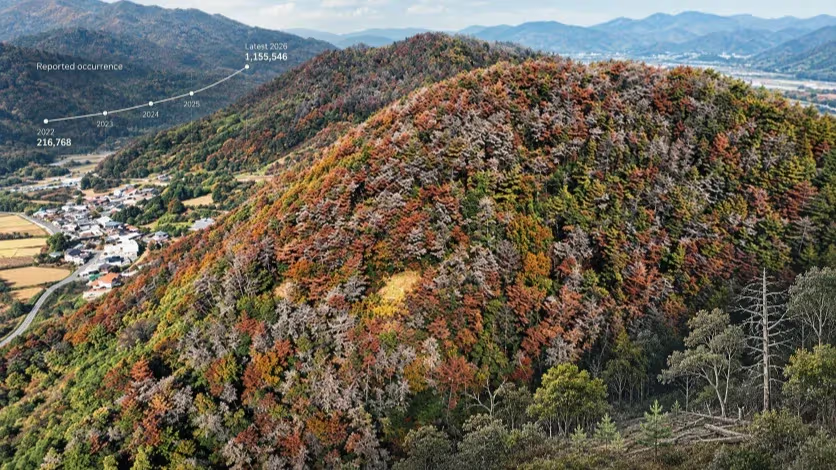
Gyeongnam’s Pine-Wilt Surge Is Forcing a Shift From Tree Removal to Forest Management
Gyeongnam’s pine-wilt outbreak has grown beyond a tree-removal problem. As re...
 NewsSep 22, 2026
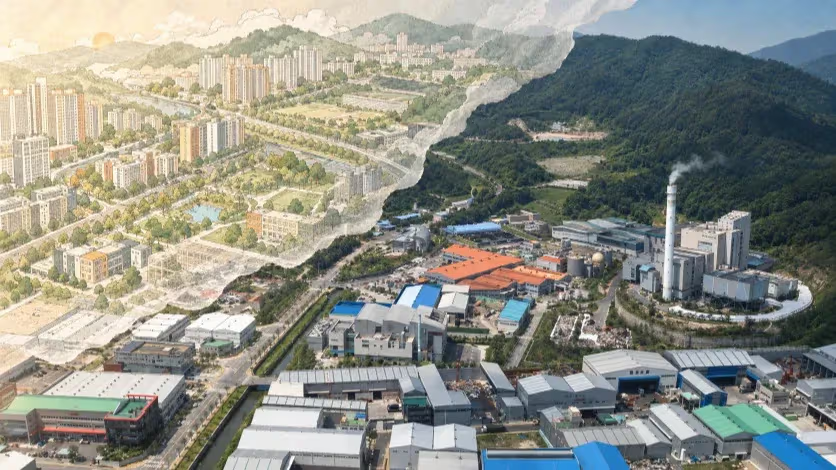
Busan Is Growing Westward as Its Waste Infrastructure Stays Put
Busan’s proposed Saenggok incinerator has moved from 800 to 500 tons a day. T...
 NewsAug 17, 2026
What South Korea’s 87% Drop in Aquaculture Heat Losses Really Measures
South Korea reported an 87 percent drop in aquaculture losses from high water...
More from the author
More from this byline
Stay with the same line of reporting through more work from this byline.
 NewsOct 9, 2026
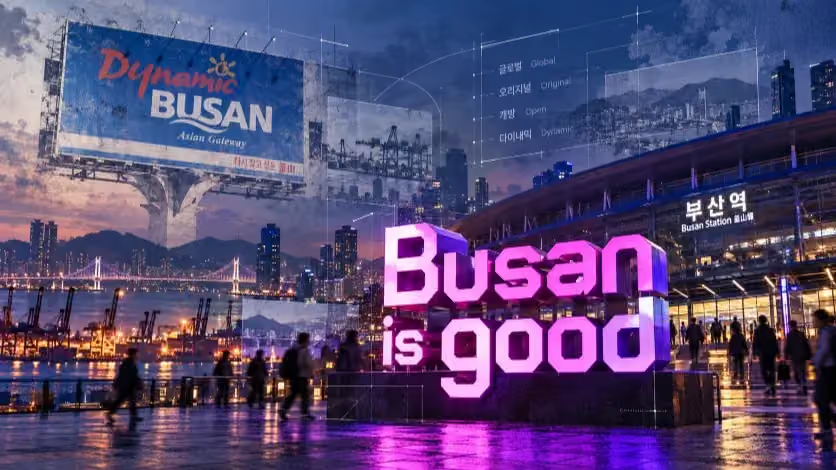
Why “Busan Is Good” Falls Short as a City Brand
 NewsSep 18, 2026
The Other AI Race Is for the Freedom to Change Course
Reader Signal
Community readWhat did this report leave you with?
Choose the signal that best reflects your reading. Select it again to remove it.
One response per article
No response selected
A moderated conversation about the reporting.
One-level replies and newsroom moderation keep the conversation anchored to this article.
Discussion Status
Open
Please sign in to join the discussion.
Newsletter
Weekly reporting and context from Busan and Korea.