Trump, Misinformation, and Conflict Resolution in Ukraine
With the 2024 U.S. election approaching, the potential return of Donald Trump to the White House has reignited debates about the future of American foreign policy. Known for his transactional, often personal approach to diplomacy, Trump has a track record of engaging directly with authoritarian leaders, including North Korea’s Kim Jong Un and Russia’s Vladimir Putin. Meanwhile, the ongoing Ukraine conflict has generated intense scrutiny over the true motivations and responsibilities behind it.
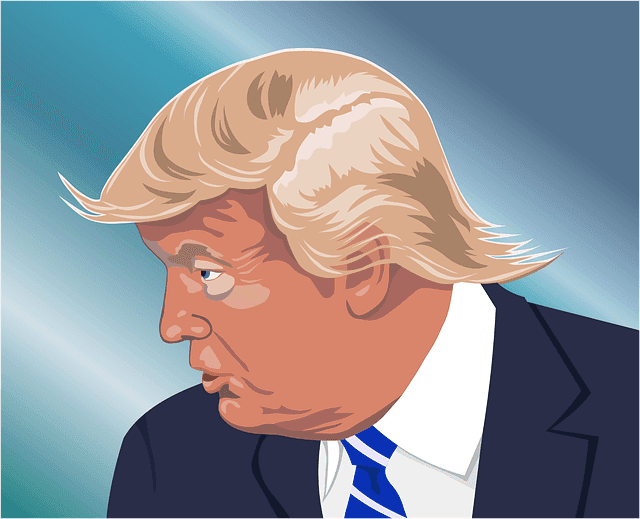
With the 2024 U.S. election approaching, the potential return of Donald Trump to the White House has reignited debates about the future of American foreign policy. Known for his transactional, often personal approach to diplomacy, Trump has a track record of engaging directly with authoritarian leaders, including North Korea’s Kim Jong Un and Russia’s Vladimir Putin.
Meanwhile, the ongoing Ukraine conflict has generated intense scrutiny over the true motivations and responsibilities behind it. While some view Ukrainian President Volodymyr Zelensky as a symbol of resistance, others suggest he may be using the war to solidify his political influence and gain international support. In a media-driven world rife with misinformation, discerning leaders’ genuine motives becomes a challenge. In this climate of uncertainty, Trump—often regarded as a disruptor—could offer an unconventional path to conflict resolution.
This article delves into the complexities of modern warfare, examining the roles of misinformation, political maneuvering, and Trump’s potential as an unexpected yet possibly effective force for peace. Drawing on contemporary philosophical and psychological insights, we explore how uncertainty, power, and individual agency shape today’s global conflicts.
Uncertainty and Misinformation: The Fog of Modern Warfare
In the Ukraine conflict, unverified reports have emerged of potential external involvement, including indications that North Korean troops may be assisting Russia. Conflicting narratives leave audiences questioning what is true and who holds responsibility.
Philosopher Jean Baudrillard sheds light on this phenomenon with his concept of "hyperreality." Baudrillard argued that in a world saturated by media, reality is increasingly replaced by manipulated images and narratives. In conflicts like Ukraine, what the public sees may only resemble the truth, with the real story hidden behind layers of media curation. In this environment, audiences are left detached from the actual events, forced to rely on narratives that obscure as much as they reveal.
The rise of misinformation and media manipulation complicates public perception, polarizing opinions about who is responsible for escalating or perpetuating the conflict. Nobel laureate Daniel Kahneman provides insight into this behavior through his “availability heuristic,” which explains how people rely on the most accessible information—often what is most sensationalized—to form opinions. In a misinformation-rich landscape, the availability of skewed narratives can create polarized views that distort public understanding and complicate diplomatic efforts.
This cloud of confusion serves as both a battlefield and a shield, protecting political actors from accountability while also allowing them to shape public perception to their advantage.
Power Play: The Psychology and Politics of Prolonging Conflict
While Zelensky’s image as a wartime leader has solidified his position on the world stage, some suggest he may have a vested interest in prolonging the Ukraine conflict to maintain his influence and consolidate power. According to psychologist Philip Zimbardo, leaders can be deeply influenced by their roles, sometimes making decisions that prioritize control over ethical considerations. High-stakes situations can lead leaders to rationalize extending conflicts as a matter of national interest or personal survival, potentially sidelining diplomatic alternatives.
The drive to bolster public image through conflict is not a new phenomenon. Philosopher Michel Foucault’s theory of “biopower” provides a useful lens, describing how leaders manipulate populations by framing war as essential to protecting national identity. By invoking patriotism, leaders can justify ongoing conflict, positioning themselves as defenders of their people. Foucault’s perspective illustrates how power not only shapes but can also justify prolonged warfare, as political figures leverage conflict to secure both domestic and international legitimacy.
Carl Schmitt’s "Concept of the Political" adds to this argument by suggesting that leaders often define themselves through conflict, using opposition to solidify their authority. Zelensky’s wartime image may fit this model, allowing him to rally international support while reinforcing his leadership against a powerful adversary.
Could Trump Be the Unlikely Solution to Geopolitical Conflicts?
While Trump’s style is unpredictable, his unorthodox approach could prove advantageous in diplomacy. Trump’s willingness to bypass protocols and engage with leaders like Kim Jong Un directly shows his ability to disrupt established norms. Philosopher Slavoj Žižek argues that transformative figures often emerge from outside conventional frameworks, challenging existing norms and creating new possibilities. Trump’s unpredictability, while controversial, might serve as the shake-up needed to break diplomatic deadlocks in conflicts like Ukraine.
Known for his direct, no-nonsense approach, Trump’s style could streamline peace processes by cutting through bureaucratic red tape. His preference for direct negotiation positions him as a leader who might bypass the complexities of multilateral diplomacy, potentially creating a clear path toward resolution. Psychologist Carl Jung’s “trickster archetype” provides a fitting description of Trump’s role: trickster figures often challenge the status quo, bringing about change through unconventional means. Trump’s alignment with this archetype suggests that his blunt, unfiltered style could provide a new avenue for diplomacy, appealing to those who seek decisive action over cautious protocols.
Marshall McLuhan’s "The Medium is the Message" further illuminates Trump’s approach. McLuhan argued that the method of communication influences the message itself, and Trump’s direct, media-focused style is as much a part of his strategy as his words. This approach could resonate with a public tired of political conventions, as Trump uses his distinct style to challenge traditional diplomatic methods, potentially offering a fresh take on complex conflicts.
Could Trump Play a Role in Resolving U.S.-North Korea Tensions?
Amid the uncertainty surrounding the Ukraine conflict, Trump’s potential as a mediator in other longstanding geopolitical challenges—such as tensions with North Korea—also warrants consideration. His direct engagement with North Korean leader Kim Jong Un during his presidency remains one of his most unconventional diplomatic moves. Although these efforts produced limited concrete results, they demonstrated Trump’s willingness to sidestep traditional diplomatic protocols, offering a unique approach to high-stakes negotiations.
Philosopher Michel Foucault’s ideas on power dynamics shed light on Trump’s approach to North Korea. Foucault emphasized that power is often exercised through relationships rather than formal structures. Trump’s engagement with Kim exemplified this, as he bypassed bureaucratic systems to build a direct, albeit informal, line of communication with a leader traditionally isolated by global sanctions and mistrust. This approach disrupts conventional power channels, potentially enabling breakthroughs where formal diplomacy has stalled.
Trump’s engagement could also be seen through Maslow’s theory of needs. North Korea’s pursuit of nuclear capability may reflect a desire for security and recognition—both on a national and international scale. Trump’s acknowledgment of Kim on the world stage, without immediately dismissing his demands, could be seen as addressing these deeper psychological needs for recognition and status. Such an approach could reduce Kim’s reliance on nuclear posturing if he feels validated through direct engagement.
Trump’s style—informal, often direct, and rooted in personal rapport—appeals to those skeptical of traditional diplomacy’s slow, multilateral processes. His unique form of engagement may cut through years of distrust by presenting North Korea with an alternative path toward international legitimacy that doesn’t hinge solely on nuclear deterrence. This aligns with Slavoj Žižek’s notion that transformative change often comes from “outsider” figures, those who operate outside the norms of established diplomacy. By positioning himself as such an outsider, Trump could bring new life to dialogue with North Korea, potentially reducing tensions in one of the world’s most volatile regions.
A Battle for Truth and Accountability
Misinformation complicates not only public perception but also diplomatic efforts, casting shadows over what is real and what is manufactured. In a world where people doubt the authenticity of news, images, and narratives, achieving genuine accountability becomes a Herculean task.
Hannah Arendt, in her exploration of truth and politics, argued that distorted facts erode political accountability. According to Arendt, when misinformation becomes the norm, it corrodes the foundations of diplomacy, rendering conflict resolution impossible. In the context of the Ukraine conflict, the struggle for truthful representation is central to achieving honest negotiations. Without a foundation of truth, meaningful progress toward peace remains elusive, leaving the public and diplomats alike in a state of ambiguity.
A Public Desire for Decisive Leadership in Uncertain Times
Amid widespread skepticism toward traditional diplomacy, some see Trump’s unpredictability as a potential asset. Trump’s unfiltered style, often viewed as a disruption, may resonate with a public that craves clarity and decisive action. Erich Fromm’s analysis of freedom and authoritarianism explains why, in times of crisis, people may gravitate toward strong, unconventional leaders. Fromm argued that fear and uncertainty can drive populations to seek clarity and direction from figures who embody decisive, if authoritarian, traits. Trump’s appeal as a disruptor may resonate with those who perceive conventional diplomacy as ineffective, particularly in an era clouded by misinformation.
Fromm’s insights suggest that Trump’s ability to cut through ambiguity could appeal to a public fatigued by prolonged, complex conflicts. In a world clouded by media spin and political maneuvering, Trump’s straightforward, if controversial, approach might be seen as a refreshing path to clarity.
Can Trump Bring Resolution to a World Shrouded in Misinformation?
In an age defined by uncertain warfare, rampant misinformation, and media manipulation, traditional diplomacy often struggles to find firm footing. Figures like Trump—despite their unpredictability—may offer a unique approach to breaking deadlocks in conflicts like Ukraine. Insights from philosophers and psychologists reveal that power, control, and the human desire for clarity deeply influence our responses to modern geopolitical crises. Trump’s disruptive style, while divisive, might resonate with those seeking straightforward, decisive solutions in a world where the truth itself feels elusive.
The question remains: Can a figure as unconventional as Trump truly bring about resolution in a world entrenched in complex and ambiguous conflicts? Or does his unpredictability only add another layer of uncertainty to an already turbulent global landscape? As we grapple with these questions, it may be time to reconsider the role of disruption—not as a threat, but as a potential tool for change.
Continue this reporting
Reporting on the same issue
Related coverage selected from the article's desk, topics and newsroom relationships.
 NewsOct 4, 2026
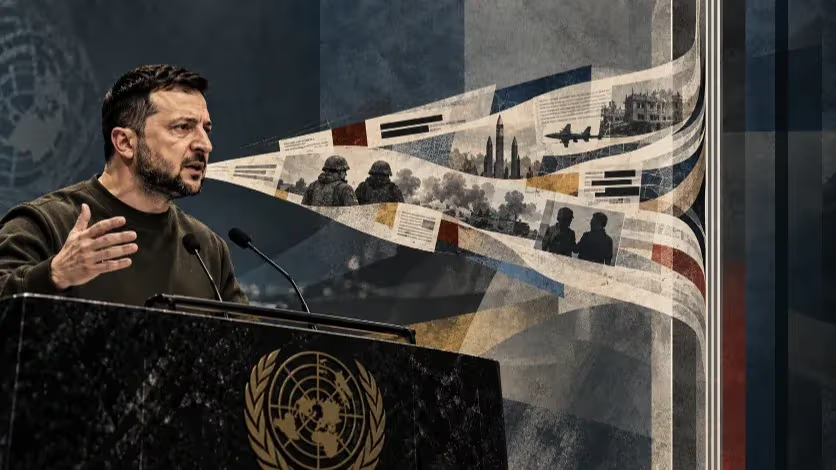
Zelensky, South Korea and the Limits of Wartime Pressure
South Korea says Kyiv broke a confidentiality understanding when Zelensky rev...
 NewsSep 1, 2026
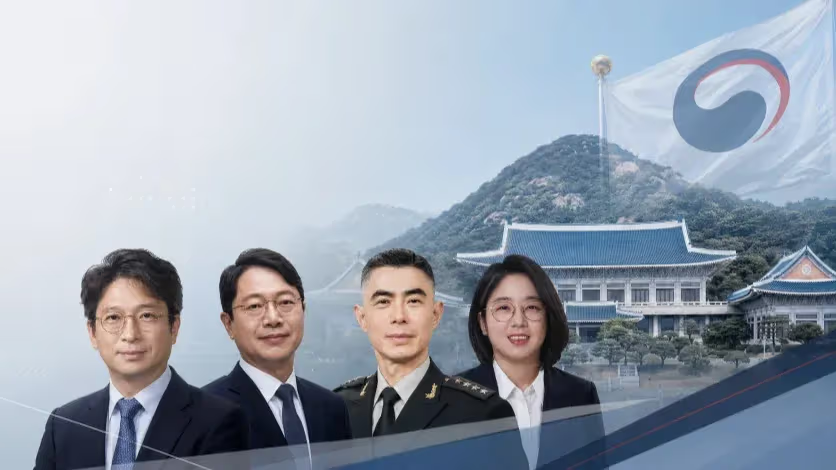
What Lee Jae Myung Thinks a Minister Can Fix
President Lee Jae Myung says reform should be judged by results rather than c...
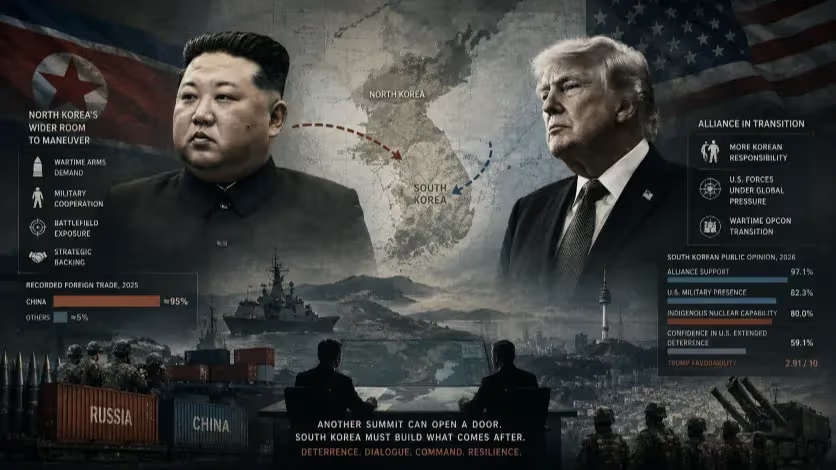 NewsAug 21, 2026
The Korean Peninsula Trump Is Returning To
Another Trump-Kim summit would unfold on a peninsula where North Korea is har...
More from the author
More from this byline
Stay with the same line of reporting through more work from this byline.
 NewsSep 18, 2026
The Other AI Race Is for the Freedom to Change Course
 NewsSep 5, 2026
How a Political Appointment Becomes a Judgment of Character
Reader Signal
Community readWhat did this report leave you with?
Choose the signal that best reflects your reading. Select it again to remove it.
One response per article
No response selected
A moderated conversation about the reporting.
One-level replies and newsroom moderation keep the conversation anchored to this article.
Discussion Status
Open
Please sign in to join the discussion.
Newsletter
Weekly reporting and context from Busan and Korea.