Why Busan is Perfect for South Korea’s Immigration Office
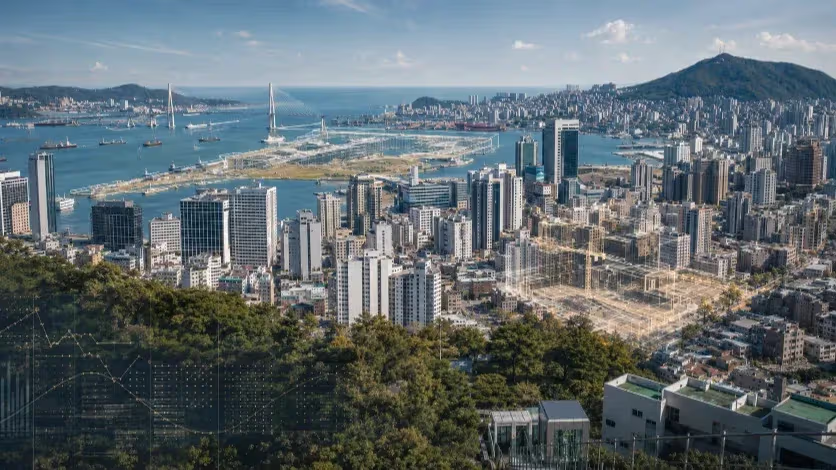
Busan, South Korea - South Korea is at a critical juncture in its efforts to address demographic challenges, labor shortages, and global competitiveness. At the heart of this initiative is the plan to establish the country’s first-ever Immigration Office (이민청), which would centralize and streamline immigration services. While cities like Ansan, Incheon, and Gimpo are making strong cases to host this pivotal institution, Busan’s unique attributes make it a compelling and potentially overlooked ca

Busan, South Korea - South Korea is at a critical juncture in its efforts to address demographic challenges, labor shortages, and global competitiveness. At the heart of this initiative is the plan to establish the country’s first-ever Immigration Office (이민청), which would centralize and streamline immigration services. While cities like Ansan, Incheon, and Gimpo are making strong cases to host this pivotal institution, Busan’s unique attributes make it a compelling and potentially overlooked candidate.
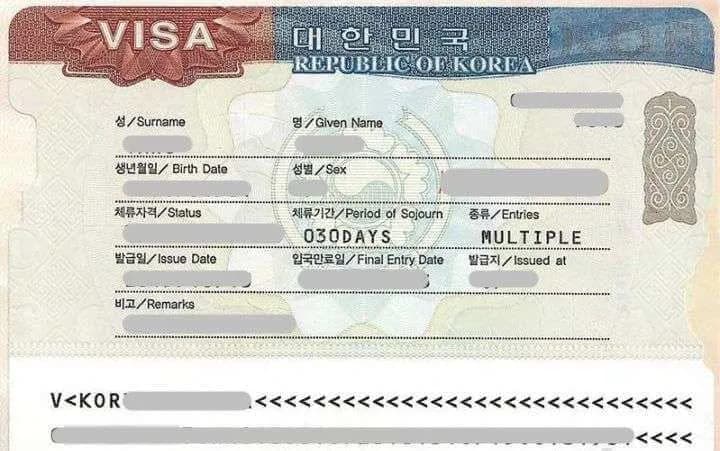
For years, South Korea’s immigration services have operated under a fragmented framework, managed across multiple ministries. From the Ministry of Justice’s oversight of visas and residency to the Ministry of Labor’s handling of foreign worker policies, the system has long been criticized for inefficiency and lack of coordination. The Immigration Office promises to change this, serving as a centralized body to unify these disparate functions and foster a more cohesive national strategy.
As the proposal gains momentum, cities like Ansan and Incheon have made their ambitions clear. Ansan, with its diverse population and thriving multicultural infrastructure, has highlighted its established role as a hub for foreign residents. Incheon, leveraging its proximity to South Korea’s main international gateway and its success in hosting the recently established Overseas Koreans Agency, has positioned itself as a frontrunner. Gimpo, too, touts its connectivity and administrative readiness. Yet, amidst this fervent competition, Busan’s candidacy has not received the attention it arguably deserves.
| City | Key Strengths | Efforts/Advocacy |
|---|---|---|
| Ansan | Largest foreign resident population, established multicultural infrastructure like the Multicultural Village Special Zone. | Aggressive lobbying by city leadership, including submitting a proposal to the Ministry of Justice. |
| Incheon | Proximity to Incheon International Airport, synergy with the Overseas Koreans Agency (재외동포청). | Emphasizing connections with the Overseas Koreans Agency and promoting its strategic location. |
| Gimpo | Excellent geographic access to Seoul and Incheon, proximity to major international hubs. | Announced plans to host the Immigration Office and conducted related feasibility studies. |
| Goyang | Strategic location in the Seoul metropolitan area, excellent transportation network, high foreign resident ratio. | Adopted resolutions in the city council and initiated a public signature campaign to support its bid. |
| Cheonan | Highest foreign resident ratio among non-metropolitan cities, transportation hub (KTX Cheonan-Asan Station). | Launched a citizen signature campaign and submitted proposals to the Ministry of Justice. |
| Jeollanam-do | Accessibility via Muan International Airport and Gwangyang Port, 41% increase in foreign residents over the past five years. | Preparing through organizational reforms like proposing a Population and Youth Immigration Bureau. |
| Gyeongsangbuk-do | Multiple areas at risk of population decline, strengthened immigration policies with a newly established Foreign Community Division. | Developed strategic plans and conducted feasibility studies to strengthen its bid. |
| Gwangju | Newly established division for foreign resident support, emphasizing multicultural readiness. | Declared intention to host the Immigration Office and initiated related policy development. |
| Chungcheongnam-do | Highest foreign resident ratio among non-metropolitan regions, strong geographic access to Seoul. | Formed a dedicated task force and began strategic planning. |
Each city highlights its unique strengths and advocates for hosting the Immigration Office as a transformative opportunity to tackle local challenges and foster economic growth.
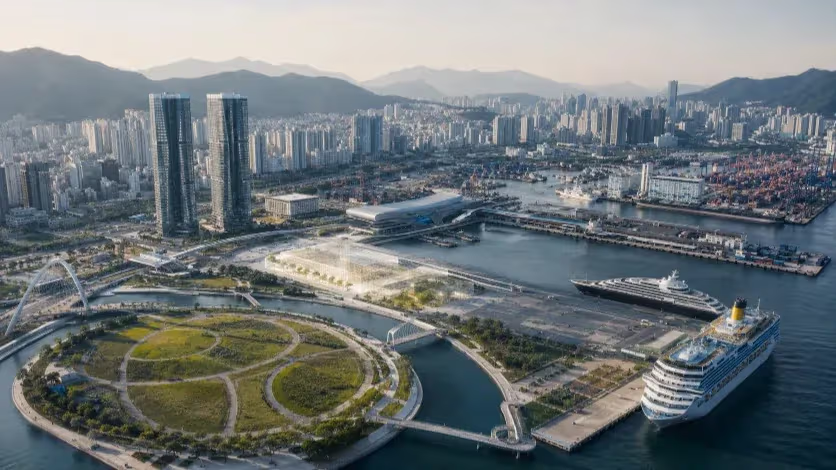
Nestled along the southeastern coast, Busan is more than a picturesque city by the sea. It is South Korea’s gateway to the world, home to one of the busiest container ports on the planet and a crucial player in Northeast Asia’s economic ecosystem. With Gimhae International Airport and extensive high-speed rail networks linking it to the rest of the country, Busan’s connectivity is unmatched. These attributes make it an ideal location for an institution like the Immigration Office, which demands accessibility and global integration.
Economically, the stakes are high. Hosting the Immigration Office could inject life into Busan’s economy, creating 3,000 jobs and generating an estimated 3 trillion KRW in annual economic benefits. Beyond numbers, it presents an opportunity to attract foreign investments and skilled workers, ensuring that Busan remains a vibrant, globally connected city.
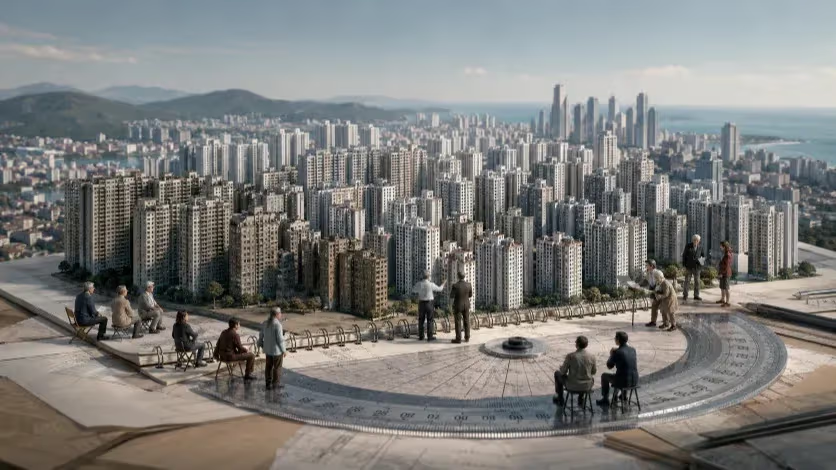
The demographic argument is equally compelling. Busan faces a stark reality: an aging population and a steady decline in residents. Establishing the Immigration Office could act as a catalyst for change, encouraging foreign migration to the region and providing a sustainable solution to these long-term challenges.
Despite its undeniable strengths, Busan’s bid is hindered by a lack of proactive advocacy. Unlike its competitors, whose campaigns are marked by vocal public and governmental support, Busan’s municipal government has remained relatively muted. Its focus has largely been on securing legislative approval for the “Global Hub City” special law, leaving the Immigration Office bid as a secondary concern. Civic engagement, too, has been limited, with few public campaigns rallying behind the cause.
Experts warn that this passive approach may cost Busan dearly. “Busan has all the elements needed to host the Immigration Office, but without active leadership, it risks being overlooked,” notes one urban development specialist. Economists echo this sentiment, emphasizing that hosting the office is not merely a matter of prestige but a strategic opportunity to reinvigorate the city’s economic and social landscape.
The decision on where to locate the Immigration Office extends beyond local interests. Placing it in Busan would mark a significant step toward addressing the nation’s regional imbalances, shifting the focus away from the Seoul metropolitan area. It would symbolize South Korea’s commitment to decentralization, ensuring that critical institutions are distributed more equitably across the country.
Nationally, the Immigration Office represents more than a bureaucratic reform; it is a gateway to global competitiveness. By attracting skilled foreign workers and better managing immigration, South Korea can position itself as a leading destination in the increasingly competitive global labor market. The Immigration Office, wherever it is established, will play a key role in shaping the nation’s multicultural and economic future.
Busan’s case for hosting the Immigration Office is compelling: its strategic location, world-class infrastructure, and potential for economic revitalization make it a natural choice. However, as the competition intensifies, the city’s leadership must rise to the occasion. Advocacy from local government, business leaders, and civic organizations will be critical in ensuring that Busan’s strengths are not overlooked in the national conversation.
As South Korea moves toward finalizing this decision, the question remains: will Busan seize the opportunity to lead the nation into a new era of immigration policy? The answer will not only shape the future of this dynamic city but also define South Korea’s place in an increasingly interconnected world.
Editorial Context
"Independent journalism relies on radical transparency. View our full log of editorial notes, corrections, and project dispatches in the Newsroom Transparency Log."
Reader Pulse
The report's impact signal
Be the first to provide a reading pulse. These collective signals help our newsroom understand the impact of our reporting.
Join the discussion
A more thoughtful conversation, anchored to the story
Atlantic-style discussion for this article. One-level replies, editor prompts, and moderation-first participation are now powered directly by Prisma.
Discussion Status
Open
Please sign in to join the discussion.
The Weekly Breeze
Independent reporting and analysis on Busan,
Korea, and the broader regional economy.