Busan's Universities to Offer Affordable Breakfast Program for Students
South Korean universities in Busan, including Pusan National University, Korea Maritime University, Busan University of Foreign Studies, and the Catholic University of Pusan, will introduce a 1,000 won breakfast program for their students. This initiative is backed by the Ministry of Agriculture, Food and Rural Affairs, and the National Agricultural Research Center, which have selected 41 universities to participate in the project this year. The program aims to support 680,000 students. The 1,0

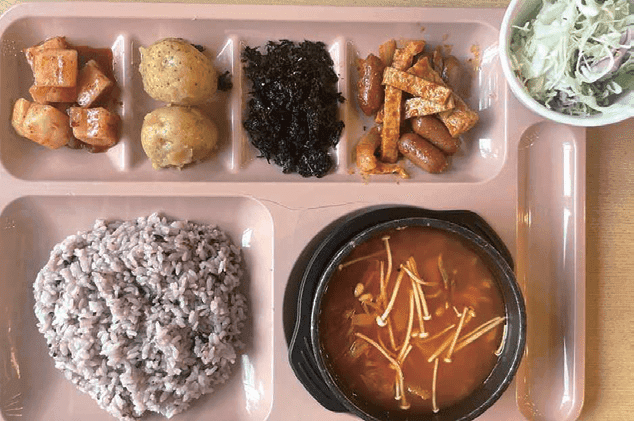
South Korean universities in Busan, including Pusan National University, Korea Maritime University, Busan University of Foreign Studies, and the Catholic University of Pusan, will introduce a 1,000 won breakfast program for their students. This initiative is backed by the Ministry of Agriculture, Food and Rural Affairs, and the National Agricultural Research Center, which have selected 41 universities to participate in the project this year. The program aims to support 680,000 students.
The 1,000 won breakfast project provides affordable, high-quality breakfasts for university students who often skip the most important meal of the day. With a 53% breakfast skipping rate among 20-somethings, the highest among all age groups, the program intends to encourage young people to develop breakfast habits and increase rice consumption.
Under this program, students pay 1,000 won for breakfast, the government contributes another 1,000 won, and schools autonomously share the remaining cost. The recent inflation has increased the burden of food costs for university students, prompting a high number of universities across the country to participate in the program. The government has even secured additional budgeting to increase the number of supported students from the initially planned 500,000 to 680,000.
Participating universities span the entire country, including Busan, Ulsan, Daegu, Gyeongsang-do, Seoul, Gyeonggi-do, Incheon, Gangwon-do, Daejeon, Chungcheong-do, Gwangju, and Jeolla-do regions. Last year's government survey revealed that 98.7% of respondents would like to see the 1,000 won breakfast program continue, and 91.8% felt the importance of breakfast through the initiative.
Jeon Han-young, a Food Policy Specialist at the Ministry of Agriculture, Food and Rural Affairs, highlighted the dual purpose of the program: to increase rice consumption by forming healthy eating habits and easing the burden of food costs for students in the era of high prices.
Editorial Context
"Independent journalism relies on radical transparency. View our full log of editorial notes, corrections, and project dispatches in the Newsroom Transparency Log."
Reader Pulse
The report's impact signal
Be the first to provide a reading pulse. These collective signals help our newsroom understand the impact of our reporting.
Join the discussion
A more thoughtful conversation, anchored to the story
Atlantic-style discussion for this article. One-level replies, editor prompts, and moderation-first participation are now powered directly by Prisma.
Discussion Status
Open
Please sign in to join the discussion.
The Weekly Breeze
Independent reporting and analysis on Busan,
Korea, and the broader regional economy.