Navigating Economic Challenges: What South Korea Can Learn from Brexit
As South Korea faces its own political and economic challenges, there are several key lessons that can be learned from the tumultuous and challenging process of Brexit. The first lesson is that the decision to leave the EU was driven by a desire for independence, but in reality, it has resulted in self-isolation, which has not been good for the British economy. South Korea, as a small country with an open economy, should avoid self-isolation and instead prioritize exchange with the wider world.

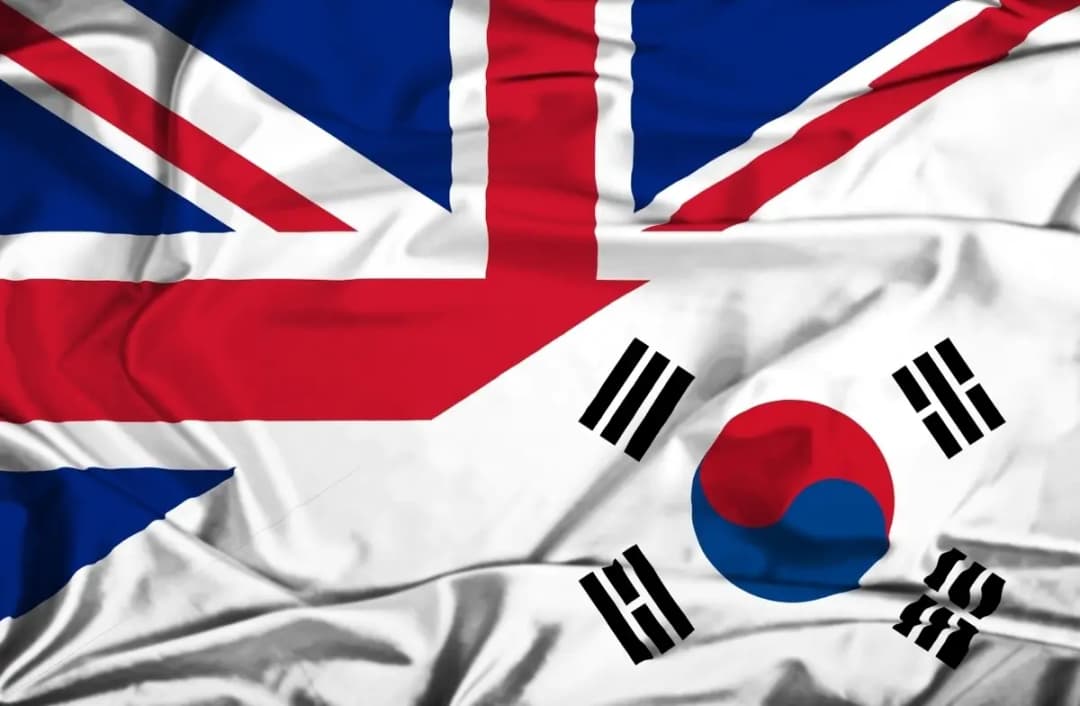
As South Korea faces its own political and economic challenges, there are several key lessons that can be learned from the tumultuous and challenging process of Brexit. The first lesson is that the decision to leave the EU was driven by a desire for independence, but in reality, it has resulted in self-isolation, which has not been good for the British economy. South Korea, as a small country with an open economy, should avoid self-isolation and instead prioritize exchange with the wider world. This is essential to ensure economic growth and competitiveness.
The importance of trade deals cannot be overstated, as Brexit has highlighted.
The UK's decision to leave the EU has left it without the trade deals it had previously enjoyed as a member of the EU. This has created significant challenges for UK businesses that rely on exports, particularly those in the manufacturing and agriculture sectors. For Korea, which is heavily reliant on exports, the importance of trade deals cannot be overstated. With the world's major economies engaged in a race to secure trade agreements, Korea must continue to prioritize trade deals in order to remain competitive in the global marketplace.
However, Brexit has also highlighted the challenges of negotiating trade deals. The process of negotiating a trade deal is complex and time-consuming, and requires a significant investment of resources. Negotiations between the UK and the EU have been particularly challenging, with disagreements over issues such as the Irish border causing significant delays. For Korea, which has recently negotiated several major trade deals, including with the EU and the US, the experience of Brexit underscores the importance of careful preparation and clear communication in trade negotiations. Korea must be prepared to invest significant resources in order to successfully negotiate future trade deals.
Regulatory alignment is another key area where Brexit has provided valuable lessons.
One of the major issues facing the UK in its negotiations with the EU has been the question of regulatory alignment. The EU has insisted that in order to maintain access to the single market, the UK must continue to adhere to EU regulations in certain areas, such as food safety and environmental standards. For Korea, which has extensive economic ties with the EU, the experience of Brexit highlights the importance of regulatory alignment in facilitating trade. Korea must be prepared to work closely with its trading partners to ensure that regulations are aligned in key areas, in order to avoid unnecessary barriers to trade.
Brexit has also led to restrictions on the flow of workers from the EU, which has caused wages to rise higher in the UK than elsewhere. While this may seem like a positive outcome, it has also contributed to rising uncertainty and depressed business investment in the UK. South Korea, as a country that relies heavily on skilled labor from overseas, should be careful in its approach to immigration policy and ensure that it does not undermine economic growth.
Finally, the COVID-19 pandemic has had a significant impact on the British economy, and while the country's vaccination campaign launch was the fastest in the world, it was not enough to stave off grievous harm from the pandemic. South Korea should be vigilant in its approach to public health and take steps to minimize the impact of future pandemics on the economy.
In conclusion, South Korea can learn valuable lessons from the experience of Brexit, such as prioritizing global exchange, carefully negotiating balanced trade deals, promoting regulatory alignment, and taking a cautious approach to immigration policy. By implementing these lessons, Korea can build a stronger, more resilient economy that is better able to compete in the global marketplace.
Continue this reporting
Reporting on the same issue
Related coverage selected from the article's desk, topics and newsroom relationships.
 NewsOct 21, 2026
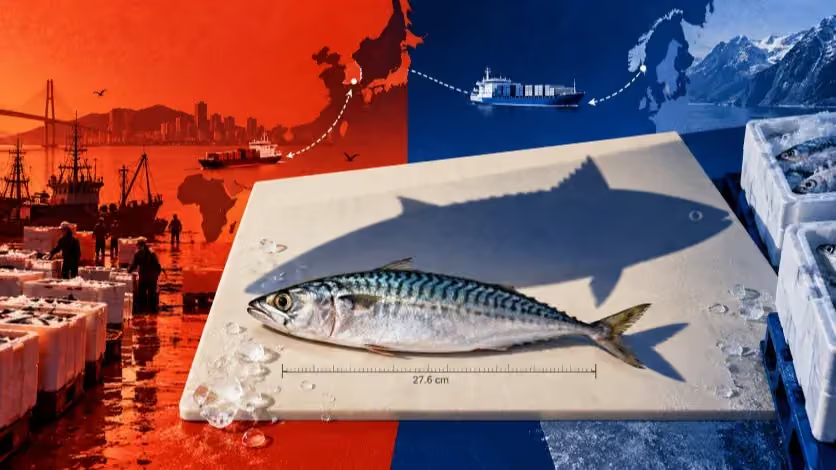
What a Small Mackerel Is Worth
Busan’s catch is dominated by small mackerel even as some buyers need larger...
 NewsSep 21, 2026
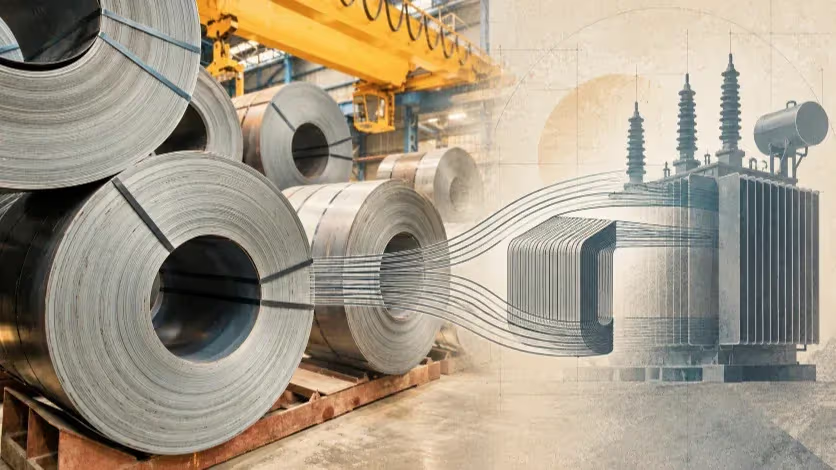
Europe’s Electrical-Steel Safeguard Now Reaches Inside the Transformer
A new EU safeguard follows electrical steel into certain finished transformer...
 NewsSep 14, 2026
Foreign Tourist Spending Is Reshaping Busan’s Nampo District
Foreign spending is making long-empty commercial space valuable again in Namp...
More from the author
More from this byline
Stay with the same line of reporting through more work from this byline.
 NewsOct 9, 2026
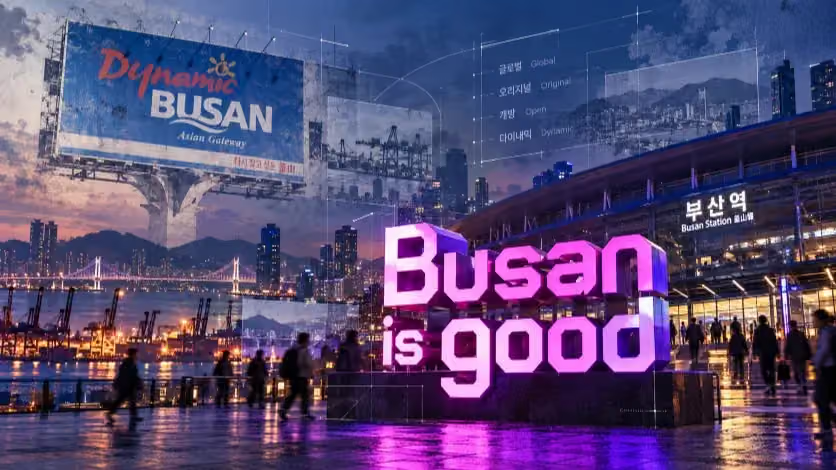
Why “Busan Is Good” Falls Short as a City Brand
 NewsSep 18, 2026
The Other AI Race Is for the Freedom to Change Course
Reader Signal
Community readWhat did this report leave you with?
Choose the signal that best reflects your reading. Select it again to remove it.
One response per article
No response selected
A moderated conversation about the reporting.
One-level replies and newsroom moderation keep the conversation anchored to this article.
Discussion Status
Open
Please sign in to join the discussion.
Newsletter
Weekly reporting and context from Busan and Korea.