Why Busan’s Skyscraper Ambitions Fall Short
Busan’s Special Architectural Zones promise innovation, but deliver exclusion. The recent rejection of a 99-story redevelopment reveals the limits of spectacle-driven planning in a city facing depopulation and inequality.

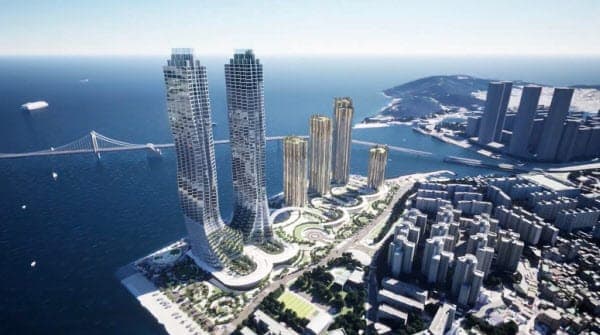
Busan, South Korea — In cities across the world, towering skylines have become emblems of ambition. They signify progress, wealth, and global status. For Busan—South Korea’s second-largest city and longtime maritime gateway to the world—this symbolism has found expression in the Special Architectural Zone (SAZ) initiative, a policy framework that promotes high-rise development through regulatory leniency and aesthetic branding.
Yet as the 99-story Samik Beach Town project was quietly voted down this April by its own residents, a quiet but powerful message emerged: height alone cannot solve what ails a city that’s shrinking, aging, and losing its next generation.
The Illusion of Density
Busan’s municipal government has pushed its Special Architectural Zones as symbols of innovation. These zones offer developers freedom from conventional height and density restrictions in exchange for "creative architecture" that elevates the city’s global profile.
But in practice, these zones rarely produce visionary architecture. They produce more luxury apartments.
The Samik Beach Town proposal—touted as a world-class redevelopment with designs by French architect Dominique Perrault—was supposed to become Korea’s tallest residential complex at 99 stories. What it offered in spectacle, however, it lacked in substance. At its core, it was yet another high-rise condominium project in an already dense coastal district.
Busan’s government argued that such developments would attract global attention, drive economic growth, and revitalize aging neighborhoods. But the very residents it aimed to impress chose to reject the plan, citing increased construction costs, project delays, and skyrocketing housing contributions that far outpaced original estimates.
The message is clear: density without equity is not revitalization. It’s vertical repetition.
The Vanishing Young and the "Old Man and the Sea"
While the city constructs higher, its population is moving out—and aging fast.
Busan has experienced continuous net population loss since 2015, with younger residents increasingly drawn to Seoul for better jobs, education, and housing accessibility. Meanwhile, Busan’s median age continues to rise, earning it a quietly circulated moniker: the city of old men and the sea.
The irony is difficult to ignore. A city building ever taller in pursuit of modernity is, in fact, becoming older, emptier, and less economically vibrant.
In this light, Busan’s skyline ambitions begin to feel not like future-proofing, but like an elaborate façade—a way to project vitality while concealing demographic decline.
Rather than attracting young people, luxury high-rises in districts like Haeundae and Namcheon often become second homes for the wealthy or speculative investment vehicles. Units in similar developments have sold for upwards of 2.3 billion KRW, far beyond the reach of average residents.
This is not regeneration. It is urban exclusion in high definition.
Special Zones, Generic Outcomes
The irony of Busan’s "Special Architectural Zones" is how little they do to make the city’s architecture—or neighborhoods—feel special.
Their promise of design innovation often gives way to monolithic luxury towers bearing corporate logos, surrounded by privatized spaces and isolated from the social fabric of the city.
This is not unique to Busan. Many global cities fall into the trap of equating architectural spectacle with civic progress. But without public programs, mixed-income integration, or accessible urban amenities, these developments become isolated symbols—impressive from afar, irrelevant up close.
What’s worse, these towers are almost never planned with the people of the neighborhood in mind. Public consultation is sparse, civic participation often symbolic, and the aesthetic value promised by developers tends to serve the market more than the community.
Identity by Height, or by Humanity?
In its pursuit of becoming a "global city," Busan has increasingly prioritized visibility over livability. The skyline has become a symbol of ambition, but cities are not defined by how tall they rise—they are defined by how well they bring people together. Busan’s true identity lies not in its verticality, but in its coastal ecology, its industrial and cultural heritage, its maritime legacy, and the resilience of its grassroots communities. Yet these essential qualities are rarely centered in the city’s urban strategy. Instead, luxury high-rises continue to proliferate in already saturated coastal districts, while aging inland neighborhoods suffer from neglect, traditional markets hollow out, and younger generations are gradually priced out of the city they once called home. What is presented as progress increasingly feels like erasure.
To revitalize itself meaningfully, Busan must shift its focus from monument-building to ecosystem-building. This requires a new model of urbanism—one that reinvests in overlooked inland areas facing infrastructure decay and demographic decline, mandates affordable housing in all major redevelopment projects, and replaces privatized towers with public, community-centered spaces. It calls for a return to human-scale design: low-rise, mixed-use, and intergenerational housing that supports inclusive neighborhoods rather than exclusive enclaves. Most importantly, it demands a planning process rooted in genuine public participation, not just aesthetic presentation.
The cancellation of the 99-story Samik Beach Town plan should not be seen as a setback, but as a wake-up call. It represents a rare moment when a local community collectively chose sustainability over spectacle, inclusion over image. Busan doesn’t need to build higher to prove its place in the world. It needs to grow deeper—into its people, its history, and its future.
Continue this reporting
Reporting on the same issue
Related coverage selected from the article's desk, topics and newsroom relationships.
 NewsOct 16, 2026
What Is Still Worth Going to See?
Busan’s biennale faces questions of artistic judgment and institutional care....
 NewsOct 14, 2026
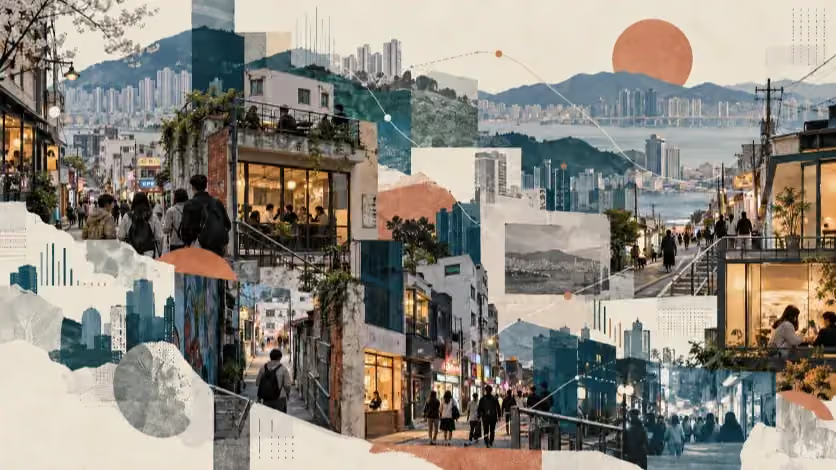
What Became of Busan’s University Streets?
From 2015 to 2023, registered businesses grew near Pusan National University...
 NewsOct 12, 2026
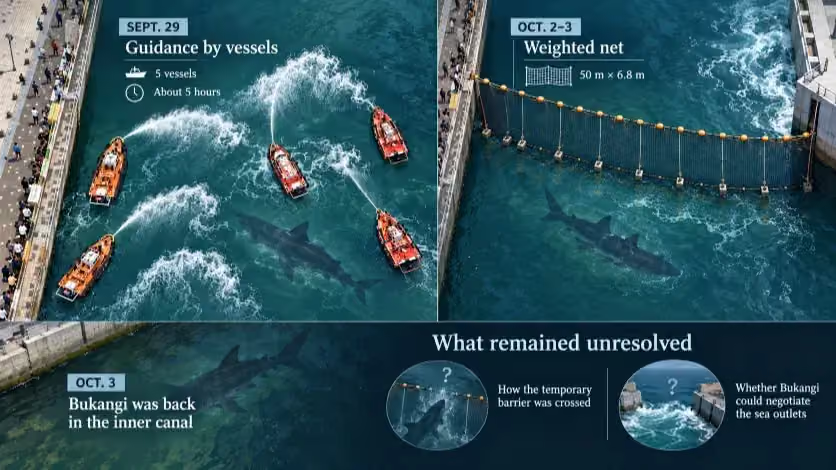
Bukangi, the Shark That Stayed in Busan’s North Port
A rescue net guided Bukangi toward the sea, but the dusky shark returned to B...
More from the author
More from this byline
Stay with the same line of reporting through more work from this byline.
 NewsOct 9, 2026
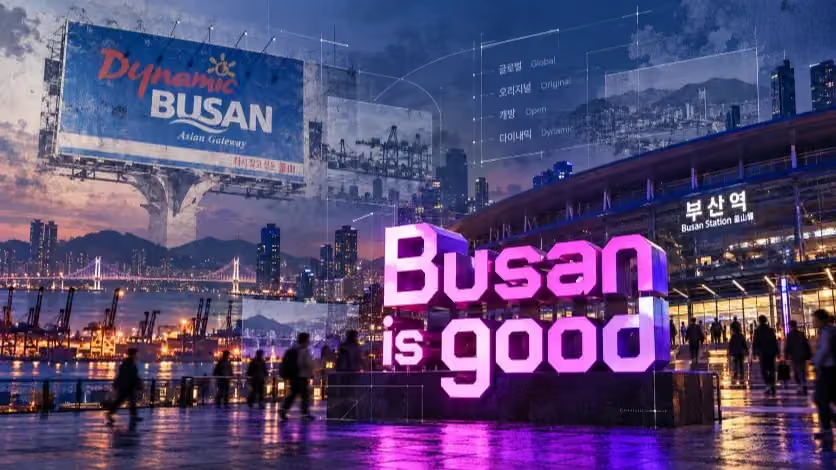
Why “Busan Is Good” Falls Short as a City Brand
 NewsSep 18, 2026
The Other AI Race Is for the Freedom to Change Course
Reader Signal
Community readWhat did this report leave you with?
Choose the signal that best reflects your reading. Select it again to remove it.
One response per article
No response selected
A moderated conversation about the reporting.
One-level replies and newsroom moderation keep the conversation anchored to this article.
Discussion Status
Open
Please sign in to join the discussion.
Newsletter
Weekly reporting and context from Busan and Korea.