Why Busan Can’t Wait: Maritime Strategy Demands Action, Not Rhetoric
Relocating the Ministry of Oceans and Fisheries to Busan has long been promised but never delivered. What’s holding it back, and what would it take to finally make it happen?

For more than two decades, the South Korean government has promised to relocate the Ministry of Oceans and Fisheries (MOF) to Busan, the country’s premier port city. Alongside this relocation, the establishment of a maritime court has also been frequently proposed as a means to consolidate Korea’s maritime legal infrastructure. These ideas have consistently appeared in presidential campaign pledges and strategic development plans, yet they remain unrealized—trapped in a loop of political rhetoric, regional rivalry, and administrative inertia.
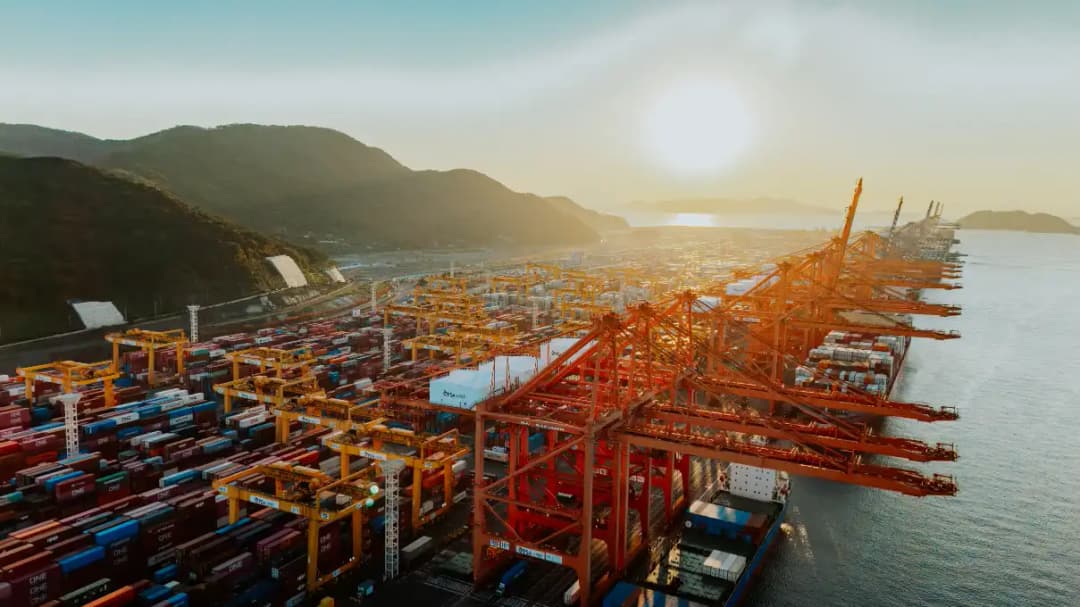
Busan is more than symbolically suited to house Korea’s maritime institutions. It is the nation's busiest port, handling over 75% of container traffic, and ranks as the seventh-largest container port in the world. The city also hosts a critical mass of maritime-related institutions, including research centers, port authorities, shipping companies, and maritime universities. Its operational ecosystem already functions as Korea’s de facto maritime capital, yet policy and legal governance remain physically and institutionally distant, centered inland in Sejong.
This disconnect has not gone unnoticed by local stakeholders. Following the dissolution of the MOF in 2008 under the Lee Myung-bak administration—when its functions were distributed across multiple ministries—a civic movement based in Busan launched a sustained, multi-year campaign advocating for the ministry’s reinstatement. The effort succeeded in 2013 during the Park Geun-hye administration, marking a rare case in which grassroots and regional lobbying reshaped national government structure. However, while the MOF was restored, it was reestablished not in Busan but in Sejong, a decision that once again prioritized administrative centralization over maritime strategy.
The logic of relocating the MOF to Busan remains compelling. It would align decision-making authority with operational realities, placing the ministry in direct proximity to the industries, institutions, and infrastructure it is tasked with overseeing. Likewise, a maritime court in Busan would bring legal resolution mechanisms closer to the source of maritime disputes, offering speed, specialization, and economic efficiency—particularly given the annual loss of legal service revenues to foreign jurisdictions where Korean shipping disputes are currently resolved.
Despite broad recognition of these benefits, implementation has faced a series of structural and political obstacles. The hyper-centralization of South Korea’s administrative apparatus in Sejong and Seoul has made inter-ministerial cooperation heavily dependent on physical proximity. Moving the MOF away from Sejong raises concerns about coordination with related ministries such as the Ministry of Economy and Finance, the Ministry of Land, Infrastructure and Transport, the Ministry of Environment, and even the Coast Guard. Without a robust system to support remote inter-agency collaboration, such relocation risks diminishing rather than enhancing administrative efficiency.
In addition to intergovernmental concerns, internal resistance from civil servants has proven formidable. Many MOF employees, having already relocated from Seoul to Sejong, are understandably reluctant to uproot their lives again. Family concerns, career stability, and perceptions of professional isolation in a peripheral city contribute to institutional hesitation. Overcoming this will require not only logistical support but also policy innovation—such as incentivized relocation packages, housing and education support, and more flexible work arrangements including phased or rotational assignments.
Moreover, the relocation cannot occur in a vacuum. For it to succeed, it must be embedded within a larger framework of policy realignment. That includes legal revisions—most notably, changes to the Government Organization Act to authorize such a move—as well as a reconfiguration of the MOF’s authority structure to allow decentralized decision-making without undermining inter-ministerial coherence. The same applies to the proposed maritime court, which would require amendments to the Court Organization Act and the establishment of jurisdictional protocols that do not disrupt existing legal hierarchies.
The move would also need to be accompanied by a broader co-location strategy. Relocating the MOF without integrating related agencies and institutions—such as the Korea Maritime Institute, Korea Ocean Business Corporation, and the National Institute of Fisheries Science—would result in fragmented administration and missed synergies. Instead, a clustered "maritime governance complex" in Busan could replicate the model used in global maritime capitals such as Singapore, London, or Hamburg, where policy, legal, research, and business entities operate in close proximity.
Equally crucial is reconciling regional competition. Incheon, another major port city, has voiced its own ambitions to host the MOF or the maritime court, invoking strategic parity and population balance. This inter-city rivalry has too often derailed constructive dialogue and fostered zero-sum political gamesmanship. For meaningful progress, national leadership must reframe the conversation—shifting it from local competition to national strategy.
Ultimately, the question of relocating the MOF and establishing a maritime court is about more than administrative geography. It is about recalibrating Korea’s institutional design to reflect its identity as a maritime nation and its aspirations for global competitiveness. At a time when Indo-Pacific sea lanes are becoming contested geopolitical arenas and when maritime logistics underpin economic resilience, Korea must ensure that its governance structure reflects its strategic needs.
Busan is ready. It possesses the infrastructure, expertise, civic support, and institutional density required to serve as the country’s maritime governance hub. What remains is for the central government to move beyond promises and establish a concrete, legally grounded, and administratively coordinated pathway for implementation. Without such commitment, Korea’s maritime ambitions risk remaining theoretical—impressive on paper but disjointed in practice.
The tide of political opportunity will not remain high forever. Korea must decide whether it will continue to postpone the inevitable or finally allow its maritime leadership to be anchored where it belongs—by the sea, in Busan.
Continue this reporting
Reporting on the same issue
Related coverage selected from the article's desk, topics and newsroom relationships.
 NewsOct 14, 2026
What Became of Busan’s University Streets?
From 2015 to 2023, registered businesses grew near Pusan National University...
 NewsOct 12, 2026
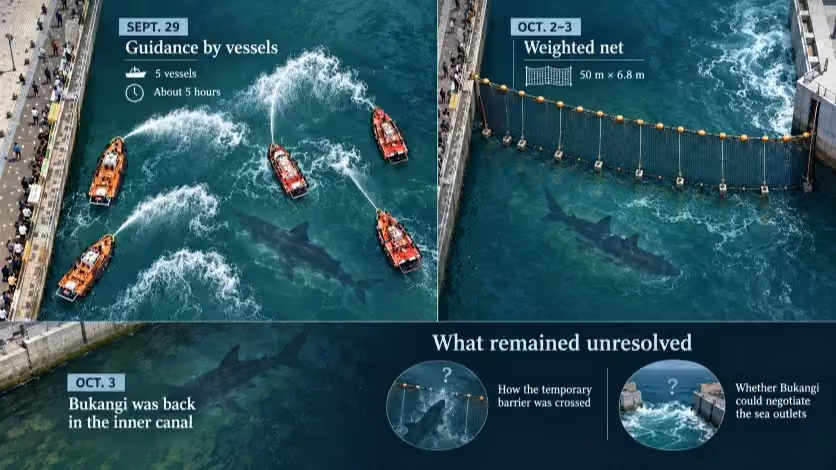
Bukangi, the Shark That Stayed in Busan’s North Port
A rescue net guided Bukangi toward the sea, but the dusky shark returned to B...
 NewsOct 6, 2026
Busan’s Water System Is Entering a Harder Era of Renewal
Busan spent decades building a water system that can absorb major failures. N...
More from the author
More from this byline
Stay with the same line of reporting through more work from this byline.
 NewsOct 9, 2026
Why “Busan Is Good” Falls Short as a City Brand
 NewsSep 18, 2026
The Other AI Race Is for the Freedom to Change Course
Reader Signal
Community readWhat did this report leave you with?
Choose the signal that best reflects your reading. Select it again to remove it.
One response per article
No response selected
A moderated conversation about the reporting.
One-level replies and newsroom moderation keep the conversation anchored to this article.
Discussion Status
Open
Please sign in to join the discussion.
Newsletter
Weekly reporting and context from Busan and Korea.