Busan Sinkhole Crisis Exposes Regulatory Failures in Public Infrastructure Oversight
The Sasang–Hadan subway sinkhole wasn’t simply an accident of soil mechanics. It was a preventable disaster rooted in regulatory neglect, incomplete risk assessments, and a public agency’s failure to enforce basic legal requirements.

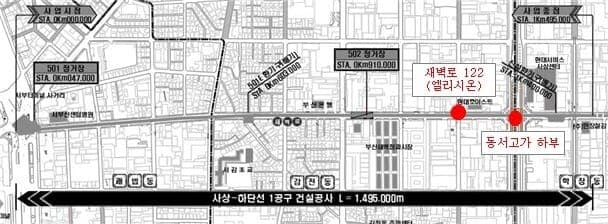
BUSAN, South Korea — A new phase of investigation is underway following a series of sinkholes that plagued the Sasang–Hadan subway line construction site in Busan. On April 24, the city’s Audit Committee announced a special task force to re-examine the troubled subway corridor—this time expanding the probe beyond the previously audited second worksite to include the more severely affected first section. City officials describe the move as part of a commitment to prioritize citizen safety. But critics argue that unless this effort tackles deeper institutional failings—not just technical oversights—the investigation risks becoming another bureaucratic cycle of report and deferral, rather than a turning point in urban accountability.
The Sasang–Hadan line has been a source of public concern since September 2024, when a massive 12-meter-wide sinkhole opened during excavation, halting construction and prompting emergency evacuations. Initial responses emphasized heavy rainfall as the cause. But a government audit released on April 22 painted a more complex picture, citing poor drainage design, insufficient cutoff grouting, and inadequate structural anchoring. The report outlined 10 administrative violations and 33 disciplinary recommendations. However, it placed the burden of responsibility largely on subcontractors and field engineers, with limited acknowledgment of the oversight lapses by the project’s commissioning authority, the Busan Transportation Corporation (BTC).
That omission is now drawing renewed scrutiny. The April 24 announcement follows growing pressure over the audit’s failure to assess Worksite 1, where 12 of the 14 known sinkhole incidents occurred. Mayor Park Heong-joon directed the Audit Committee to launch a high-intensity special investigation into the first segment, bolstered by civil engineering experts from both the public and academic sectors. In his statement, Park emphasized that “nothing is more important than citizen safety.” Yet such declarations have become familiar in the aftermath of Korean infrastructure failures—often followed by little change in operational systems or regulatory enforcement.
What remains largely unspoken is that the root causes extend beyond design or execution errors. The subway collapse revealed systemic non-compliance with South Korea’s Underground Safety Act, which requires a Ground Subsidence Risk Assessment (GSRA) for any excavation exceeding 10 meters. Under Article 35 of the Act, such assessments are also mandatory when prior incidents of ground instability have been reported—a threshold clearly met in this case, where at least 12 sinkholes were documented before the collapse. No GSRA was performed.
No such evaluation was conducted prior to tunneling, despite geotechnical maps classifying the soil as highly permeable alluvium and borehole tests indicating low shear strength. No pre-grouting or reinforcement was implemented, even though national guidelines recommend such measures when groundwater pressure differentials exceed two meters.
These were not ambiguities in law or gray areas in engineering judgment—they were clear regulatory obligations that went unfulfilled. Moreover, the construction site lacked basic monitoring systems: no piezometers to measure water pressure, no extensometers to detect soil displacement, no stress sensors on retaining walls. In contrast, projects of similar scale—such as Tokyo Metro’s Fukutoshin Line—are equipped with real-time telemetry networks that flag early warnings and allow proactive intervention. In Busan, the first sign of distress came from CCTV footage at 7:42 a.m. The collapse occurred at 8:50 a.m. No sensors, no alerts, and no evacuation protocol was triggered during that 68-minute window.
The ₩1.159 billion deduction imposed on the contractor consortium—equivalent to just 0.7% of the worksite’s total contract value—has been criticized as insufficient to deter future violations or to fund necessary structural reforms. Legal experts note that under current statutes, project owners bear ultimate responsibility for ensuring ground safety evaluations and monitoring. Yet, in practice, that responsibility is often diffused through multi-layered subcontracting, resulting in diminished accountability and limited recourse when failures occur.
The city’s response, though seemingly robust, still reflects this pattern. The language of the audit report describes BTC’s role in the passive voice: the agency “did not adequately supervise,” “delayed reporting,” and “failed to escalate issues.” Such phrasing contrasts sharply with the active assignment of blame to field-level personnel—despite the fact that those engineers were often working from designs and timelines imposed by BTC itself.
Transparency remains a further concern. Though Busan maintains detailed ground risk maps—including GPR-based data on subsidence-prone zones—these are not publicly disclosed. City officials cite fears of real estate devaluation and unnecessary panic, but critics argue that such opacity undermines informed civic participation and contributes to repeated infrastructure failures. Since 2014, more than 2,000 sinkholes have been recorded across South Korea’s urban centers. Without systemic reform in how risk is assessed, shared, and managed, such incidents are unlikely to stop.
There is value in the city’s decision to launch a special task force, particularly if it operates with independence and technical rigor. The inclusion of external academic experts is promising. But unless the findings lead to actionable reform—especially in project commissioning standards, legal enforcement, and public transparency—the investigation may amount to little more than damage control. The engineering failures have already been documented. The real question now is whether the governance model that enabled them will finally be confronted.
Busan’s sinkhole crisis did not simply emerge from soft soil or sudden storms. It emerged from a brittle system of oversight that allowed legal requirements to be bypassed, monitoring systems to be omitted, and responsibility to be deferred. If the special audit fails to address those deeper failures, then even the most rigorous investigation may do little to prevent the next collapse.
Because this wasn’t just a failure of concrete. It was a failure of accountability.
Continue this reporting
Reporting on the same issue
Related coverage selected from the article's desk, topics and newsroom relationships.
 NewsOct 16, 2026
What Is Still Worth Going to See?
Busan’s biennale faces questions of artistic judgment and institutional care....
 NewsOct 14, 2026
What Became of Busan’s University Streets?
From 2015 to 2023, registered businesses grew near Pusan National University...
 NewsOct 12, 2026
Bukangi, the Shark That Stayed in Busan’s North Port
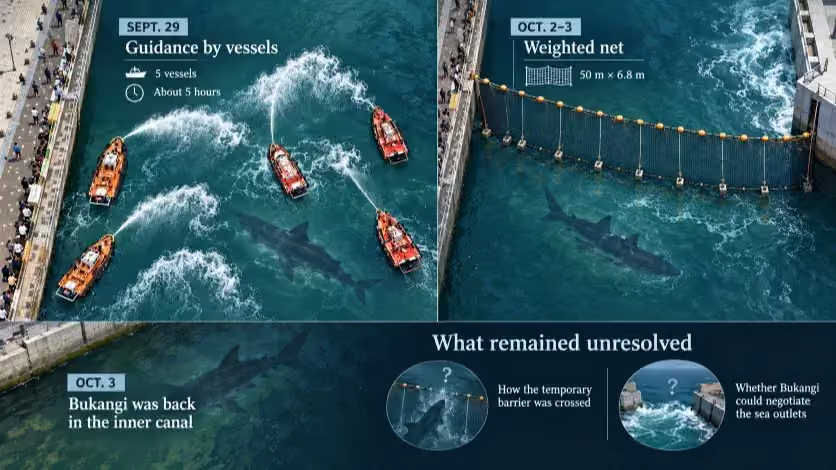
A rescue net guided Bukangi toward the sea, but the dusky shark returned to B...
More from the author
More from this byline
Stay with the same line of reporting through more work from this byline.
 NewsOct 9, 2026
Why “Busan Is Good” Falls Short as a City Brand
 NewsSep 18, 2026
The Other AI Race Is for the Freedom to Change Course
Reader Signal
Community readWhat did this report leave you with?
Choose the signal that best reflects your reading. Select it again to remove it.
One response per article
No response selected
A moderated conversation about the reporting.
One-level replies and newsroom moderation keep the conversation anchored to this article.
Discussion Status
Open
Please sign in to join the discussion.
Newsletter
Weekly reporting and context from Busan and Korea.