Stage N2 Sleep Boosts Insight, Study Finds
Not all rest is equal. Beneath a few minutes of midday stillness, the brain may be doing its most subtle work—rearranging what we know, away from conscious effort.

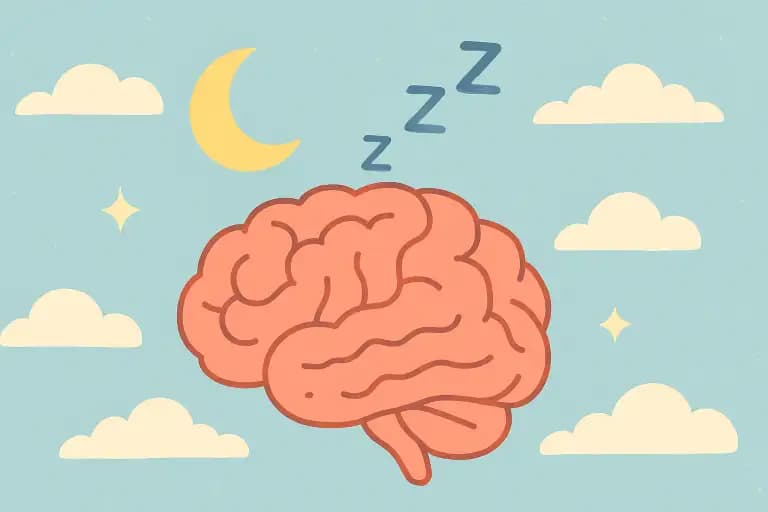
Shortly after midday, a stillness settles across many workplaces in South Korea. The pace slows, voices lower, and screens become momentarily dimmed—not by policy, but by necessity. For a few minutes between meetings or deadlines, workers lean back in their chairs, close their eyes, and let go of the tension held since morning.
In some companies, dedicated rest zones offer reclining chairs and lowered lights, while in others, individuals rely on the quietude of brief solitude at their desks. What might seem like a cultural reflex to post-lunch drowsiness is, increasingly, the subject of scientific scrutiny.
Recent findings suggest that the cognitive effects of a short nap depend not only on whether one sleeps, but on how deeply the brain descends during that rest. A study published in PLOS Biology in 2024 reported that participants who reached Stage N2 non-REM sleep—a distinct neurological state characterized by reduced responsiveness and specific EEG patterns—were significantly more likely to solve a hidden-rule problem than those who either remained awake or achieved only lighter forms of sleep. The difference was not marginal: 85.7% of those who entered N2 sleep arrived at the solution, compared to 55.5% in the wake group.
The design of the study was both precise and restrained. Participants were asked to complete a cognitive task that contained a concealed mathematical shortcut. Before the final trial, they were given a 20-minute rest period, during which EEG recordings monitored their brain activity.
Only those who exhibited the characteristic features of N2 sleep—namely sleep spindles and K-complexes—showed a marked increase in insight. This effect was not observed in participants who remained in Stage N1 sleep, where awareness lingers just beneath the surface.
While the exact neural mechanisms remain a subject of further inquiry, the findings reinforce a long-standing hypothesis: that the sleeping brain, even within brief and partial cycles, is capable of reorganizing information in ways that waking cognition cannot. This capacity appears to depend less on the subjective feeling of rest, and more on the neurophysiological quality of the sleep itself.
Sleep Architecture – Why N2 Matters
Sleep is not a uniform state but a sequence of physiological transitions, each marked by distinct patterns of neural activity. In the standard classification of non-REM sleep, Stage N1 represents the lightest threshold—transitory and fragile. During N1, the brain begins to decelerate. Alpha waves give way to theta activity, and awareness flickers in and out. Many individuals can be awakened easily during this phase, and the experience often feels more like drifting than true sleep.
N2 sleep, however, signals a deeper departure from waking consciousness. On the electroencephalogram (EEG), it is defined by the emergence of two phenomena: sleep spindles—brief bursts of synchronized brain activity in the sigma frequency range—and K-complexes, large waveform patterns believed to assist in memory consolidation and sensory decoupling. These patterns are not merely diagnostic markers. They reflect a functional reorganization within the thalamocortical system: a temporary withdrawal from external stimuli and a redirection of processing inward.
Importantly, Stage N2 constitutes the majority of total sleep in adults, occupying approximately 45–55% of a full night’s sleep. Yet its role within a short nap has been relatively understudied until recently. Unlike the deeper slow-wave sleep of N3 or the vivid dream states of REM, N2 occupies a middle ground—where perception is dulled, but the brain remains electrically active.
In the PLOS Biology study, researchers observed that cognitive gains were not uniformly distributed among those who rested. Participants who remained in N1 exhibited no significant advantage over the wake group. The marked leap in insight occurred only when sleep architecture reached N2, even within a narrow 20-minute window.
This suggests that the benefits traditionally associated with longer nocturnal sleep—such as information restructuring and abstraction—can begin to emerge earlier than previously understood, provided the brain reaches the appropriate neurophysiological threshold.
Recent work on EEG spectral slope adds further detail. This measure, which captures the steepness of the power spectrum across frequencies, has been proposed as an index of sleep depth and synaptic downscaling. In the same study, a steeper spectral slope during the nap correlated more strongly with insight than even the presence of N2 alone—pointing to the possibility that the quality of N2, rather than its binary presence, may be a key determinant of cognitive reorganization.
What these findings collectively suggest is that insight may not simply be recovered during rest, but in some cases, actively constructed. The N2 phase appears to provide the neurobiological conditions under which previously encoded material can be disassembled and recombined—away from the constraints of conscious focus.
N2 Sleep in Everyday Conditions
In South Korea, taking a nap during the day is not uncommon. It happens quietly—in staff lounges, in parked cars, in the few minutes after lunch when conversations taper off and phones are set face-down. But most people do it without thinking too much about what kind of sleep they’re entering. They rest because they’re tired, or because they have a few minutes to spare.
In recent years, some workplaces have tried to make room for rest in more formal ways. A handful of companies now provide small rooms with reclining chairs or dim lighting where employees can take a break. A few cafes in central business districts offer nap booths, rented by the half-hour. These spaces are usually clean, quiet, and dark enough to help people fall asleep. Still, they’re the exception. In most offices, there’s nowhere to lie down. And even when there is, many workers don’t feel entirely comfortable closing their eyes.
There’s also the question of how easily a person can fall into deeper sleep. Stage N2, which recent studies have linked to improved problem-solving, doesn’t always arrive on schedule. It usually takes several minutes of relaxed, uninterrupted rest to get there. The body has to begin its descent—first into drowsiness, then into something quieter. Light, noise, and stress can all interfere.
Not everyone transitions the same way. Some people may reach N2 within ten minutes. Others may not, even after twenty. Without medical equipment, there’s no way to know for sure. One person might wake up feeling sharper; another might not feel any different at all. That doesn’t mean the rest was wasted. But it does remind us that the benefits of short sleep depend on more than just setting a timer.
Still, there’s something to be said for preparing the conditions. A quiet space. A bit of time. A body not already overstimulated. In the right moment, those few minutes can matter.
Can Brief Deep Sleep Happen in Real Life?
There’s no exact formula for falling into the right kind of sleep. But a few things make it more likely.
Most people, if they’re going to nap, do so after lunch. It’s not just habit. Around that time—early afternoon—the body’s temperature dips slightly, and alertness begins to fade. This dip is part of a rhythm that repeats every day, whether we notice it or not. It creates a small window where falling asleep comes more easily, even if only for a short while.
The environment matters. Too much light makes the body hesitate. So does noise, even the kind that doesn’t seem loud at first. Phones buzzing on desks, conversations drifting in from the hallway—these things keep part of the brain alert, just in case. Cool air helps, though it doesn’t need to be cold. What matters more is stillness, both outside and inside.
Some people use sleep masks or headphones. Others simply close the door or turn away from their screen. What works will vary. But what doesn’t work is expecting the mind to switch off instantly after reading emails or racing between meetings. There needs to be a step down. A moment of not doing.
It’s not always easy to tell if you’ve reached the deeper part of sleep. There’s no device on your wrist that can measure it reliably. But sometimes, when you wake, there’s a blank stretch of time you can’t account for. You weren’t dreaming, exactly. You weren’t aware of anything. That gap is often a good sign.
There’s no guarantee that a short nap will bring clarity. But the conditions can be set—quietly, and without much effort. Whether in an office, a study room, or a shaded corner of a building, the body knows what to do when given the chance.
In most workplaces, rest is something taken between things—after the task, before the next message, during a moment of pause no one notices. It’s quiet, usually unspoken. And yet, in that small space, something real may be happening.
Sleep doesn’t need to be long to be meaningful. It doesn’t need to be deep every time. But under the right conditions, the mind seems to do more than recover. It rearranges, sorts, lets go of noise and holds onto what matters. Not all rest leads to clarity. But some does.
And in days built on attention, response, and effort, that may be enough reason to make room for it.
Continue this reporting
Reporting on the same issue
Related coverage selected from the article's desk, topics and newsroom relationships.
 NewsAug 24, 2026
Busan Is Building Policy Around a Running Boom
Busan is expanding runner facilities, public crews and major events around an...
 NewsDec 12, 2025
The Two Lives of Korean Food
Ultra-processed foods carry Korea’s culinary identity across borders, while t...
 NewsOct 26, 2025
Korea’s Prescription Monopoly Faces Its Data Reckoning
Exclusive prescribing rights protected physicians’ autonomy but eroded accoun...
More from the author
More from this byline
Stay with the same line of reporting through more work from this byline.
 NewsSep 18, 2026
The Other AI Race Is for the Freedom to Change Course
 NewsSep 5, 2026
How a Political Appointment Becomes a Judgment of Character
Reader Signal
Community readWhat did this report leave you with?
Choose the signal that best reflects your reading. Select it again to remove it.
One response per article
No response selected
A moderated conversation about the reporting.
One-level replies and newsroom moderation keep the conversation anchored to this article.
Discussion Status
Open
Please sign in to join the discussion.
Newsletter
Weekly reporting and context from Busan and Korea.