The Reality of South Korea’s Empty Knowledge Industry Centers
South Korea’s knowledge industry centers were meant to support startups and SMEs, but oversupply and speculative investment have left thousands of office spaces vacant, driving investors into financial distress.

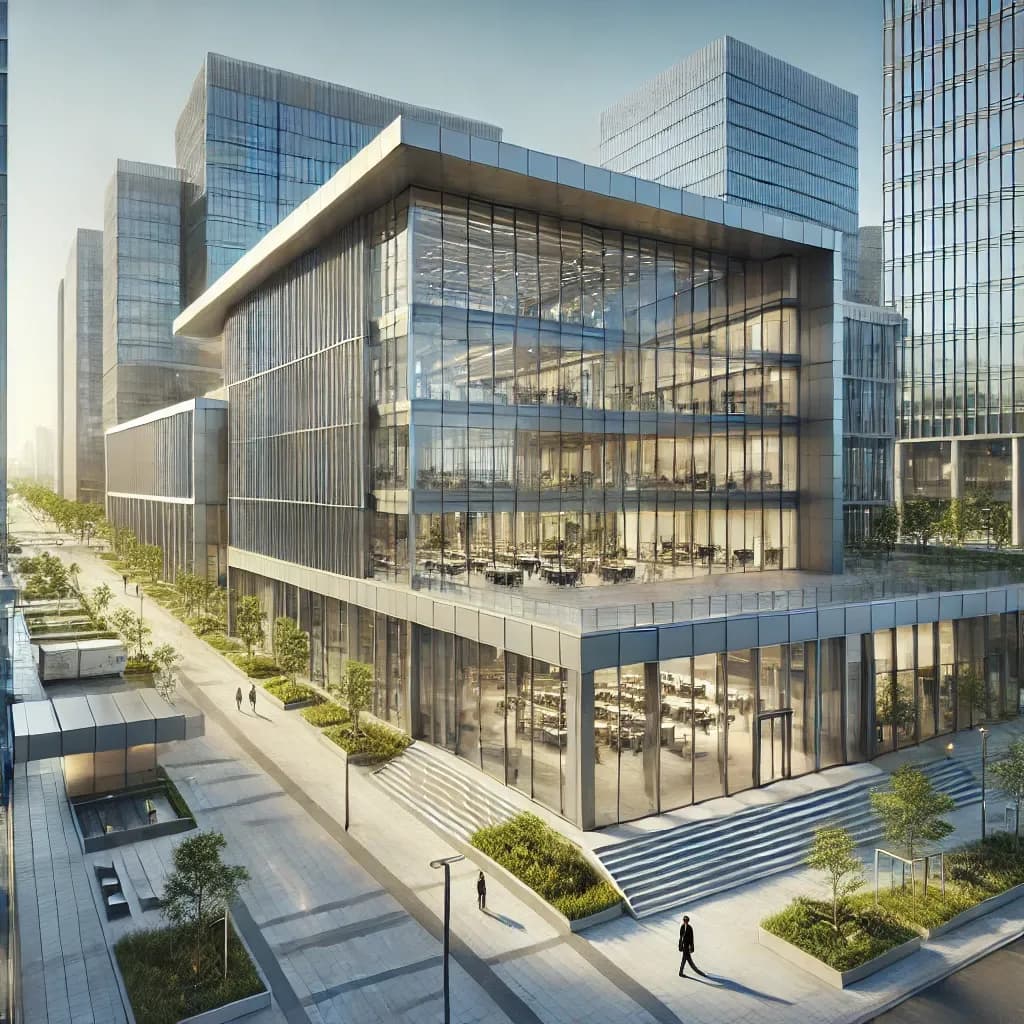
Across South Korea, towering knowledge industry centers once symbolized the nation’s drive for innovation and business decentralization. Promoted as catalysts for regional economic growth, these developments were meant to provide affordable office spaces for startups and small businesses, reducing the economic dominance of Seoul while revitalizing struggling local economies. Yet today, many of these buildings sit largely empty, their unlit corridors and vacant office units reflecting an economic miscalculation that has burdened investors, destabilized financial institutions, and done little to stem the decline of regional economies.
What began as a government-backed initiative to foster small and medium-sized enterprises (SMEs) and promote local economic development has devolved into an oversaturated market where supply far exceeds demand. The aggressive expansion of these office spaces, particularly in the past five years, has left both investors and businesses struggling with an industry that was driven more by speculative investment than by actual business needs. In major commercial zones like Seoul’s Gasan Digital Complex, vacancy rates have soared, while in provincial cities like Goyang, Daejeon, and Busan, entire buildings remain largely unoccupied, creating a financial and economic crisis that extends beyond the real estate sector.
The rapid proliferation of knowledge industry centers is at the heart of the problem. As of early 2025, South Korea hosts more than 1,548 knowledge industry centers, a dramatic increase from 1,167 in 2020—marking a staggering 32.2 percent rise in just under five years. The bulk of these developments are concentrated in the Seoul metropolitan area, with Gyeonggi Province alone accounting for 46.5 percent of the total floor space. Local governments, eager to attract investment and boost regional economies, facilitated these expansions through tax incentives and eased regulations, while developers, sensing an opportunity, rapidly constructed new office buildings at an unsustainable pace.
The consequences of this unchecked expansion are now fully visible. In Goyang, a city adjacent to Seoul, the average occupancy rate across its 25 knowledge industry centers is a mere 56 percent, with some newer developments struggling to surpass 10 percent occupancy. The situation is no better in other regions, where vacancy rates have skyrocketed, reaching as high as 90 percent in certain complexes in Hanam and Pyeongtaek. Developers who promised high occupancy and stable returns have instead left investors grappling with empty units, collapsing rental prices, and rising debt obligations.
The financialization of these office spaces is a key factor in their decline. Instead of being leased by actual businesses, many units were sold as speculative real estate investments, with developers and brokers aggressively marketing them to individual investors. Promises of “guaranteed rental yields” and “high capital appreciation” lured thousands of buyers, many of whom took out loans covering 80 to 90 percent of the property’s value, expecting rental income to service their debt. But as the reality of oversupply set in, these units became financial burdens rather than assets. With few tenants and falling rental prices, investors are now defaulting on their loans at alarming rates, leading to an unprecedented surge in real estate auctions.
In 2024 alone, 1,594 knowledge industry center units entered the auction market—a 131.7 percent increase from the previous year, the highest level since records began in 2001. The financial strain on investors is mirrored in the banking sector, where rising delinquency rates on commercial real estate loans have triggered concerns about broader economic instability. Loan default rates for knowledge industry centers have climbed to 11.55 percent, significantly higher than traditional commercial properties, and the total volume of outstanding loans linked to these developments has ballooned to 1,122 trillion won. Non-performing loans tied to these properties now total 30.7 trillion won, a 7 trillion won increase in just one year, raising fears of contagion in the banking system.
The crisis has not only impacted investors and financial institutions but has also failed in its most fundamental goal: fostering business growth and regional economic stability. While these office spaces were originally intended to support SMEs and startups, the vast majority remain unoccupied, either due to high costs, unsuitable leasing conditions, or a lack of local business ecosystems to sustain them. Many companies that were initially expected to move into these centers have opted to remain in established business hubs like Pangyo or Gangnam, where talent pools and logistical advantages are stronger. The result is a paradox where, despite a massive oversupply of office space, small businesses still struggle to find affordable, well-located workspaces that meet their needs.
The surrounding local economies have also suffered from the downturn. The lack of office occupancy means that nearby businesses—cafés, restaurants, convenience stores—have experienced sharp declines in customer traffic, with some shutting down entirely. In smaller cities where these knowledge industry centers were meant to stimulate economic activity, they have instead exacerbated stagnation, draining local government resources without delivering the promised economic revitalization.
In response to the crisis, some local governments are taking steps to mitigate the damage. Goyang City has expanded the range of businesses allowed to occupy knowledge industry centers, increasing the number of approved business categories from 97 to 126 in an effort to attract a broader mix of tenants. Other municipalities are reevaluating their zoning regulations and considering tax incentives for businesses willing to relocate to struggling office developments. Yet, these measures may not be enough to resolve the core issue of excessive supply in the absence of genuine demand.
The broader implications of the knowledge industry center crisis underscore a fundamental misalignment between development policies and economic realities. The assumption that real estate development alone can drive economic growth has been repeatedly challenged, not only in South Korea but in similar failed projects worldwide. The rapid expansion of knowledge industry centers, driven by speculation rather than business demand, highlights the dangers of prioritizing real estate investment over actual economic productivity.
Moving forward, policymakers face a crucial choice. One option is to continue providing financial support and regulatory adjustments to stabilize the market, helping existing developments find viable business tenants. A more radical approach would involve repurposing or restructuring some of these underutilized spaces—potentially converting them into alternative facilities such as research hubs, co-working spaces, or even educational institutions. Additionally, stricter controls on future knowledge industry center approvals must be implemented to prevent further oversupply and ensure that new developments are based on realistic demand projections.
The knowledge industry center boom was envisioned as a pathway to regional economic revitalization and business growth, but in its current state, it has become a cautionary tale of speculative excess and flawed planning. Without immediate and decisive policy intervention, these office spaces will remain underutilized assets that contribute little to the economy while burdening investors and financial institutions alike. South Korea must rethink its approach to commercial real estate and economic development—focusing less on infrastructure expansion and more on fostering sustainable business ecosystems that create long-term value beyond speculative property investments.
The Weekly Breeze
Keep pace with Busan's deep narratives.
Delivered every Monday morning.