The Fall of Homeplus: What Went Wrong and What Comes Next?
The decline of Homeplus marks a turning point for South Korea’s retail industry. E-commerce, debt, and shifting consumer habits have reshaped the market—can Homeplus adapt?

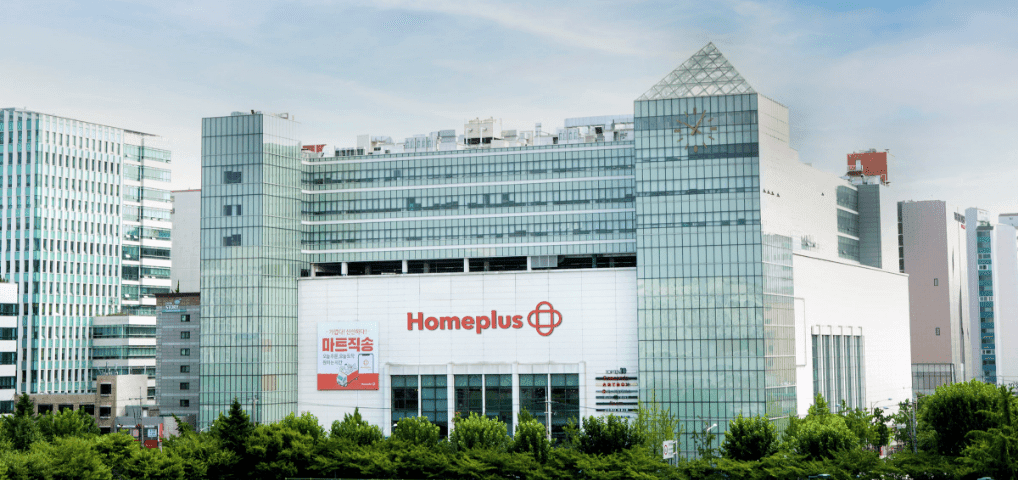
For years, Homeplus has stood as one of South Korea’s dominant hypermarket chains, a trusted name in household shopping and a key competitor in the retail wars against E-Mart and Lotte Mart. But now, the once-mighty retailer finds itself at a crossroads, forced into corporate rehabilitation after financial pressures mounted beyond control. The fallout has been swift and severe, with small business owners, suppliers, and employees caught in the turbulence of a collapsing giant.
Across the country, small vendors who operate within Homeplus stores are facing an increasingly desperate situation. Payments for sales made as far back as January have not been disbursed, leaving shop owners scrambling for funds. For businesses that rely on these payments to manage inventory, pay rent, and cover wages, the delay is more than an inconvenience—it is a financial catastrophe.
Among them is a food vendor who has been operating inside Homeplus for seven years. “I have no idea when I’ll get paid,” he says, his voice filled with frustration. “I have staff to pay, supplies to order, and now my credit card is maxed out just trying to keep things running.” His story is far from unique. Across the country, independent retailers are caught in the same financial limbo, forced to take on debt just to survive.
Suppliers, too, are losing patience. Major companies, including LG Electronics, Samyang Foods, Dongseo Foods, and Ottogi, have already begun pausing or reconsidering their partnerships with Homeplus over fears of non-payment. Lotte Chilsung has temporarily halted deliveries, and other firms are expected to follow. If this trend continues, the situation could spiral further, with shrinking product availability leading to declining customer confidence—a vicious cycle that could accelerate Homeplus’ downfall.
The uncertainty surrounding Homeplus is not just an isolated corporate crisis. It is a symptom of larger shifts in South Korea’s retail landscape, where traditional hypermarkets are losing their foothold in an industry increasingly dominated by e-commerce and direct-to-consumer models. The question is no longer just whether Homeplus can recover, but whether the retail sector, as we know it, is undergoing an irreversible transformation.
How Homeplus Found Itself on the Brink
The collapse of Homeplus did not happen overnight. It was the result of years of financial mismanagement, changing consumer habits, and an industry struggling to adapt to the digital era.
For much of its history, Homeplus thrived on a simple business model: drawing customers into expansive, one-stop shopping centers where they could buy groceries, electronics, household goods, and more. But this model has been under siege. South Korean consumers, once reliant on physical stores, have embraced the convenience of online shopping with unprecedented speed.
Platforms like Coupang, Gmarket, and Market Kurly have revolutionized the way people shop, offering same-day deliveries, competitive pricing, and the ability to browse from the comfort of home. The COVID-19 pandemic only accelerated this shift, cementing e-commerce as the new norm. By the time Homeplus recognized the urgency of digital transformation, it was already losing ground. While competitors like E-Mart launched aggressive online expansions and logistics improvements, Homeplus’ response was sluggish and reactive, failing to capture market share in the rapidly growing e-commerce space.
The company’s financial troubles deepened as it struggled to balance expensive store operations with declining foot traffic. As sales dwindled, Homeplus found itself stretched thin, with increasing operational costs and mounting debt. Credit rating agencies took notice, and by late 2023, the company’s downgraded credit standing limited its ability to secure favorable loans. This created a cash flow crisis that eventually made it impossible to meet supplier payments on time.
At the heart of the issue was a failure to evolve. Consumers had changed, but Homeplus had not adapted fast enough.The company’s sprawling stores, once considered an advantage, now felt like a burden in an era where efficiency, delivery speed, and digital convenience mattered more than large physical footprints.
Homeplus entered corporate rehabilitation—a move designed to give it legal protection while it restructures debts, negotiates new payment plans, and attempts to stabilize its business. But the process is fraught with challenges. The court’s involvement means that outstanding payments to vendors and suppliers will not be cleared immediately. Instead, creditors and business partners are left waiting, unsure of when or even if they will see their money.
What Comes Next for Homeplus?
With Homeplus now navigating the complexities of corporate rehabilitation, its next steps will determine whether the retailer can salvage its operations or if it is headed toward a slow, drawn-out collapse.
The company has pledged to prioritize supplier payments and stabilize store operations, claiming it has over 6 trillion KRW (approximately $4.5 billion) in available funds when factoring in projected revenues. But this figure is met with skepticism. Will those funds be enough to sustain operations, or will Homeplus be forced to cut costs by closing stores and reducing staff?
The possibility of mass store closures looms over employees and local economies alike. If Homeplus downsizes significantly, it could mean not only job losses but also declining competition in the retail sector, consolidating power among fewer players like E-Mart and Lotte Mart. For consumers, this could lead to higher prices and fewer shopping options.
For Homeplus to have a fighting chance, it must do more than just reduce costs. It needs a radical reinvention. The company cannot survive by merely maintaining the status quo—it must modernize its operations, embrace digital transformation, and regain consumer trust. This means prioritizing online retail, leveraging AI-driven logistics, and creating a seamless omnichannel experience that integrates physical stores with digital convenience.
But transformation takes investment, and right now, Homeplus is focused on survival rather than innovation. Whether it will have the resources—or the leadership vision—to execute such a turnaround remains uncertain.
A Defining Moment for South Korean Retail
Homeplus’ struggles are not just about one company’s missteps. They reflect a larger shift in South Korea’s retail ecosystem—one where legacy hypermarkets must confront the reality of an increasingly digital-first economy.
The modern consumer is not the same as they were a decade ago. They expect efficiency, seamless digital experiences, and competitive pricing. Retailers that fail to deliver on these fronts will inevitably fall behind. The lesson from Homeplus’ downfall is clear: companies that do not evolve with consumer behavior will struggle to survive, no matter how dominant they once were.
For Homeplus, the next few months will be critical. If it can regain financial stability, rethink its strategy, and execute a meaningful transformation, it may still find a place in South Korea’s retail landscape. If not, it risks becoming yet another cautionary tale of a once-powerful brand that failed to keep pace with the world around it.
The Weekly Breeze
Keep pace with Busan's deep narratives.
Delivered every Monday morning.