Is AI Reducing Our Ability to Think?
Imagine waking up one morning, and instead of deciding how you want your coffee, an artificial intelligence (AI) system not only brews it for you but also selects the type, sweetness, and temperature based on your mood, weather conditions, and health data. Convenient? Absolutely. But as AI systems become increasingly capable of making these decisions for us, a critical question emerges: Are we gradually surrendering our cognitive abilities to machines? As AI continues to integrate into daily li

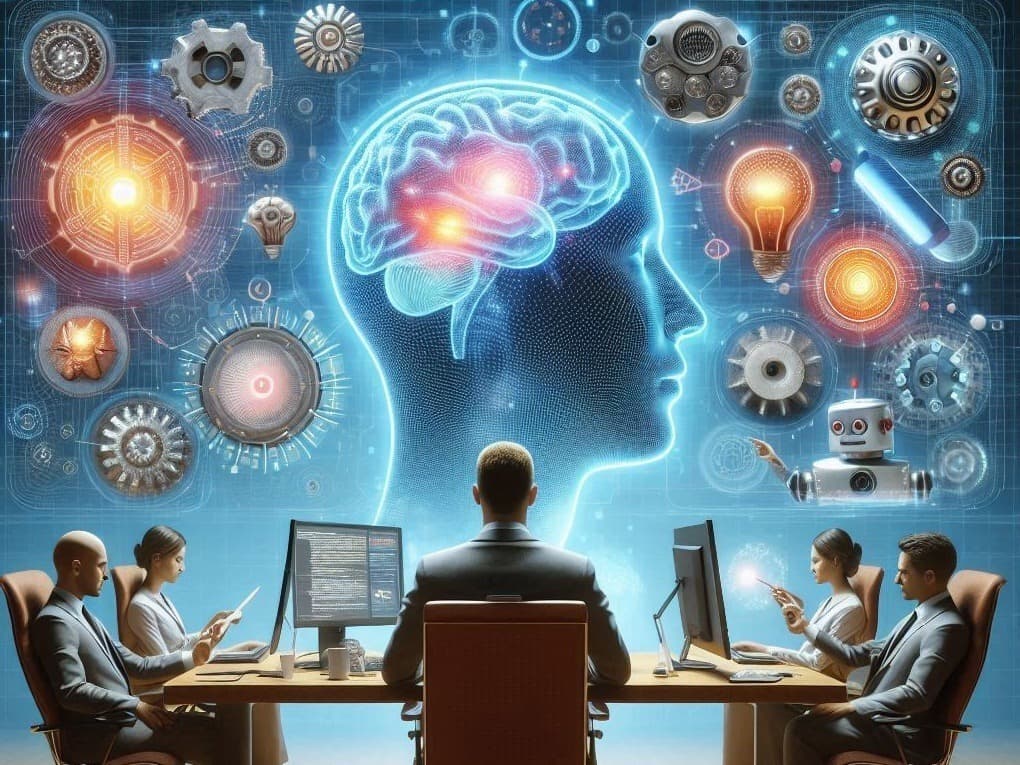
Imagine waking up one morning, and instead of deciding how you want your coffee, an artificial intelligence (AI) system not only brews it for you but also selects the type, sweetness, and temperature based on your mood, weather conditions, and health data. Convenient? Absolutely. But as AI systems become increasingly capable of making these decisions for us, a critical question emerges: Are we gradually surrendering our cognitive abilities to machines?
As AI continues to integrate into daily life, its ability to assist—or even replace—human decision-making presents both opportunities and risks. While AI undoubtedly improves efficiency in tasks ranging from financial management to personalized product recommendations, growing reliance on these systems raises concerns about the potential erosion of human cognitive skills such as judgment, creativity, and critical thinking.
Automation vs. AI
Automation refers to systems that perform predefined, repetitive tasks, such as automatic coffee machines. These machines follow clear instructions set by humans and offer limited decision-making capabilities. However, when AI is involved, it fundamentally changes the equation. AI systems do not just execute tasks—they analyze data, learn from it, and make decisions, often without human intervention.
For example, an AI-powered coffee machine might learn your preferences based on past behavior and health data, autonomously selecting the coffee it deems optimal for you. While this seems like a convenience, the long-term effects on human decision-making processes are more concerning. By consistently outsourcing choices to AI, humans risk becoming passive consumers of machine-generated solutions. Over time, this could diminish our ability to make thoughtful, independent decisions.
The Cognitive Impact of AI Overreliance
Several studies highlight the cognitive risks posed by overreliance on AI. Research in educational contexts has found that AI-driven systems, such as dialogue assistants, can significantly weaken key cognitive skills like critical thinking and decision-making. This is particularly worrying in situations where individuals trust AI output without scrutinizing it. Over time, the habit of trusting AI can lead to cognitive passivity, where people stop engaging deeply with the decisions they are making.
In experiments involving AI-assisted decision-making, participants often default to AI's recommendations, even when their initial judgment might have been more accurate. This shift from active to passive decision-making signals a potential decline in cognitive engagement. The more AI handles critical functions, the less effort humans put into considering alternative options or understanding the nuances of the situation.
The Creativity Conundrum
Beyond judgment, AI’s influence on creativity also deserves attention. Traditionally, creative problem-solving requires individuals to explore various possibilities and think divergently. However, when AI offers pre-determined or "optimized" solutions, it limits the space for creative experimentation. While AI excels at generating practical solutions based on patterns in data, it cannot replicate the spontaneity or emotional depth that fuels human creativity.
Overdependence on AI-generated outputs risks stifling innovation. People may begin to defer to AI suggestions rather than challenge or expand upon them. Over time, this could lead to a reduction in human creativity, as individuals become less inclined to think beyond the constraints imposed by the machine.
The Role of AI in Shaping Modern Work Environments
AI is not only impacting individual decision-making but is also transforming workplaces. In industries like finance, healthcare, and law, AI systems are being integrated to assist professionals in handling large volumes of data, providing predictive insights, and even drafting reports. While this boosts productivity, it raises questions about how much human expertise is still being developed.
In fields where human intuition and judgment have traditionally been key, such as medicine, AI is increasingly making diagnostic decisions. A report by the World Economic Forum suggests that while AI can outperform humans in specific tasks like image recognition, it often lacks the holistic reasoning that medical professionals bring to patient care. As reliance on AI increases, there is concern that medical professionals may lose the ability to make critical judgments without the help of algorithms.
AI-Induced Cognitive Laziness?
There’s also a growing body of research suggesting that AI may induce what some psychologists refer to as "cognitive laziness." The ease of access to AI-powered solutions—whether it's asking virtual assistants for directions, or having algorithms predict our preferences—reduces the necessity for individuals to engage deeply with problems. This may result in diminished learning experiences.
A study published by Computational Brain & Behavior explored how people integrate AI advice with their own judgments in decision-making tasks. It found that participants who received AI assistance tended to defer to the AI even when it conflicted with their own reasoning, especially in high-stakes situations. Over time, such behavior could lead to a decline in independent problem-solving skills, as people become more inclined to trust machine intelligence over their own.
The Erosion of Expertise and Knowledge Retention
The more people rely on AI systems, the more likely they are to lose touch with the expertise they have spent years developing. Take navigation, for example. Before the advent of GPS, individuals would rely on maps and their own spatial reasoning to navigate unfamiliar places. Today, many rely exclusively on GPS systems, which not only guide them but also eliminate the need to remember directions or familiarize themselves with geographic knowledge. This is indicative of a broader trend: humans are outsourcing memory, expertise, and skills to machines.
According to a study from the Massachusetts Institute of Technology (MIT), professionals in various fields are increasingly relying on AI to make decisions that once required years of experience. As these systems grow more accurate, there’s a risk that humans may lose valuable skills that are only honed through direct practice and experience.
AI in Education: Revolution or Risk?
AI is also transforming education, with tools that can tailor learning experiences to individual students. Adaptive learning platforms use algorithms to personalize lessons, assess progress, and even recommend content based on students’ weaknesses. While this has potential benefits for efficiency and engagement, it also presents risks. Will students become passive learners, relying on technology to “think” for them, rather than developing their own critical thinking and problem-solving abilities?
Critics argue that over-dependence on AI in educational contexts could reduce the development of deeper, reflective learning practices. A 2021 study from Smart Learning Environments highlights that while AI can provide students with tailored feedback, there’s a significant reduction in the need for self-directed learning. This could have long-term effects on students’ ability to think independently and engage critically with new information.
AI and the Future of Human Autonomy
As AI systems become more autonomous and integrated into decision-making processes, the concept of human autonomy is challenged. In a world where AI systems guide our health choices, recommend products, and even suggest social connections, are we truly making our own decisions, or are we increasingly guided by algorithms?
The more AI takes over decision-making processes, the more we must question who is truly in control. In highly automated environments, such as self-driving cars or automated financial markets, human input is minimized, leaving algorithms to dictate outcomes. This raises ethical concerns about accountability and the potential for humans to lose their sense of control over their own lives.
The Ethical Dilemmas of AI Dependency
AI raises many ethical questions, particularly when it comes to accountability. If an AI system makes a faulty decision—such as recommending an ineffective treatment plan in healthcare or making biased hiring recommendations—who is held responsible? The designers of the AI? The users who trusted the system?
Additionally, there’s the issue of bias in AI. Machine learning systems are only as good as the data they’re trained on, and biased data can lead to biased outcomes. Without critical oversight from humans, these biases can perpetuate and even amplify societal inequalities. For instance, if an AI system trained on biased hiring data continues to recommend candidates based on that bias, it may result in discriminatory hiring practices.
Mitigating Cognitive Decline
Ethical concerns arise when AI is allowed to make decisions with significant consequences, such as in hiring, financial planning, or healthcare. These systems, while efficient, can perpetuate biases present in their training data, leading to potentially unfair outcomes. Worse, humans may stop questioning these decisions due to an overreliance on AI’s perceived objectivity.
To mitigate these risks, it’s important to foster critical engagement with AI systems. Providing users with transparent, simple explanations of AI-generated decisions can help reduce overreliance and promote better decision-making. Designing AI systems that encourage users to reflect on and challenge the AI's suggestions can help preserve essential cognitive skills like judgment and creativity.
The Need for a Balanced Approach
The widespread integration of AI into our daily lives brings tremendous potential, but it also demands caution. While AI can serve as a powerful tool, improving efficiency and assisting with complex tasks, it is crucial that humans remain actively engaged in the decision-making process. By fostering a culture of critical engagement with AI—one where users question outputs, remain aware of AI's limitations, and continue to cultivate their own skills—we can ensure that technology serves to enhance, rather than diminish, human intelligence.
To safeguard our cognitive abilities, creativity, and autonomy in an AI-driven world, the focus should be on using AI as a complement to human thought, not a substitute. Through thoughtful design, education, and ethical consideration, we can maintain the delicate balance between human judgment and machine efficiency.
The Weekly Breeze
Keep pace with Busan's deep narratives.
Delivered every Monday morning.