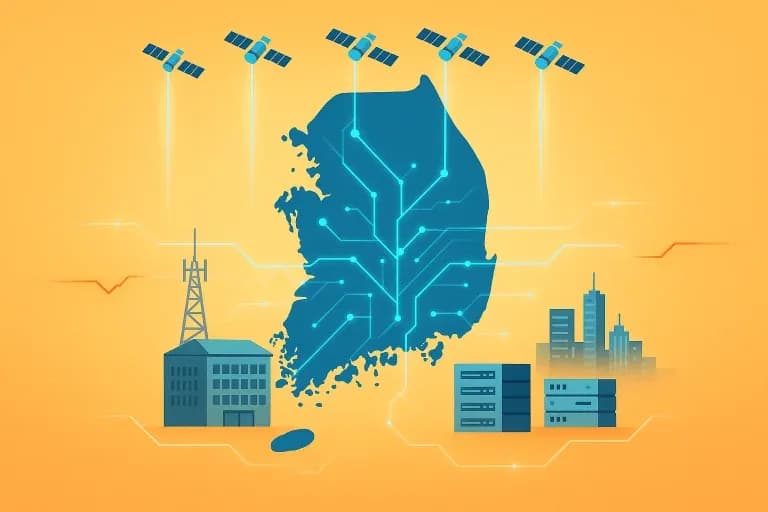
How Stablecoins Could Transform South Korea’s Digital Economy
KRW-pegged stablecoins could soon reward Koreans for walking, learning, and creating — if lawmakers and the Bank of Korea align on regulation.



Imagine waking up, heading out for your morning walk, and returning home to find your digital wallet topped up — not with loyalty points or app tokens, but with actual Korean won. No banks, no paperwork, no delays. Just a few thousand steps, verified by your phone’s motion sensors, rewarded in real-time through an app.
This concept, once confined to futuristic visions, is becoming increasingly plausible. It represents the intersection of health technology, digital currency, and behavioral economics, all powered by stablecoins — a new generation of blockchain-based assets designed to maintain price stability. While stablecoins like USDT and USDC have already revolutionized the way cryptocurrency users store and transfer value, South Korea is now exploring a more localized vision: a KRW-pegged stablecoin that could transform everyday activities — from fitness tracking to content creation — into opportunities for real-time financial reward.
As the conversation around digital payments grows, South Korea is positioning itself to be at the forefront of a new digital economy. With the rise of the “Earn-to-Act” model, individuals could be rewarded for simple actions — walking, learning, or creating — with money that holds tangible value. This idea is no longer a distant possibility; it’s one that is being actively explored by developers, fintech companies, and even legislators, who are laying the groundwork for a future where stablecoins become an everyday tool for personal and professional engagement.
In South Korea, where digital currency and fintech innovation have already gained momentum, the emergence of a KRW-pegged stablecoin might just provide the key to unlocking a new form of reward-based economic participation. As regulatory frameworks begin to take shape, the country is on the verge of potentially becoming one of the first to translate this concept from theory into practice, bringing programmable money into the hands of everyday people.
Could KRW stablecoins be the missing link between real-world action and real-world reward?
How a Stablecoin Would Work in Real Life
To grasp how a stablecoin could seamlessly reward our daily actions — such as walking, learning, or creating — we need to look at the mechanics beneath the surface. At first glance, it may seem implausible that a person’s step count or a completed lesson module could directly result in a financial transaction. But in reality, the building blocks of this system already exist — in fitness trackers, mobile wallets, smart contracts, and blockchain networks. What’s emerging is the possibility of linking them together in a meaningful, regulated way.
Let’s imagine a health app that tracks a user’s steps through motion sensors in their phone or smartwatch. Once the user crosses a certain threshold — say, 10,000 steps — the app verifies this data and automatically triggers a smart contract, a piece of code programmed to release a reward. That reward, in this case, would be a small amount of KRW-backed stablecoin, transferred directly to the user’s mobile wallet. Unlike reward points or in-game tokens, this would be actual value — money that could be spent, saved, or exchanged.
This same logic could apply to dozens of digital behaviors. When a user writes a helpful comment in a discussion forum, completes a language-learning session, uploads a verified photo for a citizen science project, or contributes a well-received post on a knowledge platform, the system could issue automatic compensation. The entire process would be instantaneous, cost-effective, and verifiable, using blockchain’s transparent ledger and programmable logic. Unlike traditional reward systems that rely on centralized databases, opaque accounting, and delayed payouts, a stablecoin-based system would settle rewards in real time.
Crucially, the user experience wouldn’t need to change dramatically. In fact, that’s the point. On the surface, it might still look like any familiar app — be it Toss, Kakao Pay, or Naver’s blog platform. But under the hood, every reward, payout, and transaction could be processed by a stablecoin engine, replacing outdated loyalty systems with financial tools that speak the language of digital cash. It would feel natural, but it would also be transformative.
What makes this all feasible is not just the technology, but its growing accessibility. APIs from health apps, wallet integrations, and smart contract libraries already exist. The final piece of the puzzle — legal permission to issue and circulate a KRW-backed stablecoin — is on the legislative table. If passed, it could allow for a new generation of services that merge everyday actions with everyday value, all in the currency people actually use.
The implications are profound. By reducing friction, increasing trust, and enabling new types of interaction, stablecoins could become the invisible infrastructure powering behavior-based economics. And unlike cryptocurrencies that fluctuate in value and attract speculation, a KRW-pegged stablecoin would serve not as an asset, but as a conduit — stable, liquid, and useful.
Use Cases in Action
The idea of stablecoins rewarding everyday actions becomes most tangible when we see how it could be woven into the digital services we already use. Take, for example, a popular fitness app — one that tracks steps, records workouts, and nudges users toward healthier habits. Today, many such apps offer badges, rankings, or point-based reward systems. But these systems are often siloed, limited in use, and lack any tangible value beyond the app’s own ecosystem. Introduce a KRW-pegged stablecoin into that loop, and the picture changes dramatically. Now, instead of earning virtual kudos, users could earn programmable Korean won — money they could redeem, spend, or send — directly linked to the physical effort they make.
This model of digital effort producing financial reward isn’t limited to fitness. Consider an online learning platform that tracks user progress through lessons, assessments, and daily goals. The completion of a module could trigger a small stablecoin payout — not as a gimmick, but as a real incentive, grounded in national currency and instantly accessible. Learning becomes not only self-improvement but also micro-income. In a similar vein, creators on writing or video platforms could receive real-time, value-pegged compensation for their output. Engagement metrics such as reads, likes, or comments would no longer feed into vague ad-based revenue systems but would instead tie directly to programmable payments, governed by transparent smart contracts and processed through stablecoin transactions.
Even knowledge-sharing platforms — forums, Q&A communities, crowdsourced innovation spaces — stand to benefit. In these contexts, reputation and contribution quality are key currencies, but they often go uncompensated. A stablecoin mechanism could change that by tying peer validation to financial reward. A well-received answer or edit could result in automatic payment, verified and executed by the community or a DAO-based logic layer, all without a centralized authority issuing manual payouts.
What unites these examples is not just the use of blockchain, but the fusion of real-world effort, platform activity, and stable, spendable compensation. Stablecoins make possible a new kind of economic feedback loop — one where contributions are measured, valued, and paid for in real time using tokens that hold their worth. And because they are tied to a fiat currency like the Korean won, these tokens are not speculative assets, but practical money. This makes them appropriate not just for tech-savvy crypto users, but for everyday citizens engaging with familiar apps in familiar ways.
This emerging utility layer — sitting quietly behind existing interfaces — has the potential to transform engagement across sectors. It brings the promise of Web3 into direct contact with real-world motivation, blurring the line between digital interaction and financial reward. Whether the activity is physical, intellectual, creative, or communal, the reward mechanism can now speak the same monetary language — KRW — but do so in a faster, more flexible, and more transparent way.
As the potential expands, so too do the questions of legitimacy and legal infrastructure.
What’s Happening in South Korea?
For all its technical feasibility and creative potential, the future of stablecoin-based services in South Korea hinges on a more fundamental question: will the law allow it?
Until recently, the answer was ambiguous at best. While global stablecoins like USDT and USDC were in wide use on crypto exchanges, the Korean won had no legally recognized digital equivalent on the blockchain. Any attempt to create one faced significant barriers, from capital controls to financial regulation. However, a turning point may be arriving. In 2024 and 2025, multiple legislative proposals have been introduced by South Korea’s National Assembly, spearheaded by lawmakers in the Democratic Party, that could formalize the structure under which KRW-pegged stablecoins may exist.
At the heart of these efforts is the Digital Asset Basic Act, a landmark bill that outlines a framework for stablecoin issuance, management, and oversight. Under the proposed law, only regulated financial institutions — such as banks or licensed fintech firms — would be allowed to issue stablecoins pegged to the Korean won. They would be required to maintain 100% reserves in fiat currency or highly liquid, low-risk assets such as short-term government bonds. Importantly, issuers would also face mandatory audit requirements, internal risk management obligations, and regular reporting to the Financial Services Commission (FSC).
The bill also opens the door to a central body — a proposed Digital Asset Committee — that would oversee stablecoin policy, coordinate between agencies, and evaluate new market entrants. In effect, the law seeks to translate monetary trust into programmable infrastructure, offering both the technological freedom of crypto and the regulatory stability of traditional finance.
Meanwhile, a second legislative proposal, tentatively titled the Digital Payment Instruments Act, takes a more cautious view. Led by lawmakers with ties to the Ministry of Strategy and Finance and the Bank of Korea (BoK), it emphasizes systemic risk controls. This version includes provisions for emergency powers, allowing authorities to temporarily restrict the issuance or circulation of stablecoins during market stress. It also strengthens the role of the BoK, giving it the authority to monitor and intervene in stablecoin operations if deemed necessary for national monetary stability.
What both bills make clear is that stablecoins will not be left to the free market in Korea. They will be highly structured, tightly supervised, and likely limited in who can issue them and how they can be used. Yet within those boundaries, they offer a way to bring real-world utility to digital assets, and a legal path for apps, platforms, and users to begin transacting in programmable Korean won.
Though neither bill has passed yet, momentum is building. Policy think tanks, major financial institutions, and blockchain startups are already preparing for a regulated KRW stablecoin environment. And with the current administration taking a more progressive stance on digital assets, many observers believe a version of this legislation could be enacted within the next 12 months.
If that happens, South Korea would become one of the few countries in the world to explicitly allow fiat-pegged stablecoins under a national legal framework, backed not just by code, but by law. This, in turn, would lay the groundwork for the kinds of everyday use cases explored earlier — not as theoretical innovations, but as sanctioned financial products embedded in digital life.
Of course, the central bank remains cautious. And in the next section, we’ll explore exactly why the Bank of Korea sees KRW stablecoins as both an opportunity and a potential threat — especially in light of its own ambitions for a central bank digital currency.
Central Bank Concerns – CBDC vs. Private Stablecoins
As lawmakers consider opening the door to KRW-pegged stablecoins, one institution has been watching with particular intensity: the Bank of Korea (BoK). As South Korea’s central monetary authority, the BoK is tasked with maintaining price stability, overseeing the nation’s payment systems, and — increasingly — preparing for a future in which physical cash may play a diminishing role. In that context, the bank is developing its own digital currency: the CBDC, or central bank digital currency. And for BoK officials, the rise of privately issued stablecoins presents both a technological parallel and a strategic dilemma.
At a glance, stablecoins and CBDCs share certain similarities. Both are digitized representations of fiat currency, designed to be used in everyday transactions. Both promise real-time settlement, programmable features, and integration with digital platforms. But the differences are equally stark. While a CBDC is a direct liability of the central bank — backed by sovereign trust and guaranteed by law — a stablecoin is typically issued by a private company, even if it's fully collateralized and regulated. In the eyes of monetary authorities, this distinction matters.
The BoK’s concern is that if private stablecoins become widespread — especially in closed-loop environments like apps, platforms, or communities — they could begin to fragment the money supply. When people start spending KRW-pegged tokens issued by a tech company rather than using traditional bank accounts or government-issued cash, the central bank loses a degree of control over how money flows through the economy. In extreme cases, this could hinder the BoK’s ability to conduct monetary policy, manage interest rates, or respond quickly to crises.
There is also a worry that privately issued stablecoins could become vehicles for capital flight, illicit finance, or unchecked financial innovation. Even with regulatory safeguards in place, the combination of decentralization and programmable money raises difficult questions about oversight and enforcement. What happens if a major platform issues a KRW stablecoin and becomes functionally larger than a retail bank? What if its internal economy grows faster than the real economy around it?
At the same time, the BoK is not blind to the advantages that stablecoins offer. They could significantly reduce transaction costs, foster innovation in digital payments, and enhance financial inclusion — especially for young people, freelancers, or underbanked populations who already live much of their lives inside digital ecosystems. Some at the BoK even acknowledge that stablecoins could serve as a bridge technology, preparing the public and the infrastructure for the eventual rollout of a government-backed CBDC.
This complex balance — between innovation and control, openness and oversight — lies at the heart of the current debate. In internal discussions and public statements, the BoK has signaled a willingness to explore “coexistence frameworks,” in which private stablecoins and CBDCs operate side by side, under clearly delineated rules. Such frameworks would likely include strict licensing, issuance caps, interoperability standards, and emergency shutdown protocols.
Still, the tension remains. The question is not just whether KRW stablecoins will be legal, but whether their growth will be seen as complementing or competing with the central bank’s mission. If the BoK views these instruments as a threat to monetary sovereignty, its influence could shape how quickly — or cautiously — South Korea’s programmable money economy emerges.
Real-World Precedents – Is This Happening Elsewhere?
Though South Korea’s legislative and technical exploration of KRW-based stablecoins is still in motion, the global stage already offers a preview of what happens when programmable, fiat-pegged money enters real-world systems. Across continents and industries, stablecoins have begun moving beyond the speculative fringes of cryptocurrency into something more utilitarian, embedded in platforms, payment networks, and even personal routines.
One of the clearest glimpses into this future came with the launch of STEPN, a blockchain-powered fitness app that pays users to walk, jog, or run. Although STEPN does not use a traditional fiat-pegged stablecoin — its reward tokens are volatile and crypto-native — the model it introduced captured the imagination of the public: exercising not for badges or rankings, but for money. Despite volatility issues and sustainability concerns, the app attracted millions of users at its peak, demonstrating a powerful behavioral insight: people respond to real-time, financial incentives embedded in daily routines. Had STEPN’s rewards been paid in a stable, government-pegged token rather than a speculative asset, the model might have endured longer — and looked far more like the KRW stablecoin concept now under discussion in Korea.
Elsewhere, stablecoins are already transforming payments at the infrastructure level. JPMorgan Chase quietly rolled out JPM Coin, a dollar-pegged digital token used internally to settle high-volume transactions between institutional clients. Unlike public cryptocurrencies, JPM Coin lives inside a permissioned network, operated by the bank itself. But its function — instantaneous, verifiable value transfer pegged to fiat — reflects the same logic that consumer-facing stablecoin applications aspire to achieve. In late 2023, JPMorgan reported over $1 billion settled daily using this token, suggesting that even conservative institutions are beginning to trust programmable, fiat-linked money.
Other efforts are far more public. Circle’s USDC, Tether’s USDT, and newer entrants like PayPal’s PYUSD have entered the mainstream not only as trading instruments but as tools for remittances, donations, subscriptions, and peer-to-peer payments. Developers on platforms like Solana, Ethereum, and Polygon are building ecosystems where stablecoins serve as the primary medium of exchange — from tipping creators to powering DAO payrolls.
Importantly, a new wave of applications has focused on microtransactions and creator monetization. Platforms such as Stacker News, built atop the Bitcoin Lightning Network, allow users to earn tiny amounts of cryptocurrency for contributions to forums, similar to how Reddit or Quora might function with a monetary overlay. Although these examples often use Bitcoin or volatile tokens, the underlying mechanics — reputation, evaluation, and automated reward — are directly applicable to a stablecoin environment.
In emerging markets, stablecoins are playing a different but equally transformative role: protecting savings against inflation, facilitating cross-border commerce, and replacing dollar cash in digital form. In countries such as Argentina, Nigeria, and the Philippines, where local currencies are volatile and banking infrastructure uneven, stablecoins backed by the U.S. dollar have become de facto tools for economic survival. They function as portable, borderless, programmable savings, and their adoption is often grassroots-led, driven by users rather than institutions.
For South Korea, the takeaway is clear. Stablecoins are not just a crypto trend — they are already embedding themselves in the fabric of global payments, commerce, and platform engagement. What remains is not to prove the concept, but to shape the context. Legal frameworks, monetary strategy, and platform partnerships will determine whether South Korea’s stablecoin efforts evolve as public infrastructure, private innovation, or both.
From Pilot Projects to Payment Paradigm
What was once a speculative idea — that daily actions could be rewarded in real-time with digital currency — is now approaching reality. The convergence of blockchain infrastructure, mobile applications, behavioral economics, and financial regulation is producing a new kind of monetary experience: programmable, predictable, and deeply embedded in daily life.
For South Korea, the potential of KRW-backed stablecoins lies not in mimicking the global crypto economy, but in creating a native digital financial layer that aligns with its social structures, platform economy, and policy goals. The technology exists. The legislative groundwork is in motion. Users are already accustomed to app-based payments, gamified experiences, and tokenized rewards. All that remains is the bridge — a stable, regulated digital won that can link digital behavior to financial outcomes.
Of course, challenges persist. The tension between innovation and regulation, between private issuance and central bank control, will not dissolve overnight. There will be friction — over who gets to issue value, who sets the rules, and how the line between money and incentives is drawn. But those debates are a sign of seriousness. They reflect a country preparing not just to experiment with digital finance, but to govern it.
What begins as a reward for a walk, a post, or a lesson completed may seem trivial at first. But in aggregate, these transactions form a behavioral economy — one in which contribution, learning, health, and creativity are not merely personal pursuits, but measurable, compensable forms of value. A KRW stablecoin, if realized, could become the quiet enabler of that shift — not as a revolutionary currency, but as a tool for redesigning economic participation.
South Korea now stands on the cusp of a globally significant experiment: to make stable money not just programmable, but personal. The road from pilot projects to paradigm shift is still long, but increasingly, it’s paved with real code, real policy, and perhaps soon, real Korean won.
The Weekly Breeze
Keep pace with Busan's deep narratives.
Delivered every Monday morning.