How Media Misleads on Korea’s Rising Rice Prices
The rise in rice prices is being falsely attributed to government policies, overlooking the deeper issues of market inefficiencies and supply chain weaknesses.

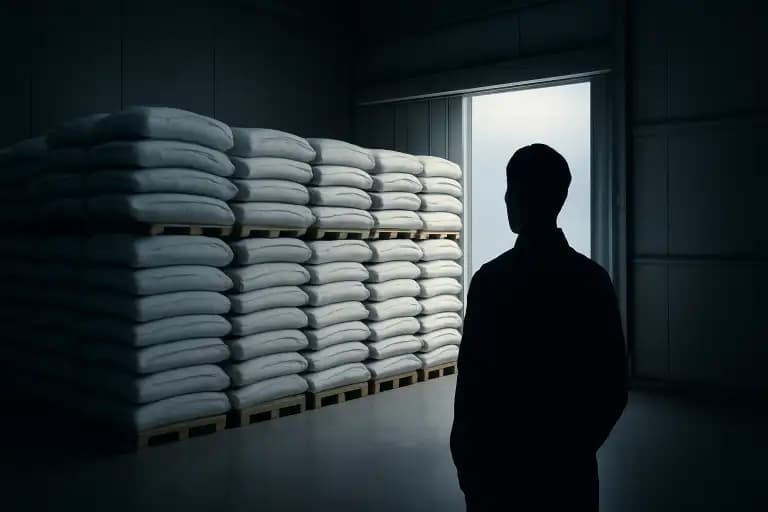
Journalists who craft misleading narratives about agricultural policies in their offices are ignoring a harsher reality: Without the protection of farmers and sustainable food systems, the future of food security in a changing climate is at risk.
Recent media coverage, including reports from some major newspapers, has presented the recent surge in rice prices in South Korea as the result of excessive government intervention. Headlines have emphasized the idea that large-scale government purchases, along with the proposed Grain Management Act, are responsible for the instability in the rice market. However, this framing oversimplifies the issue and risks misrepresenting both the underlying policy context and the actual market forces at play.
| Framing | Reality |
|---|---|
| Gov’t distorted the market by buying too much rice | Gov’t bought 200,000 tons to stabilize harvest; surplus was only 56,000 tons; common global practice. |
| The Grain Management Act caused instability | Law was vetoed in 2023, never enforced; applies only if prices drop—current prices are rising. |
| Farmers are profiting from higher prices | Most farmers sold during harvest at lower prices; gains now go to storage firms, not producers. |
| Public rice auctions will protect consumers | Rice is a minor part of food costs; auctions risk hurting new-season prices and farmer income. |
| Gov’t must act fast to stop price chaos | Root issues are structural: low stock, poor storage, centralized supply—not regulation. |
Critics have pointed to the Grain Management Act, a proposed law designed to ensure government intervention when prices fall below a certain threshold, as the primary culprit. Yet, this law has not even been enacted—after passing through the National Assembly in 2023, it was vetoed by the president. Moreover, the recent increase in rice prices, which has caused widespread concern, occurred long after last year’s harvest and is happening independently of any government-mandated intervention.
Instead of focusing on unimplemented laws, the real issue lies in the structural inefficiencies of South Korea's agricultural market. Seasonal supply imbalances, concentrated distribution channels, and limited storage infrastructure are the true drivers of the price fluctuations. These systemic challenges are often overlooked in political debates that seek simple scapegoats.
Government purchases of surplus rice during the 2024 harvest season are often cited as a primary cause of today’s elevated prices. Critics argue that by removing 200,000 tons of rice from circulation, authorities distorted the market and triggered artificial scarcity. This narrative, while superficially compelling, overlooks both the scale and context of the intervention. The surplus at the time amounted to just 56,000 tons, and the government’s action was not a knee-jerk political gesture, but a precautionary measure aimed at preventing a repeat of the steep price drops seen in 2022 and 2023.
Certain media outlets have oversimplified the rise in rice prices by blaming government intervention and an unimplemented law. This misses the real issues: weak infrastructure, seasonal imbalances, and market concentration. The focus should be on addressing these structural problems to ensure food security and support farmers.
Government Intervention and the Myth of Market Distortion
In fact, such purchases are not unusual, nor uniquely Korean. Japan, the United States, and the European Union all employ similar mechanisms to stabilize prices for strategic agricultural goods—especially staple grains—through either public procurement, price guarantees, or reserve stockpiling. In Korea’s case, the purchase was discretionary and temporary, not mandated by law, and primarily intended to convert surplus stock into non-food uses such as livestock feed and aid.
Portraying this as reckless interference misrepresents the function of public grain policy. These systems exist precisely because food markets do not operate like textbook commodities. They are subject to seasonal volatility, climate risk, and logistical bottlenecks. Left entirely to market forces, such conditions could result in both overproduction and sharp underproduction—undermining the very food security that governments are expected to safeguard.
The notion that any form of government involvement amounts to “market distortion” assumes a theoretical market equilibrium that rarely, if ever, exists in agricultural reality. It also ignores the fact that without such stabilization measures, the risk falls squarely on producers, who already operate in a low-margin, high-risk environment. In this light, the government’s actions appear not as disruptive, but as protective—of both market continuity and farming livelihoods.
A recurring theme in recent commentary is the claim that the proposed Grain Management Act has contributed to price instability by signaling excessive state intervention. The logic runs that the very existence of the bill—passed by the National Assembly in 2023 but ultimately vetoed by President Yoon Suk Yeol—has disrupted market expectations and encouraged speculative hoarding. Yet this argument does not hold up under scrutiny.
The Grain Management Act Was Never Enforced
First and foremost, the law has not been implemented. It remains politically stalled and legally inert. No rice has been purchased under its provisions, and its intended purpose—to serve as a price floor mechanism when prices fall below a certain threshold—has not been triggered. Ironically, the current problem is not falling prices, but rising ones. To argue that a law designed to protect farmers from losses is somehow responsible for price inflation is not only logically flawed, but borders on deliberate misrepresentation.
Moreover, even if the Act were in place, it would only be activated under strict conditions: a sustained price decline of more than 5% below the average of the previous five years, based on harvest-season data. It does not mandate indiscriminate government purchases, nor does it empower the state to control prices in rising markets. Rather, it offers a safety net—a structural backstop—to ensure that farmers are not forced to sell their harvest at unsustainable losses in oversupply conditions.
What this framing reveals is less about the law itself and more about an ideological discomfort with any state role in agricultural markets. By invoking the specter of the Grain Management Act in debates about current price levels, critics conflate potential policy with actual practice, creating a phantom threat that conveniently shifts attention away from structural flaws in the rice distribution system.
Rising Prices, But Not for Farmers
One of the most persistent misconceptions in recent media coverage is the assumption that rising rice prices naturally benefit farmers. On the surface, this appears intuitive: if prices go up, so should farm income. In practice, however, this relationship is far less direct—and in the current case, largely inaccurate.
Most farmers in South Korea sell their rice during the harvest season, typically between October and December. During that period in 2024, the average producer price was between 43,000 and 46,000 won per 20 kilograms, significantly lower than the 50,420 won recorded in June 2025. By the time the market began to climb in earnest, the vast majority of producers had already sold their stock. The beneficiaries of the price rise are not the farmers who cultivated the rice, but rather storage operators, wholesalers, and large-scale distributors who held inventory into the off-season.
This pattern is not new. Structural asymmetries in Korea’s rice supply chain have long enabled intermediaries to capture a disproportionate share of price gains. According to the Korea Rural Economic Institute, private-sector rice inventories dropped by 23 percent year-on-year as of April, indicating that many smaller operators had exhausted their stocks—leaving the market increasingly concentrated in the hands of a few large-scale Rice Processing Complexes (RPCs). These entities now enjoy greater pricing power and profit margins as retail prices continue to rise.
Meanwhile, farmers remain vulnerable to the same set of pressures they’ve faced for years: rising input costs, aging rural labor, and stagnant or declining real incomes. In 2023, average net income per 10a (roughly 1,000 m²) of rice paddies fell to its lowest level since 2016, highlighting the disconnect between market prices and actual livelihoods. A temporary bump in wholesale value does little to offset the broader trend of declining farm profitability.
The notion that farmers are "winning" from the current market conditions is not only inaccurate—it serves to justify policy decisions that may further harm them. Calls to intervene in the market to suppress prices, under the assumption that producers are profiting, ignore the reality that those who grow the rice are often the last to benefit from its sale.
Structural Realities Behind the Price Surge
While policy narratives have focused heavily on government actions, the actual drivers behind Korea’s recent rice price increase are rooted in structural characteristics of the agricultural market—many of them longstanding and well-documented. Chief among these is the seasonal cycle of supply and demand. Between June and September, Korea enters what is commonly known as the off-season, a period when stocks from the previous harvest begin to run low, and new crops have yet to arrive. During this window, upward pressure on prices is common and historically consistent.
This year, however, several additional forces have amplified that seasonal trend. As of April, private-sector rice inventories had fallen by 23 percent year-on-year, according to the Korea Rural Economic Institute. This was not due to government hoarding or artificial scarcity, but rather the normal drawdown of commercial stocks combined with weak purchasing power among smaller milling firms. These operators, unable to secure large volumes of rice in advance, have increasingly relied on purchasing from larger Rice Processing Complexes (RPCs), thereby concentrating demand and pricing power.
Meanwhile, production costs have continued to climb. Input prices for fertilizer, fuel, and labor remain elevated due to global supply disruptions and a tightening rural workforce. At the same time, logistical costs—storage, transportation, packaging—have grown more volatile. These pressures are particularly difficult to absorb in a supply chain where farmers have little control over end-market pricing, and where processing and distribution are increasingly centralized.
The result is a system that responds to short-term fluctuations with exaggerated pricing effects. Small supply shifts or demand bottlenecks can translate into noticeable price movements at the consumer level—not because of deliberate manipulation, but because of infrastructural fragility and lack of resilience. This context is often ignored in media portrayals that seek singular culprits for complex outcomes.
To meaningfully stabilize rice prices in the long term, Korea will need to move beyond reactive interventions. What’s required is a more coordinated system of reserve management, diversified storage capacity, and transparent pricing mechanisms—changes that cannot be accomplished through scapegoating or headline-driven policy cycles.
Rice Is Not Just a Market Good—It’s a Public Asset
At the heart of this debate lies a more fundamental question: should rice be treated as just another commodity subject to the logic of price signals and market efficiency, or as a public good that warrants strategic management and protection? In South Korea, the answer has long leaned toward the latter— and with good reason.
Rice is the country’s only staple grain with a self-sufficiency rate above 90 percent. In contrast, Korea imports over 95 percent of its wheat and corn, making rice the sole pillar of domestic food sovereignty. During times of global supply chain instability—as seen during the COVID-19 pandemic, the Ukraine war, or India’s rice export restrictions in 2023—this self-reliance has served as a crucial buffer against external shocks.
To allow the domestic rice industry to erode under the banner of market orthodoxy would be to ignore the lessons of recent history. Once production capacity is lost, it is difficult and expensive to recover. Farmland is converted; young people exit the sector; and infrastructure built over generations falls into disuse. Protecting rice farmers, then, is not merely a question of economic fairness—it is a matter of national resilience.
Critics of public intervention often frame it as distortion, as if free markets in agriculture were not already riddled with volatility, consolidation, and asymmetry. But food systems are not neutral; they reflect values. Choosing not to intervene is just as much a political act as choosing to support producers. And in the case of rice, inaction has consequences—not just for farmers, but for consumers, national policy, and future generations.
It is precisely because rice carries this strategic weight that mechanisms like public stockpiling, emergency purchasing, and baseline income support exist. These are not artifacts of protectionism, but tools of preparedness. In an era where climate risk, war, and trade restrictions are no longer distant possibilities but recurring threats, food sovereignty is not a luxury—it is a necessity.
Blaming the rise in rice prices on government intervention oversimplifies the issue, ignoring the real challenges of a fragile supply chain, aging farmers, and centralized distribution. The price increase is a result of seasonal pressures and weak infrastructure, not runaway regulation.
Addressing these issues requires long-term investment and policies focused on food security, not short-term price suppression. Rice is a strategic asset, and the debate should focus on how the government intervenes to protect both farmers and consumers, especially in times of global uncertainty.
The Weekly Breeze
Keep pace with Busan's deep narratives.
Delivered every Monday morning.