Time for Korea to Embrace Vertical Farming on Agricultural Land
As the world's population grows, the issue of food security becomes more pressing. With limited arable land available for farming, new methods of food production are necessary to ensure that people have access to fresh and healthy food. One promising solution is vertical farming, which involves growing crops in stacked layers. However, many countries, including Korea, have yet to fully embrace this innovative method of food production. Recent various studies have explored the feasibility of ver


As the world's population grows, the issue of food security becomes more pressing. With limited arable land available for farming, new methods of food production are necessary to ensure that people have access to fresh and healthy food. One promising solution is vertical farming, which involves growing crops in stacked layers. However, many countries, including Korea, have yet to fully embrace this innovative method of food production.
Recent various studies have explored the feasibility of vertical farms on agricultural land. One such study suggests that this could be a viable option for urban food production. However, in Korea, vertical farms are not currently recognized as agricultural facilities, which has hindered their development. The country's regulations only allow certain structures, such as greenhouses, mushroom growers, plastic houses, and livestock farms, to be built on agricultural land.
This is a missed opportunity for Korea, as vertical farming has the potential to increase food production, promote sustainable agriculture, and provide job opportunities. Moreover, it can help address the issue of rural depopulation. By providing job opportunities in the field of urban agriculture, young people can be incentivized to stay in rural areas and contribute to the revitalization of local communities.
In contrast, Japan has embraced vertical farming on agricultural land. The Japanese government introduced a plan to promote the use of unused urban spaces for agriculture, including vertical farming, in 2013. The government provided financial support for the construction of vertical farms, and several companies have since established successful vertical farms. For example, Mirai Co. in Miyagi Prefecture produces over 10,000 heads of lettuce per day using LED lights and hydroponic technology. Another successful vertical farm is Spread Co. in Kyoto, which produces 30,000 heads of lettuce per day using robots and artificial intelligence.
By allowing vertical farms to be built on agricultural land, Korea can benefit from this innovative solution to the global food security challenge. The integration of vertical farms on agricultural land has the potential to revolutionize the agriculture industry and contribute to the sustainable development of the country. It is time for Korea to explore the feasibility of this innovative solution and adjust its regulations to allow for the development of vertical farming on agricultural land. By doing so, Korea can take a step towards preparing for a potential food crisis and promoting sustainable agriculture.
The future of agriculture lies in innovative solutions such as vertical farming. As we face the challenge of feeding a growing population, it is important for countries to embrace these solutions and adjust their regulations accordingly. By doing so, we can ensure that everyone has access to fresh and healthy food and promote sustainable development for our planet.
Continue this reporting
Reporting on the same issue
Related coverage selected from the article's desk, topics and newsroom relationships.
 NewsSep 30, 2026
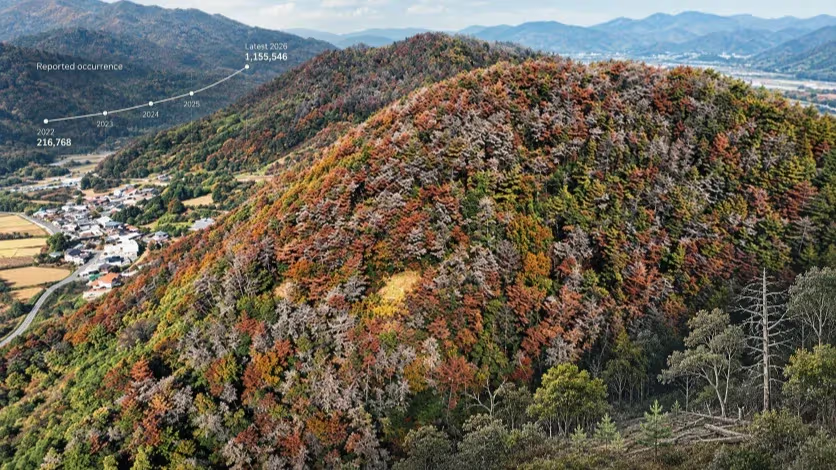
Gyeongnam’s Pine-Wilt Surge Is Forcing a Shift From Tree Removal to Forest Management
Gyeongnam’s pine-wilt outbreak has grown beyond a tree-removal problem. As re...
 NewsSep 22, 2026
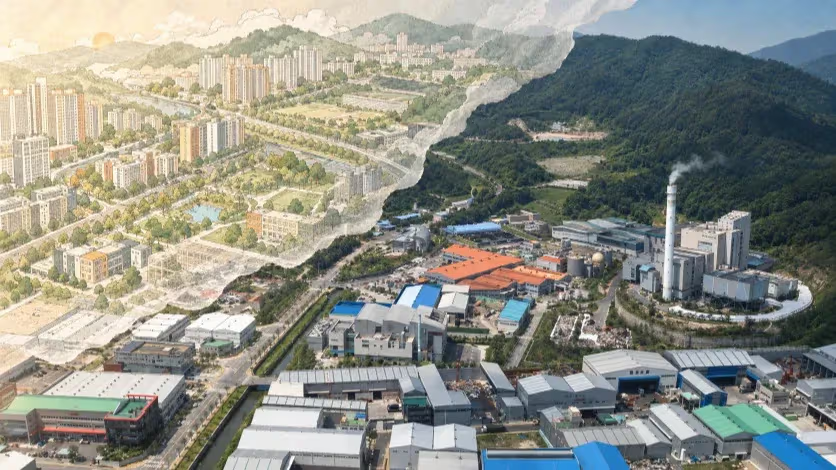
Busan Is Growing Westward as Its Waste Infrastructure Stays Put
Busan’s proposed Saenggok incinerator has moved from 800 to 500 tons a day. T...
 NewsAug 17, 2026
What South Korea’s 87% Drop in Aquaculture Heat Losses Really Measures
South Korea reported an 87 percent drop in aquaculture losses from high water...
More from the author
More from this byline
Stay with the same line of reporting through more work from this byline.
 NewsOct 9, 2026
Why “Busan Is Good” Falls Short as a City Brand
 NewsSep 18, 2026
The Other AI Race Is for the Freedom to Change Course
Reader Signal
Community readWhat did this report leave you with?
Choose the signal that best reflects your reading. Select it again to remove it.
One response per article
No response selected
A moderated conversation about the reporting.
One-level replies and newsroom moderation keep the conversation anchored to this article.
Discussion Status
Open
Please sign in to join the discussion.
Newsletter
Weekly reporting and context from Busan and Korea.