South Korea's Food Security and Agricultural Challenges
South Korea faces pressing challenges in food security and agricultural productivity, characterized by declining self-sufficiency rates and an aging farming population. These issues have raised concerns about the country's ability to provide for its growing population in the coming decades. In response, South Korea is turning to innovative technologies such as smart farming to revolutionize its agricultural sector. By examining successful cases in other countries and tailoring these strategies t


South Korea faces pressing challenges in food security and agricultural productivity, characterized by declining self-sufficiency rates and an aging farming population. These issues have raised concerns about the country's ability to provide for its growing population in the coming decades. In response, South Korea is turning to innovative technologies such as smart farming to revolutionize its agricultural sector. By examining successful cases in other countries and tailoring these strategies to its unique circumstances, South Korea aims to not only enhance its food self-sufficiency rates but also ensure the long-term sustainability of its agricultural industry, promoting economic growth and fostering rural revitalization.
The importance of addressing these challenges cannot be understated, as food security plays a crucial role in maintaining social stability, public health, and overall well-being. Additionally, agriculture remains a vital component of South Korea's economy and rural livelihoods, warranting the need for innovative solutions to overcome its current limitations. By investing in cutting-edge technology and learning from global successes, South Korea can improve its agricultural productivity, contribute to environmental sustainability, and create a more resilient food system capable of meeting the demands of the 21st century.
Declining Food Self-Sufficiency Rates and Challenges
South Korea's food self-sufficiency rates have experienced a dramatic decline over the past few decades. In the 1980s, the overall food self-sufficiency rate was around 70%, but by 2020, it had plummeted to 45.8%. The grain self-sufficiency rate experienced a similar decline, falling from 50% to 20.2% during the same period. A combination of factors, including a decreasing agricultural population, an aging workforce, and structural limitations, such as an excessive focus on specific crops, contribute to the deteriorating food security situation in the country.
- Shrinking Agricultural Population: The agricultural population in South Korea has been on a steady decline, with young people leaving rural areas in search of better opportunities in urban centers. This migration has led to a shortage of skilled labor in the agricultural sector, resulting in lower productivity and a weakened ability to sustain food production.
- Aging Workforce: The aging population in South Korea is another significant factor contributing to declining productivity. With a smaller and older workforce, it becomes increasingly difficult to maintain the labor-intensive nature of traditional agriculture, further exacerbating the food security issue.
- Structural Limitations: South Korea's agricultural sector faces structural limitations, such as an overemphasis on certain crops, leading to inefficient land use and a lack of crop diversification. This focus on specific crops leaves the country more vulnerable to fluctuations in global markets, climate change, and pests or diseases that could negatively impact food production.
- Environmental and Climate Challenges: Climate change poses a serious threat to agriculture, as more frequent extreme weather events and shifting weather patterns can lead to crop failures and reduced yields. Additionally, issues like soil degradation, water scarcity, and loss of biodiversity further threaten South Korea's food security.
To address these challenges, South Korea must adopt innovative solutions and technologies to revitalize its agricultural sector. By learning from successful cases in other countries, investing in smart farming technologies, and developing policies that promote sustainable agriculture, South Korea can work towards enhancing its food self-sufficiency rates and ensuring long-term food security for its population.
Smart Farming as a Solution: A Comprehensive Approach
Smart farming, which employs advanced agricultural technologies leveraging automation, intelligence, and big data, offers a potential solution to South Korea's food security and agricultural challenges. By adopting these technologies, the country can overcome structural issues, increase productivity, and improve food security. South Korea's government agencies, local governments, and agricultural companies are already developing technologies to collect, share, and analyze data throughout the production, distribution, and consumption processes, striving for a more efficient and sustainable agricultural system.
Successful Cases from Other Countries
- The Netherlands: A small country with limited land area, the Netherlands has become the world's second-largest exporter of agricultural products, thanks to its embrace of innovative technologies. The country's advanced greenhouse systems, precision agriculture, and efficient water management techniques have significantly increased agricultural productivity while reducing environmental impact. South Korea can learn from the Netherlands' approach to smart farming, applying similar technologies and techniques to enhance its agricultural sector.
- Israel: Despite its arid climate, Israel has become a global leader in agricultural technology, particularly in the areas of irrigation and water management. The country's innovative drip irrigation system and water reuse strategies have allowed it to grow crops in previously inhospitable areas, improving food security and contributing to agricultural exports. By adopting and adapting these technologies, South Korea can optimize water use in its agricultural sector, helping to address the challenges posed by climate change and water scarcity.
- Japan: Japan's indoor vertical farming industry has garnered international attention for its ability to produce high-quality crops with minimal water, land, and pesticide use. By controlling environmental factors such as temperature, humidity, and lighting, these farms can achieve significantly higher yields than traditional agriculture. South Korea can benefit from Japan's experiences in indoor farming, developing similar facilities to produce crops in a more resource-efficient manner, especially in urban areas with limited land availability.
- The United States: The US has long been a leader in agricultural technology, with precision agriculture and big data playing crucial roles in increasing productivity and reducing waste. American farmers use satellite imagery, drones, and advanced analytics to optimize planting, irrigation, and harvesting, allowing them to grow more food with fewer resources. South Korea can leverage these technologies to enhance its own agricultural productivity, employing precision agriculture techniques to better manage resources and minimize environmental impact.
By examining and implementing these successful cases from other countries, South Korea can tailor its approach to smart farming and develop a more efficient, sustainable, and resilient agricultural system. This will not only enhance the country's food self-sufficiency rates but also ensure the long-term sustainability of its agricultural industry, promoting economic growth and fostering rural revitalization.
South Korea must address its pressing food security and agricultural productivity challenges head-on. Embracing innovative smart farming technologies and learning from successful cases in other countries is imperative for enhancing food self-sufficiency rates, ensuring long-term sustainability of the agricultural sector, and promoting rural revitalization. By taking assertive and proactive measures, South Korea can transform its agricultural industry, fostering economic growth and securing the well-being of its population in the face of an ever-changing global landscape. The time for action is now, and the potential rewards are immense – for the nation, its people, and the environment.
Continue this reporting
Reporting on the same issue
Related coverage selected from the article's desk, topics and newsroom relationships.
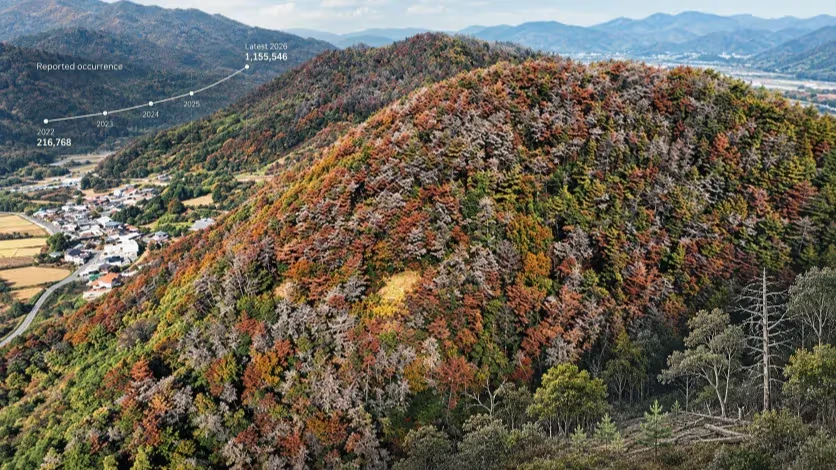 NewsSep 30, 2026
Gyeongnam’s Pine-Wilt Surge Is Forcing a Shift From Tree Removal to Forest Management
Gyeongnam’s pine-wilt outbreak has grown beyond a tree-removal problem. As re...
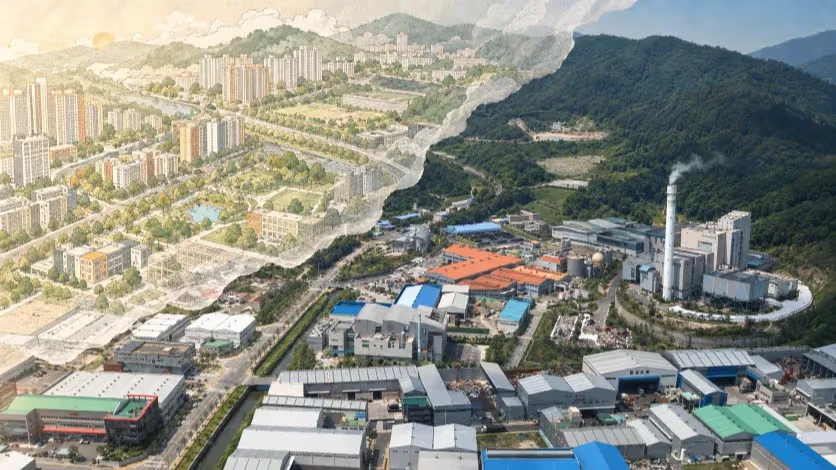 NewsSep 22, 2026
Busan Is Growing Westward as Its Waste Infrastructure Stays Put
Busan’s proposed Saenggok incinerator has moved from 800 to 500 tons a day. T...
 NewsAug 17, 2026
What South Korea’s 87% Drop in Aquaculture Heat Losses Really Measures
South Korea reported an 87 percent drop in aquaculture losses from high water...
More from the author
More from this byline
Stay with the same line of reporting through more work from this byline.
 NewsOct 9, 2026
Why “Busan Is Good” Falls Short as a City Brand
 NewsSep 18, 2026
The Other AI Race Is for the Freedom to Change Course
Reader Signal
Community readWhat did this report leave you with?
Choose the signal that best reflects your reading. Select it again to remove it.
One response per article
No response selected
A moderated conversation about the reporting.
One-level replies and newsroom moderation keep the conversation anchored to this article.
Discussion Status
Open
Please sign in to join the discussion.
Newsletter
Weekly reporting and context from Busan and Korea.