South Korea Introduces Mobile Foreigner Registration Cards
Seoul, South Korea - Starting January 10, 2025, foreign residents in South Korea can embrace a more convenient and secure form of identification as the government rolls out its new mobile foreigner registration card. In a move that underscores the country’s commitment to digital innovation, the mobile version will offer the same legal validity as the traditional physical card, making it a game-changer for over 2.5 million foreigners living in South Korea. The introduction of the mobile foreigne

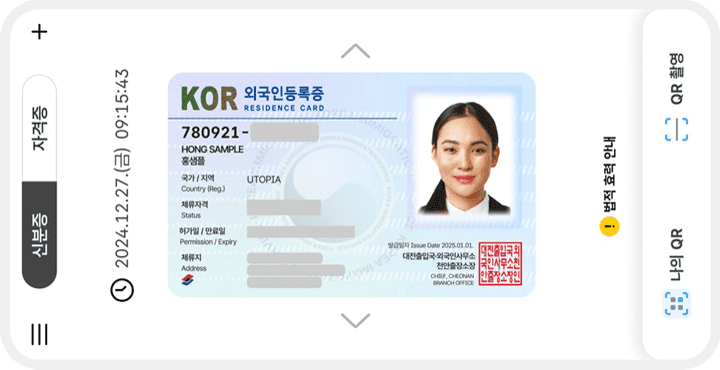
Seoul, South Korea - Starting January 10, 2025, foreign residents in South Korea can embrace a more convenient and secure form of identification as the government rolls out its new mobile foreigner registration card. In a move that underscores the country’s commitment to digital innovation, the mobile version will offer the same legal validity as the traditional physical card, making it a game-changer for over 2.5 million foreigners living in South Korea.
The introduction of the mobile foreigner registration card is part of a broader effort by the Ministry of the Interior and Safety and the Ministry of Justice to modernize public services. It follows the success of mobile IDs for Korean citizens, such as the mobile driver’s license and pilot mobile resident ID programs.
Gone are the days when foreign residents needed to carry a physical card for identification. The mobile version allows users to store their credentials securely on a smartphone, offering unmatched convenience. According to officials, any foreign resident aged 14 or older who is registered in South Korea can apply for the new service.
The card will be accessible via the “Mobile ID” app, which has already gained traction for its use in issuing digital IDs to Korean citizens. Users can choose between two methods to obtain their mobile foreigner registration card: scanning the IC chip on a physical foreigner registration card or photographing a QR code provided by immigration offices. Both methods ensure accessibility, but the IC chip option provides greater convenience for reissuance if the user changes devices or reinstalls the app.
Security is at the forefront of this digital innovation. The government has integrated advanced blockchain and encryption technologies to ensure that users’ personal data remains safe from breaches. Each mobile card is tied exclusively to the owner’s smartphone, and in the event of device loss or theft, users can report the card as lost to prevent misuse.
One standout feature of the mobile card is its ability to share only the necessary information in specific situations. For example, while purchasing age-restricted products like tobacco or alcohol, users can display just their name and date of birth, leaving other sensitive details, such as their registration number and address, hidden. This approach not only enhances privacy but also reduces the risk of identity theft.
The mobile foreigner registration card will be accepted anywhere the physical card is currently used, including government offices, hospitals, convenience stores, and more. Officials have also revealed plans to expand its usability into virtual settings. Collaborations are underway with major banks and public service platforms to allow users to access banking and online verification services with their mobile ID.
In an ambitious move to make the service even more versatile, the government aims to integrate the card with popular mobile wallets such as Samsung Wallet, Kakao, and Naver by the end of the year. This initiative reflects South Korea’s strategy to position itself as a global leader in digital governance.
Foreign residents eager to take advantage of this new system can begin applying at immigration offices starting January 10. Depending on their preference, they can choose to scan their IC chip-enabled foreigner registration card or use the QR code method provided at the office.
The process, while straightforward, requires the user to install the Mobile ID app on their smartphone. For those opting for the IC chip method, the transition is particularly seamless as reissuance can be done without visiting the immigration office again if they change devices.
Continue this reporting
Reporting on the same issue
Related coverage selected from the article's desk, topics and newsroom relationships.
 NewsAug 30, 2026
The Hidden Economics of South Korea’s Public Transport
Busan’s latest transport review exposes a wider national problem: South Korea...
 NewsAug 11, 2026
Korea’s Innovation Cities Did Not Grow the Same Way
Nearly two decades after South Korea began relocating public institutions, th...
 NewsAug 8, 2026
A Climate Window Is Not a Shipping Lane
PANSTAR ACRO is scheduled to sail from Busan to Rotterdam through the Norther...
More from the author
More from this byline
Stay with the same line of reporting through more work from this byline.
 NewsSep 5, 2026
How a Political Appointment Becomes a Judgment of Character
 NewsAug 27, 2026
South Korea Has Outgrown Washington’s Nuclear Rules
Editorial Record
Corrections, sourcing notes and newsroom disclosures remain part of the published record. View Newsroom Notes →
Reader Signal
Community readWhat did this report leave you with?
Choose the signal that best reflects your reading. Select it again to remove it.
One response per article
No response selected
A moderated conversation about the reporting.
One-level replies and newsroom moderation keep the conversation anchored to this article.
Discussion Status
Open
Please sign in to join the discussion.
Newsletter
Weekly reporting and context from Busan and Korea.