South Korea's Dire Doctor Shortage: A Call to Action
South Korea has a well-established reputation for world-class healthcare infrastructure. Despite this, the country is facing a critical shortage of specialized doctors, particularly in essential areas such as higher-risk surgeries, pediatrics, and general medicine. This is a problem that needs to be addressed quickly and efficiently, as the shortage is only expected to worsen in the coming years. The government has been exploring various proposals to solve this pressing issue, including a recen


South Korea has a well-established reputation for world-class healthcare infrastructure. Despite this, the country is facing a critical shortage of specialized doctors, particularly in essential areas such as higher-risk surgeries, pediatrics, and general medicine. This is a problem that needs to be addressed quickly and efficiently, as the shortage is only expected to worsen in the coming years.
The government has been exploring various proposals to solve this pressing issue, including a recent suggestion from Health Minister Cho Kyoo-hong to reduce the severity of punishment for medical negligence or malpractice. This proposal has received criticism from patient advocacy groups, who believe that it is a step in the wrong direction and that the focus should be on catering to the needs of patients rather than protecting doctors.
The shortage of specialized doctors in South Korea is indeed dire. With only 2.5 doctors per 1,000 inhabitants, compared to the OECD average of 3.7, the country has seen instances where a hospital had to stop offering inpatient care for children due to a lack of resident pediatricians. The root of the problem starts at the university level, where the government has a cap on the number of students admitted to medical schools each year. This has led to a situation where aspiring medical professionals are more likely to choose fields like cosmetic surgery, which are less regulated and more profitable, instead of critical care.
This situation is further compounded by the high workloads faced by doctors, with 98% of residents working over 80 hours a week in 2017, and surgery-related departments struggling to fill up residency programs. The declining fertility rate and aging population in South Korea have also led to fewer doctors wanting to work in pediatrics and obstetrics.
Despite the high salaries earned by doctors in South Korea, which are four times the average salary of other professionals, the lack of liability protections for medical professionals is a major concern. A study from the Korea Medical Association showed that over 750 doctors are criminally charged with professional negligence resulting in death or injury every year, which is much higher than in other developed countries like Japan, the UK, and Germany.
This issue has led to a decline in public faith in hospitals and surgeons, with patients having the lowest perception of their own health status of all OECD countries. To address this, the government has taken steps to install surveillance cameras in operating rooms to prevent cases of malpractice.
South Korea's dire shortage of specialized doctors is a pressing issue that requires immediate action. The government must work towards creating a supportive and sustainable healthcare environment that attracts aspiring medical professionals to choose critical care over more lucrative fields. At the same time, it must also take measures to protect patients and restore public faith in the healthcare system.
Continue this reporting
Reporting on the same issue
Related coverage selected from the article's desk, topics and newsroom relationships.
 NewsOct 4, 2026
Zelensky, South Korea and the Limits of Wartime Pressure
South Korea says Kyiv broke a confidentiality understanding when Zelensky rev...
 NewsSep 1, 2026
What Lee Jae Myung Thinks a Minister Can Fix
President Lee Jae Myung says reform should be judged by results rather than c...
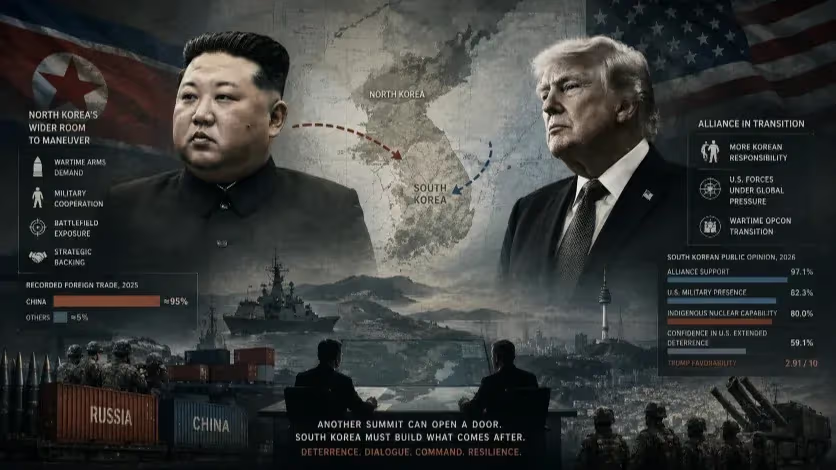 NewsAug 21, 2026
The Korean Peninsula Trump Is Returning To
Another Trump-Kim summit would unfold on a peninsula where North Korea is har...
More from the author
More from this byline
Stay with the same line of reporting through more work from this byline.
 NewsOct 9, 2026
Why “Busan Is Good” Falls Short as a City Brand
 NewsSep 18, 2026
The Other AI Race Is for the Freedom to Change Course
Reader Signal
Community readWhat did this report leave you with?
Choose the signal that best reflects your reading. Select it again to remove it.
One response per article
No response selected
A moderated conversation about the reporting.
One-level replies and newsroom moderation keep the conversation anchored to this article.
Discussion Status
Open
Please sign in to join the discussion.
Newsletter
Weekly reporting and context from Busan and Korea.