North Korea’s Alleged Troop Support for Russia: Fact or Strategy?
Recent reports have stirred global attention, alleging that North Korea has sent troops to assist Russia in its ongoing war against Ukraine. Ukrainian and South Korean intelligence sources claim that North Korean soldiers, including special forces, are stationed in Russian-occupied areas of Ukraine. However, both Moscow and Pyongyang firmly deny these allegations. Adding a layer of complexity, there is growing speculation that North Korea may not have sent combat troops, but rather technical per


Recent reports have stirred global attention, alleging that North Korea has sent troops to assist Russia in its ongoing war against Ukraine. Ukrainian and South Korean intelligence sources claim that North Korean soldiers, including special forces, are stationed in Russian-occupied areas of Ukraine. However, both Moscow and Pyongyang firmly deny these allegations. Adding a layer of complexity, there is growing speculation that North Korea may not have sent combat troops, but rather technical personnel or engineers to provide logistical and tactical support. This possibility raises questions about the true nature of North Korea’s involvement and the political motivations behind these claims.
The military relationship between Russia and North Korea has strengthened significantly in 2024. After a defense pact was signed between Kim Jong-un and Vladimir Putin, speculation about deeper military cooperation began to rise. This agreement included provisions for mutual assistance, heightening concerns that North Korea might be supporting Russia’s military in the ongoing conflict with Ukraine.
Historically, North Korea has often supported its allies with military expertise, though not always through direct troop involvement. During the Vietnam War, North Korea covertly provided military pilots and technicians to assist North Vietnam, rather than sending ground troops, suggesting that Pyongyang prefers a more covert, non-combat role when aiding allies.
Ukraine’s President Volodymyr Zelensky and South Korean intelligence services have asserted that North Korea is sending thousands of soldiers to support Russia’s war effort. Reports suggest that around 12,000 North Korean troops, including special operations units, may have been deployed to Russia’s Far East for training, with plans to join the Ukrainian battlefield. South Korean intelligence has reportedly used AI facial recognition technology to identify North Korean military officers near the front lines.
For Ukraine, these claims help frame the conflict as a global struggle involving not just Russia but also its rogue-state allies, increasing the urgency for international support. South Korea, meanwhile, sees this as an opportunity to highlight the threat North Korea poses, further isolating Pyongyang diplomatically and economically.
While the allegations of North Korean troop deployment are alarming, some analysts suggest that North Korea’s involvement may not involve traditional ground forces. Instead, it is possible that Pyongyang has sent military engineers or technical personnel to provide support in areas such as weapons maintenance, logistics, and missile operations.
This hypothesis is consistent with North Korea’s historical approach to military engagements, where it has often deployed technical experts rather than combat soldiers. In the current context, North Korea could be supplying personnel to maintain and operate the weapons systems they have provided to Russia, ensuring their effective use in the conflict. This would offer Moscow significant assistance without requiring the large-scale deployment of North Korean combat troops.
Moreover, sending engineers or technicians rather than soldiers would allow North Korea to contribute to Russia’s war effort while maintaining plausible deniability. Both Moscow and Pyongyang have denied sending North Korean soldiers to Ukraine, which could indicate that their involvement is primarily technical in nature, avoiding the optics of direct military engagement.
Despite reports from Ukraine and South Korea, both Russia and North Korea have firmly denied the presence of North Korean troops in Ukraine. These denials may be part of a strategy of strategic ambiguity. For Russia, admitting that it requires foreign troops could undermine its narrative of a self-sufficient military campaign. Acknowledging external support would also invite further international condemnation and sanctions.
For North Korea, public acknowledgment of troop deployment could lead to increased scrutiny and sanctions, complicating its already delicate international standing. By denying direct involvement and maintaining ambiguity about the nature of its support, North Korea can assist Russia while avoiding the full diplomatic and economic consequences of deploying combat troops.
The U.S. and NATO have reacted cautiously to the reports of North Korean troop involvement. NATO Secretary-General Mark Rutte noted that while these claims are concerning, they require further verification. This cautious stance is in line with NATO’s broader strategy of avoiding actions that could escalate the conflict, particularly given the uncertain nature of North Korea’s involvement.
The U.S., facing the 2024 presidential election, is likely balancing its support for Ukraine with the desire to avoid further entanglement in a new foreign crisis. While North Korean involvement would raise alarm, the U.S. administration may be wary of overreacting without clear evidence, particularly in an already complex election year.
Both South Korea and Ukraine have political motivations for emphasizing the narrative of North Korean troop involvement. For Ukraine, highlighting North Korea’s support for Russia reinforces the image of the war as a global struggle against authoritarian regimes. This narrative helps sustain international military and financial support. South Korea, meanwhile, uses these claims to further isolate North Korea and align more closely with its Western allies, particularly the U.S. and Japan.
On the other hand, NATO and the U.S. are handling the situation with restraint, reflecting a desire to avoid unnecessary escalation. The lack of definitive evidence of North Korean combat troops allows them to respond with measured diplomacy, focusing instead on supporting Ukraine’s defense and enforcing sanctions against both Russia and North Korea.
The speculation surrounding North Korea’s involvement in the Russia-Ukraine war—whether as combat troops or technical personnel—remains unresolved. While South Korea and Ukraine may have strong political reasons for pushing the narrative of North Korean troop deployment, the denials from Russia and North Korea suggest that any involvement may be more covert and technical in nature.
For now, NATO and the U.S. remain cautious, wary of escalating the conflict without clear evidence. As the situation unfolds, further intelligence may clarify the extent of North Korea’s involvement. However, it is likely that both Pyongyang and Moscow will continue to maintain strategic ambiguity, balancing the benefits of their alliance against the risks of further international isolation.
In the coming months, the world will be watching closely as these geopolitical dynamics evolve, with significant implications for global security and diplomacy.
Continue this reporting
Reporting on the same issue
Related coverage selected from the article's desk, topics and newsroom relationships.
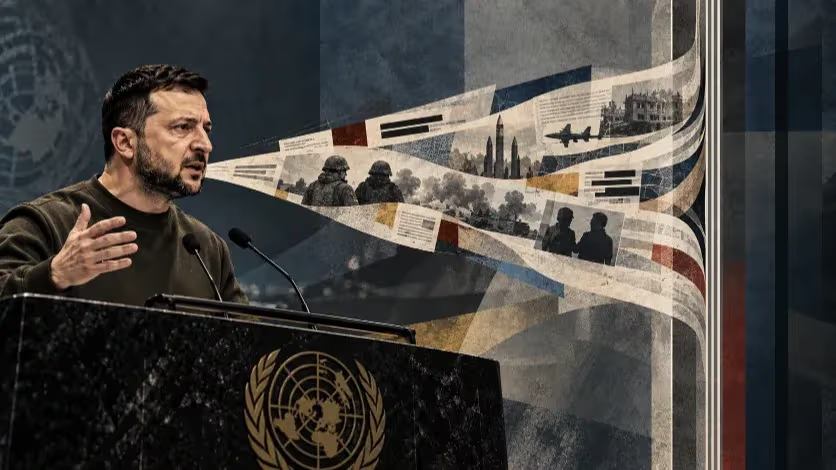 NewsOct 4, 2026
Zelensky, South Korea and the Limits of Wartime Pressure
South Korea says Kyiv broke a confidentiality understanding when Zelensky rev...
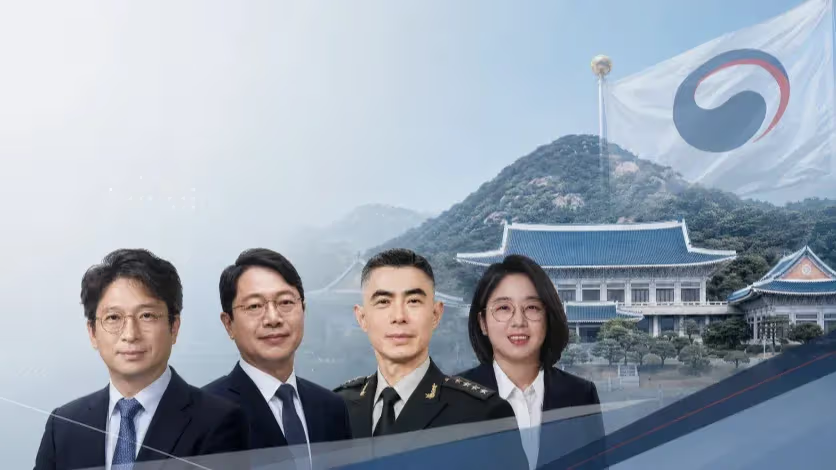 NewsSep 1, 2026
What Lee Jae Myung Thinks a Minister Can Fix
President Lee Jae Myung says reform should be judged by results rather than c...
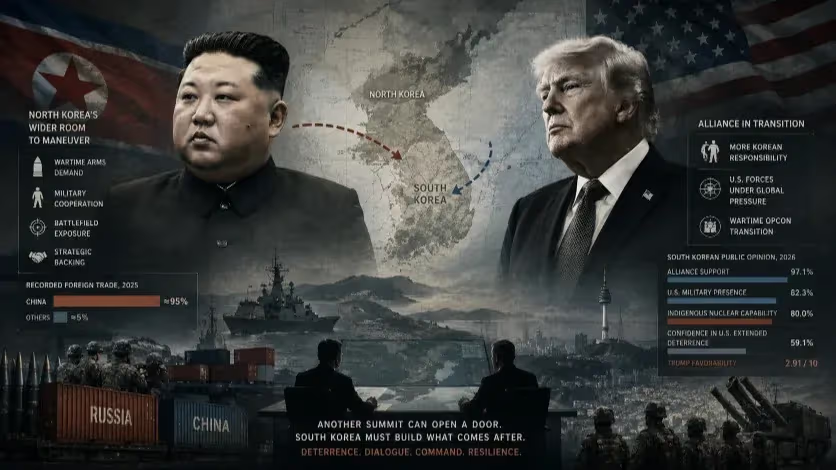 NewsAug 21, 2026
The Korean Peninsula Trump Is Returning To
Another Trump-Kim summit would unfold on a peninsula where North Korea is har...
More from the author
More from this byline
Stay with the same line of reporting through more work from this byline.
 NewsSep 18, 2026
The Other AI Race Is for the Freedom to Change Course
 NewsSep 5, 2026
How a Political Appointment Becomes a Judgment of Character
Reader Signal
Community readWhat did this report leave you with?
Choose the signal that best reflects your reading. Select it again to remove it.
One response per article
No response selected
A moderated conversation about the reporting.
One-level replies and newsroom moderation keep the conversation anchored to this article.
Discussion Status
Open
Please sign in to join the discussion.
Newsletter
Weekly reporting and context from Busan and Korea.