The Rise of the Petroyuan: Saudi Arabia's Potential Game-Changer in Global Oil Markets
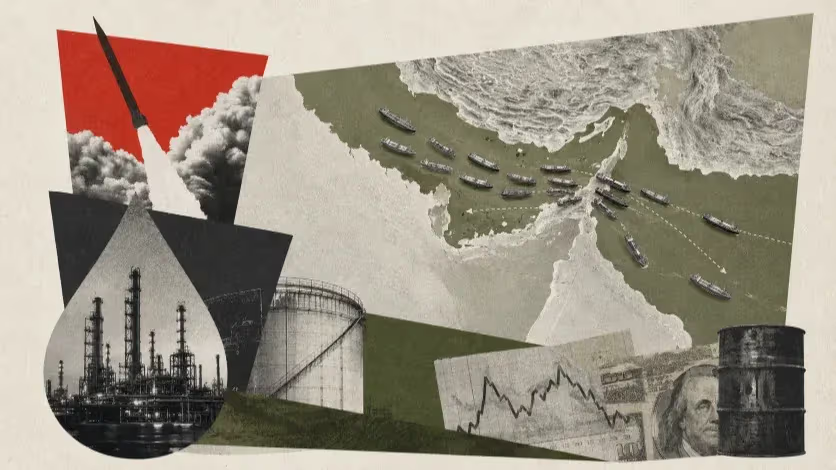
Saudi Arabia, a steadfast ally of the United States for decades, is considering a historic shift in its economic and geopolitical approach. The kingdom is actively discussing the possibility of pricing some of its oil sales to China in yuan, a move that could challenge the U.S. dollar's longstanding dominance in the global petroleum market. This development could have far-reaching implications for the international financial system, the U.S. dollar, and the delicate balance of power in the Middl

Saudi Arabia, a steadfast ally of the United States for decades, is considering a historic shift in its economic and geopolitical approach. The kingdom is actively discussing the possibility of pricing some of its oil sales to China in yuan, a move that could challenge the U.S. dollar's longstanding dominance in the global petroleum market. This development could have far-reaching implications for the international financial system, the U.S. dollar, and the delicate balance of power in the Middle East.
The history between Saudi Arabia and the United States dates back to the 1930s when American oil companies first discovered oil reserves in the kingdom. Over the years, the relationship has evolved to encompass economic, political, and military aspects. In 1974, Saudi Arabia and the U.S. reached an agreement whereby the Saudis would trade oil exclusively in U.S. dollars in exchange for security guarantees from the Nixon administration. This arrangement, known as the petrodollar system, has been a cornerstone of global finance and has helped maintain the U.S. dollar's status as the world's reserve currency.
However, the geopolitical landscape has changed significantly in recent years. The United States has become one of the world's top oil producers, reducing its dependence on Saudi oil imports. In contrast, China's oil imports have surged in line with its rapidly expanding economy, making it the world's largest crude importer. Saudi Arabia was China's top crude supplier in 2021, followed by Russia.
The talks between Saudi Arabia and China have gained momentum due to the kingdom's growing dissatisfaction with U.S. security commitments and disagreements over the Yemen civil war and Iran's nuclear program. Additionally, Saudi Arabia's relationship with the U.S. has been strained under President Biden's administration, which has been critical of the kingdom's human rights record and the killing of Saudi journalist Jamal Khashoggi in 2018.
By pricing oil sales to China in yuan, the standing of China's currency would be boosted, further signaling the shift of global economic power towards Asia. The talks also include the possibility of incorporating yuan-denominated futures contracts, or petroyuan, into Saudi Arabian Oil Co.'s (Aramco) pricing model.
The potential shift could have significant implications for the global financial system and U.S. dollar dominance. Although Saudi Arabia still plans to conduct most oil transactions in dollars, such a move could encourage other oil producers to price their Chinese exports in yuan. This change may gradually erode the U.S. dollar's supremacy, which has long been a cornerstone of the international financial system.
The decision to switch to yuan pricing, however, carries risks for Saudi Arabia's economy, as the country's currency, the riyal, is pegged to the U.S. dollar. Despite these concerns, some economists argue that the move could diversify the kingdom's revenue base and strengthen ties with China, especially during a time of high oil prices.
In conclusion, the potential shift of Saudi Arabia's oil pricing strategy toward the yuan is indicative of the rapidly changing geopolitical and economic landscape. The kingdom's growing dissatisfaction with U.S. policy and its expanding relationship with China could lead to a significant realignment of global financial power. The implications of this development will be closely watched by countries around the world, as the balance of power in the Middle East and the future of the U.S. dollar as the world's reserve currency hang in the balance.
Editorial Context
"Independent journalism relies on radical transparency. View our full log of editorial notes, corrections, and project dispatches in the Newsroom Transparency Log."
Reader Pulse
The report's impact signal
Be the first to provide a reading pulse. These collective signals help our newsroom understand the impact of our reporting.
Join the discussion
A more thoughtful conversation, anchored to the story
Atlantic-style discussion for this article. One-level replies, editor prompts, and moderation-first participation are now powered directly by Prisma.
Discussion Status
Open
Please sign in to join the discussion.
The Weekly Breeze
Independent reporting and analysis on Busan,
Korea, and the broader regional economy.