South Korea's Exports Decline for Sixth Consecutive Month Amid Economic Slowdown
South Korea's exports experienced a decline for the sixth straight month in March, primarily due to weakened global demand for semiconductors in the face of an economic slowdown. According to the Ministry of Trade, Industry and Energy, the country has now faced a trade deficit for 13 consecutive months. In March, outbound shipments dropped 13.6% on-year to $55.12 billion. Since October last year, exports have fallen as major economies have tightened monetary policies to curb inflation. The down


South Korea's exports experienced a decline for the sixth straight month in March, primarily due to weakened global demand for semiconductors in the face of an economic slowdown. According to the Ministry of Trade, Industry and Energy, the country has now faced a trade deficit for 13 consecutive months. In March, outbound shipments dropped 13.6% on-year to $55.12 billion.
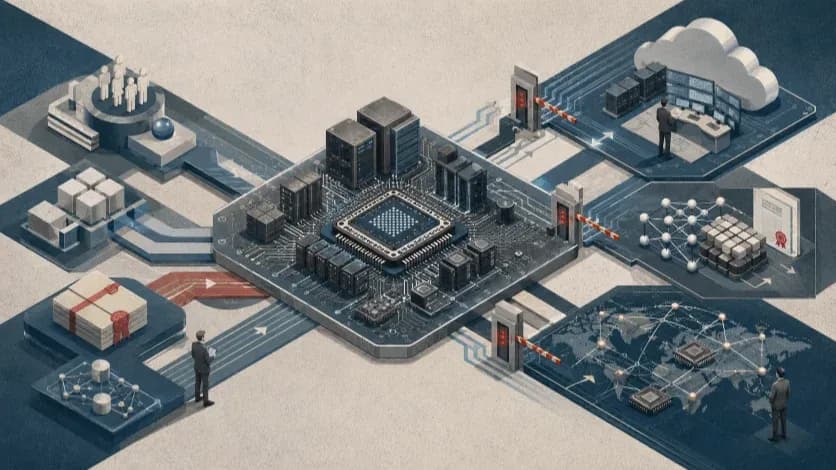
Since October last year, exports have fallen as major economies have tightened monetary policies to curb inflation. The downturn is the first time since 2020 that exports have decreased for six months in a row. Semiconductor exports, South Korea's primary export item, plunged 34.5% in March due to reduced demand and declining chip prices.
A high base effect also contributed to the decline, as exports reached an all-time high of $63.8 billion in March 2022. Despite the decrease, export value surpassed $55 billion for the first time in six months. Imports fell 6.4% on-year to $59.75 billion in March, leading to a trade deficit of $4.62 billion.
South Korea has recorded a trade deficit every month since April last year due to high energy prices, marking the first time the country has experienced a deficit for 13 consecutive months since 1997. The trade deficit for the first quarter of 2023 is already more than half of the total losses reported for 2022, which saw the country's largest trade deficit ever at $47.8 billion.
Industry Minister Lee Chang-yang acknowledged the challenges in exports due to global economic slowdown and financial sector uncertainties. The government aims to bolster exports and reduce trade deficits through policy financing, tailored industry support measures, and assistance for smaller firms entering overseas markets. The 2023 export target is set at $685 billion, a 0.2% increase from 2022, despite the finance ministry's earlier prediction of a 4.5% on-year decline.
Editorial Context
"Independent journalism relies on radical transparency. View our full log of editorial notes, corrections, and project dispatches in the Newsroom Transparency Log."
Reader Pulse
The report's impact signal
Be the first to provide a reading pulse. These collective signals help our newsroom understand the impact of our reporting.
Join the discussion
A more thoughtful conversation, anchored to the story
Atlantic-style discussion for this article. One-level replies, editor prompts, and moderation-first participation are now powered directly by Prisma.
Discussion Status
Open
Please sign in to join the discussion.
The Weekly Breeze
Independent reporting and analysis on Busan,
Korea, and the broader regional economy.