South Korea Debates Revised Grain Management Act amidst Surplus Rice Production
South Korea's National Assembly rejected a revision to the Grain Management Act that would have required the government to purchase surplus rice. The bill faced strong opposition from President Yoon Suk Yeol, who exercised his right to veto the legislation, citing concerns over wasting government resources. The controversial bill aimed to address the country's surplus rice production in the face of decreasing consumption patterns. South Korea's grain self-sufficiency rate, including feed, stood

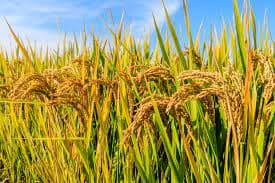
South Korea's National Assembly rejected a revision to the Grain Management Act that would have required the government to purchase surplus rice. The bill faced strong opposition from President Yoon Suk Yeol, who exercised his right to veto the legislation, citing concerns over wasting government resources. The controversial bill aimed to address the country's surplus rice production in the face of decreasing consumption patterns.
South Korea's grain self-sufficiency rate, including feed, stood at 18.5% in 2021, while the country's food self-sufficiency rate was 44.4%. The relatively low self-sufficiency rates make the nation highly dependent on foreign imports, especially among the members of the Organization for Economic Cooperation and Development (OECD).
The revision to the Grain Management Act would have made it mandatory for the government to purchase surplus rice when its production exceeded domestic demand by 3-5% or when rice prices dropped by 5-8% compared to the previous year. Proponents of the revision argued that it was necessary to protect farmers' livelihoods and secure food security.
However, critics argued that the revision would impose a heavy financial burden on the government and lead to rice overproduction, ultimately diminishing agricultural competitiveness. A report by the Rural Development Administration predicted that if the bill were enacted, the government would need to purchase more than twice the amount of rice compared to the current situation, costing an estimated KRW 1.3 trillion annually until 2030.
The surplus rice production is mainly due to a decline in consumption as South Koreans' dietary habits have changed over the past few decades. Rice consumption has rapidly decreased, with the average annual consumption per person dropping to 56.7 kg in 2021, half the amount compared to 1992. The shift towards a more Western and diverse diet and the preference for processed food and convenient meals have contributed to the reduction in rice consumption.
The debate over the Grain Management Act highlights the need to address changing consumption patterns and the importance of ensuring food security while maintaining a balance between farmers' livelihoods and government resources.
Editorial Context
"Independent journalism relies on radical transparency. View our full log of editorial notes, corrections, and project dispatches in the Newsroom Transparency Log."
Reader Pulse
The report's impact signal
Be the first to provide a reading pulse. These collective signals help our newsroom understand the impact of our reporting.
Join the discussion
A more thoughtful conversation, anchored to the story
Atlantic-style discussion for this article. One-level replies, editor prompts, and moderation-first participation are now powered directly by Prisma.
Discussion Status
Open
Please sign in to join the discussion.
The Weekly Breeze
Independent reporting and analysis on Busan,
Korea, and the broader regional economy.