Living in High-Rise Apartments: A Potential Threat to Mental Health
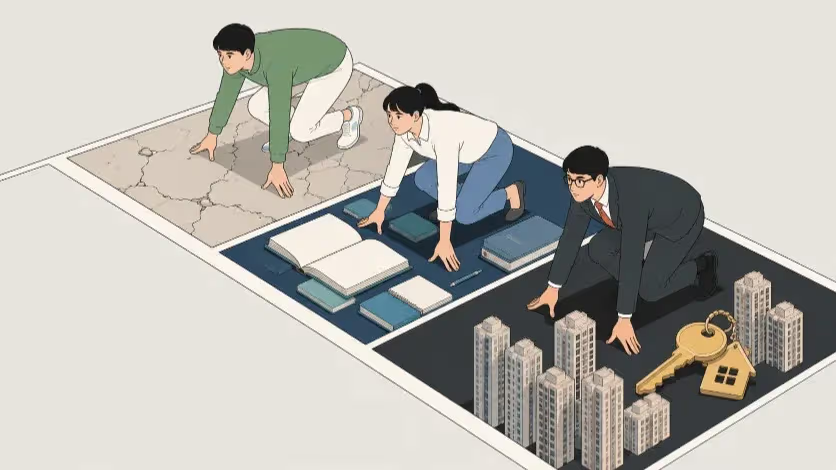
South Korea's love for high-rise apartments is growing at an astonishing pace, with the country's total area of building permits for high-rise buildings with 30 floors or more reaching 16.65 million square meters in 2022, marking the second consecutive year of expansion. A recent study by the Ministry of Land, Infrastructure, and Transport also revealed that eight of the top 10 skyscrapers in the country are located in Busan, a popular coastal city. However, various researches conducted globall


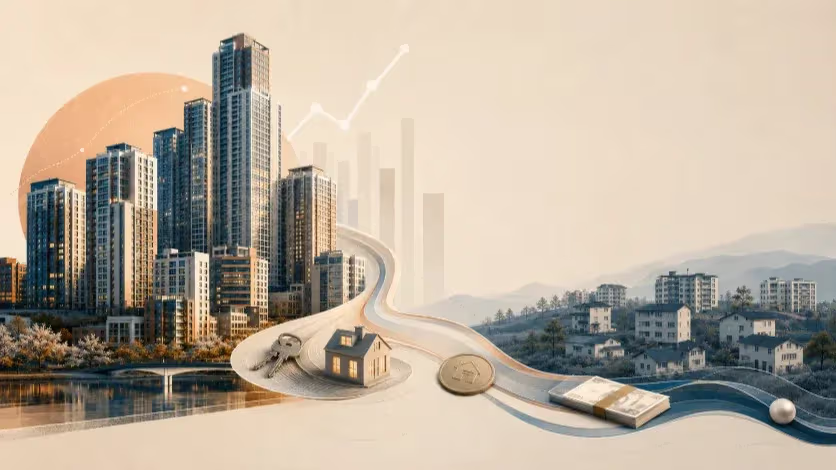
South Korea's love for high-rise apartments is growing at an astonishing pace, with the country's total area of building permits for high-rise buildings with 30 floors or more reaching 16.65 million square meters in 2022, marking the second consecutive year of expansion. A recent study by the Ministry of Land, Infrastructure, and Transport also revealed that eight of the top 10 skyscrapers in the country are located in Busan, a popular coastal city.
However, various researches conducted globally have suggested that living in high-rise apartments may be linked with depression, and South Korea is no exception. The country has the highest prevalence of depression among OECD countries, with several studies indicating a possible correlation between high-rise living and mental health issues. In fact, a comprehensive study conducted by Cornell University in the USA found that people living on higher floors reported poorer mental health than those living on lower floors in six out of eight studies. Another study conducted in Scotland found that residents living in flats of five floors or more experienced twice as many mental illness symptoms as those living in low-rise and detached houses.
As the popularity of high-rise living continues to rise in South Korea, particularly in provinces outside of Seoul, there are increasing concerns about the potential negative impacts on mental health. The government needs to take proactive steps to ensure the safety and well-being of its citizens, including conducting research and implementing policies that promote mental health in high-rise living environments.
One potential solution could be to shift the focus of housing policy from apartment-centered policies to eco-friendly ones. This would involve creating rural residential communities that are radially connected to the city center by transportation infrastructure, similar to Denmark's approach to address its housing problems. Denmark's solution focused on providing commuters with easy access to the city center by train, and it could serve as a valuable model for South Korea to follow.
Ultimately, the country needs to balance its desire for urban development and housing supply with the well-being of its citizens. Further research and measures should be taken to address the potential negative impacts of high-rise living on mental health, while also promoting sustainable and eco-friendly housing policies.
Editorial Context
"Independent journalism relies on radical transparency. View our full log of editorial notes, corrections, and project dispatches in the Newsroom Transparency Log."
Reader Pulse
The report's impact signal
Be the first to provide a reading pulse. These collective signals help our newsroom understand the impact of our reporting.
Join the discussion
A more thoughtful conversation, anchored to the story
Atlantic-style discussion for this article. One-level replies, editor prompts, and moderation-first participation are now powered directly by Prisma.
Discussion Status
Open
Please sign in to join the discussion.
The Weekly Breeze
Independent reporting and analysis on Busan,
Korea, and the broader regional economy.