Debunking Nuclear Power Myths: The Urgent Need for Renewable Energy Investment Amidst EU Disputes and South Korea's Shift
Nuclear power is often promoted as a quick and efficient solution for large-scale decarbonization, which is crucial for mitigating the worst effects of climate change. Some politicians and industry groups favor nuclear power over substantial investment in renewable energy, citing its safety, efficiency, stability, and rapid deployment. However, as renewable energy solutions become more cost-effective and the consequences of climate change intensify, it is crucial to address the myths propagated


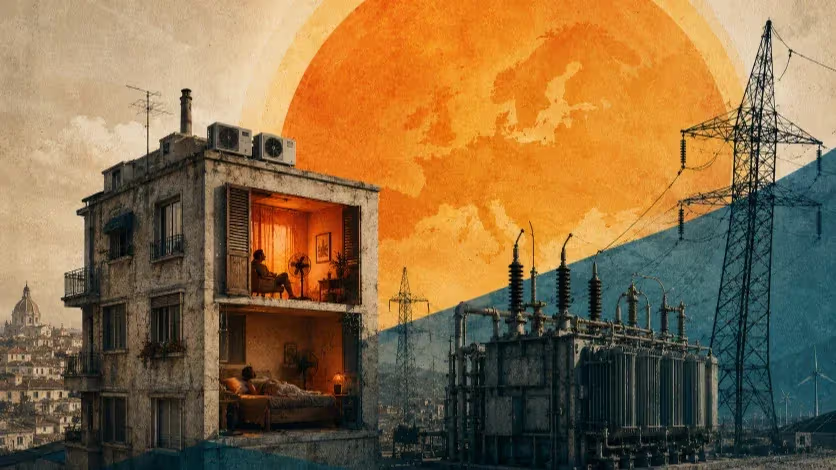
Nuclear power is often promoted as a quick and efficient solution for large-scale decarbonization, which is crucial for mitigating the worst effects of climate change. Some politicians and industry groups favor nuclear power over substantial investment in renewable energy, citing its safety, efficiency, stability, and rapid deployment. However, as renewable energy solutions become more cost-effective and the consequences of climate change intensify, it is crucial to address the myths propagated by the nuclear industry and its proponents.
Currently, a contentious debate is unfolding within the European Union regarding the inclusion of nuclear-derived fuels in renewable energy targets. France is intensifying its efforts to have nuclear-derived fuels recognized, creating a potential conflict among member countries. The dispute revolves around whether fuels produced using nuclear power should be included in the targets, and France is expected to submit a new proposal to address the issue.
France's position, which involves recognizing "low-carbon hydrogen" produced from nuclear energy, has received support from Poland, Hungary, and the Czech Republic. However, Germany, Spain, and Denmark are against the inclusion of nuclear energy in renewables targets, arguing that it would hinder the necessary expansion of renewable energy to achieve climate goals and replace Russian gas.
With opposing views among EU member countries, some diplomats are doubtful that an agreement can be reached this month. France's latest draft proposal includes modifications to the current targets under negotiation, such as aiming for 42% of hydrogen used in industry to be produced from renewable sources by 2030.
Seven European nations, led by Germany, have written a letter to the European Commission expressing their opposition to considering hydrogen derived from nuclear power as a renewable option for transport goals. Austria, Denmark, Ireland, Luxembourg, Spain, and Portugal have also signed the letter, which states that low carbon fuels should not be part of the renewable energy directive.
In contrast, South Korea is planning to increase nuclear power generation and reduce its renewable energy ambitions to achieve emissions reduction targets. The country's 10th Basic Plan for Long-Term Electricity Supply and Demand anticipates nuclear plants accounting for almost one-third of generation capacity by 2030, up from about 24% in earlier proposals. Renewable sources are expected to generate about 21.6% by the same date, lower than the previous estimate of 30.2%.
In contrast to the claims of nuclear power supporters, renewable energy sources, such as solar, wind, and hydroelectric power, have become increasingly affordable and efficient. Investment in renewable energy infrastructure can lead to a greener, more sustainable future without the risks and long-term consequences associated with nuclear power.
Proponents of nuclear energy argue that it is a stable and reliable source of power, while critics point out the potential for accidents, radioactive waste disposal challenges, and the high costs of constructing and maintaining nuclear power plants. Moreover, the development of nuclear power plants can take years or even decades, which may delay the transition to a zero-carbon future.
The focus should be on accelerating the deployment of renewable energy solutions to address the urgent need for decarbonization. Although nuclear power may have a role to play in some regions, it should not be considered a magic bullet solution or an alternative to meaningful investment in renewable energy systems. By debunking nuclear power myths and prioritizing renewable energy, we can pave the way to a green, peaceful, and zero-carbon future while resolving conflicts within the EU and beyond.
Editorial Context
"Independent journalism relies on radical transparency. View our full log of editorial notes, corrections, and project dispatches in the Newsroom Transparency Log."
Reader Pulse
The report's impact signal
Be the first to provide a reading pulse. These collective signals help our newsroom understand the impact of our reporting.
Join the discussion
A more thoughtful conversation, anchored to the story
Atlantic-style discussion for this article. One-level replies, editor prompts, and moderation-first participation are now powered directly by Prisma.
Discussion Status
Open
Please sign in to join the discussion.
The Weekly Breeze
Independent reporting and analysis on Busan,
Korea, and the broader regional economy.