Apple Vision Pro: A New Era of Augmented Reality
In a move reminiscent of the iPhone's groundbreaking launch in 2007, Apple has announced its entry into the augmented reality (AR) sphere with the innovative Vision Pro. The device, touted by Apple CEO Tim Cook as "the first Apple product in which you look through it, not at it," is poised to revolutionize the way we interact with technology, merging the real and digital worlds seamlessly. When the iPhone first hit the market, few could have predicted the far-reaching impact it would have on so

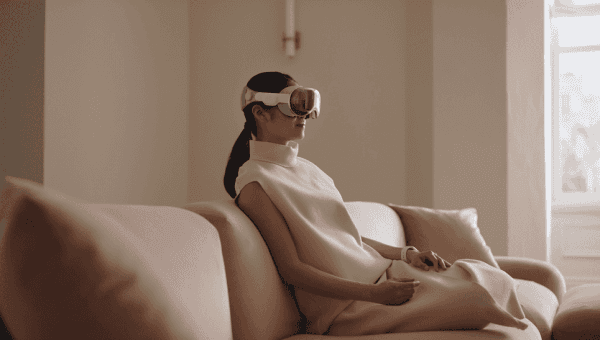
In a move reminiscent of the iPhone's groundbreaking launch in 2007, Apple has announced its entry into the augmented reality (AR) sphere with the innovative Vision Pro. The device, touted by Apple CEO Tim Cook as "the first Apple product in which you look through it, not at it," is poised to revolutionize the way we interact with technology, merging the real and digital worlds seamlessly.
When the iPhone first hit the market, few could have predicted the far-reaching impact it would have on society. It fundamentally reshaped our relationship with technology and has since become an essential tool in our daily lives, from communication and entertainment to business and education.
Now, Apple is once again standing on the brink of technological innovation with the Vision Pro. Resembling a pair of ski goggles, the device replaces traditional controllers with eye movement. Users can navigate through rows of application icons by simply looking at them, touching to select, and swiping to scroll. Additionally, it responds to voice commands, marking a new era in user interface design.
Just as the iPhone brought the digital world into the palms of our hands, the Vision Pro aims to bring it before our eyes while keeping us connected to our physical surroundings. Its novel EyeSight feature displays users' eyes, fostering a more personal connection and avoiding the sense of isolation often associated with AR and virtual reality (VR) experiences.
The device is housed in an aluminum frame with a glass front, accommodating sensors, cameras, the display, and Apple's M2 chips, cooled by an integrated fan. The mask and strap, covered with fabric, are modular and adjustable to fit various head sizes. Vision Pro also includes custom optical inserts developed by Zeiss for those who wear prescription glasses.
Priced at an impressive $3,499, the Vision Pro is slated for a 2024 release. It marks a significant milestone in Apple's product lineup, a testament to years of development, and enters a market that, like the smartphone market in 2007, is ripe for revolutionary growth.
The potential of the Vision Pro parallels the transformative impact of the iPhone launch. While the price point may seem daunting, it's worth remembering that the first-generation iPhone also faced initial criticism for its cost. Despite this, it quickly became a symbol of mobile communication and digital access.
Meanwhile, rumors about the lower-cost Apple Glasses, the company's speculated AR smart glasses, continue to circulate. Predicted to sync with iPhones and deliver a seamlessly integrated user experience, these glasses may become a more accessible entry point into AR technology.
As we witness the dawn of this exciting new era in interactive experiences, it's clear that Apple is aiming to repeat history. The Vision Pro and the rumored Apple Glasses, much like the iPhone, could well become integral to our daily lives, fundamentally reshaping our relationship with the digital world. Only time will tell if they live up to the revolutionary impact that the iPhone had over a decade ago.
Editorial Context
"Independent journalism relies on radical transparency. View our full log of editorial notes, corrections, and project dispatches in the Newsroom Transparency Log."
Reader Pulse
The report's impact signal
Be the first to provide a reading pulse. These collective signals help our newsroom understand the impact of our reporting.
Join the discussion
A more thoughtful conversation, anchored to the story
Atlantic-style discussion for this article. One-level replies, editor prompts, and moderation-first participation are now powered directly by Prisma.
Discussion Status
Open
Please sign in to join the discussion.
The Weekly Breeze
Independent reporting and analysis on Busan,
Korea, and the broader regional economy.