Korean Shipbuilding Industry Faces Labor Shortage Amid Booming Orders
In 2023, the Korean shipbuilding industry is experiencing a surge in orders for the first time in a decade. However, a severe labor shortage has become a critical issue. Despite the demand for workers, the industry struggles to attract and retain talent, particularly among the younger MZ generation. The three major Korean shipbuilders, Korea Shipbuilding & Marine Engineering, Samsung Heavy Industries, and Daewoo Shipbuilding & Marine Engineering, have seen a significant increase in orders. The


In 2023, the Korean shipbuilding industry is experiencing a surge in orders for the first time in a decade. However, a severe labor shortage has become a critical issue. Despite the demand for workers, the industry struggles to attract and retain talent, particularly among the younger MZ generation.
The three major Korean shipbuilders, Korea Shipbuilding & Marine Engineering, Samsung Heavy Industries, and Daewoo Shipbuilding & Marine Engineering, have seen a significant increase in orders. The docks are full, but the industry lacks enough engineers to build the ships.
Since 2014, the number of shipbuilders in Korea has dropped from 200,000 to 90,000. The current shortage of around 14,000 workers is expected to reach 43,000 by 2027. This labor scarcity could lead to large compensation payouts to ordering companies for delayed deliveries.
The workforce is aging, with most shipyard welders in their 50s and nearing retirement. Younger individuals are opting for careers in the automotive and electronics sectors instead. In a recent recruitment drive by Hyundai Motor, over 30,000 people applied for 400 positions, with some workers even leaving shipbuilding giant HHI for these roles.
The labor shortage in the shipbuilding industry is also attributed to the multi-level subcontracting structure. Workers in subcontracting roles often receive less than half the wages of prime contractors, resulting in high turnover rates.
Despite the current boom in shipbuilding, former workers who were laid off during downturns have not returned to the industry. The industry is now employing senior citizens and women over the age of 60 due to the lack of available younger workers.
As of January, South Korean shipbuilders' global market share has fallen to 32.7%, down from 40% a year earlier. China's share has increased from 46.6% to 57.4% in the same period, raising concerns that Korea's shipbuilding industry may suffer the same fate as Japan's, which lost its prestige due to a rapidly declining and aging workforce.
Continue this reporting
Reporting on the same issue
Related coverage selected from the article's desk, topics and newsroom relationships.
 NewsAug 30, 2026
The Hidden Economics of South Korea’s Public Transport
Busan’s latest transport review exposes a wider national problem: South Korea...
 NewsAug 11, 2026
Korea’s Innovation Cities Did Not Grow the Same Way
Nearly two decades after South Korea began relocating public institutions, th...
 NewsAug 8, 2026
A Climate Window Is Not a Shipping Lane
PANSTAR ACRO is scheduled to sail from Busan to Rotterdam through the Norther...
More from the author
More from this byline
Stay with the same line of reporting through more work from this byline.
 NewsSep 5, 2026
How a Political Appointment Becomes a Judgment of Character
 NewsAug 27, 2026
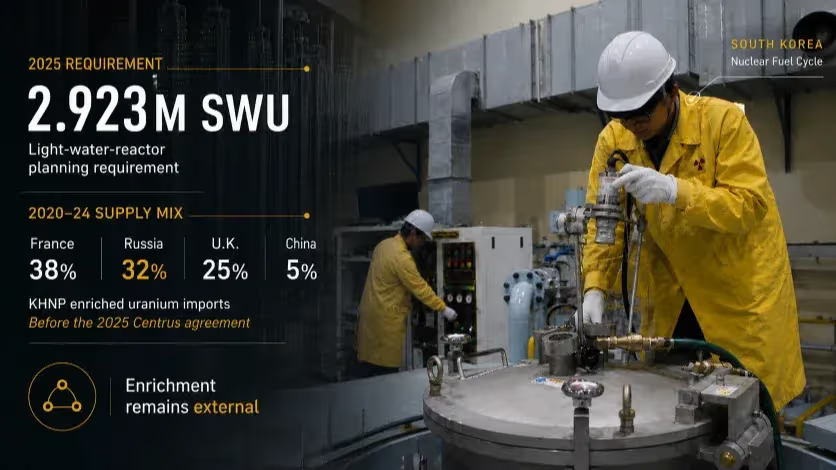
South Korea Has Outgrown Washington’s Nuclear Rules
Editorial Record
Corrections, sourcing notes and newsroom disclosures remain part of the published record. View Newsroom Notes →
Reader Signal
Community readWhat did this report leave you with?
Choose the signal that best reflects your reading. Select it again to remove it.
One response per article
No response selected
A moderated conversation about the reporting.
One-level replies and newsroom moderation keep the conversation anchored to this article.
Discussion Status
Open
Please sign in to join the discussion.
Newsletter
Weekly reporting and context from Busan and Korea.