US Chips and Science Act Raises Concerns for Korean Chipmakers: Finding the Balance Between Subsidies and Trade Secrets
The US Chips and Science Act, a bipartisan legislation aimed at boosting the country's semiconductor industry with a $52 billion investment, has sparked concerns among Korean chipmakers, such as Samsung Electronics and SK Hynix. These companies fear that their trade secrets may be compromised as they seek subsidies under the Act. In response, experts suggest a delicate balance between protecting trade secrets and promoting collaboration between the US and Korean companies. The US Department of


The US Chips and Science Act, a bipartisan legislation aimed at boosting the country's semiconductor industry with a $52 billion investment, has sparked concerns among Korean chipmakers, such as Samsung Electronics and SK Hynix. These companies fear that their trade secrets may be compromised as they seek subsidies under the Act. In response, experts suggest a delicate balance between protecting trade secrets and promoting collaboration between the US and Korean companies.
The US Department of Commerce has issued guidelines on March 27, requiring companies applying for subsidies under the Chips Act to submit detailed profitability calculations, including projected cash flows, in Excel files for verification purposes. This move is part of a policy to confiscate excess profits if companies make more than expected. However, semiconductor industry insiders argue that revealing information like yields and utilization rates, which are considered trade secrets, could be detrimental if leaked to competitors like Intel.
Despite these concerns, experts believe that Korean companies will likely apply for the subsidies due to increasing investment costs and the importance of maintaining relationships with the US. To address the issue of trade secrets, experts advise the Korean government and companies to cooperate with their US counterparts while protecting their sensitive information.
The success of the Chips and Science Act hinges on US policymakers addressing several key challenges faced by domestic and foreign companies alike. These include reducing bureaucratic red tape, which can delay the construction of new chip plants (fabs) and discourage private investment. Additionally, reforming the immigration system to attract and retain skilled workers is vital for the growth of the semiconductor industry.
Moreover, US lawmakers should consider revising the policies related to funding requirements to minimize the burden on companies. The current approach, which demands compliance with numerous government rules and social objectives, could hinder the competitiveness of businesses and undermine the Act's primary goal of strengthening the US semiconductor industry.
Addressing these challenges is essential not just for the semiconductor industry but also for broader American ambition and progress. By finding the right balance between securing subsidies and protecting trade secrets, the US and Korean companies can work together to strengthen their respective semiconductor sectors and contribute to global advancements in technology.
The Chips and Science Act seeks to level the playing field for the US semiconductor industry; however, successful implementation calls for a thoughtful approach to the concerns raised by Korean companies like Samsung Electronics and SK Hynix. By fostering a collaborative environment that respects trade secrets and addresses the challenges faced by the industry, the US can work towards creating a more balanced and competitive global semiconductor market.
Continue this reporting
Reporting on the same issue
Related coverage selected from the article's desk, topics and newsroom relationships.
 NewsSep 21, 2026
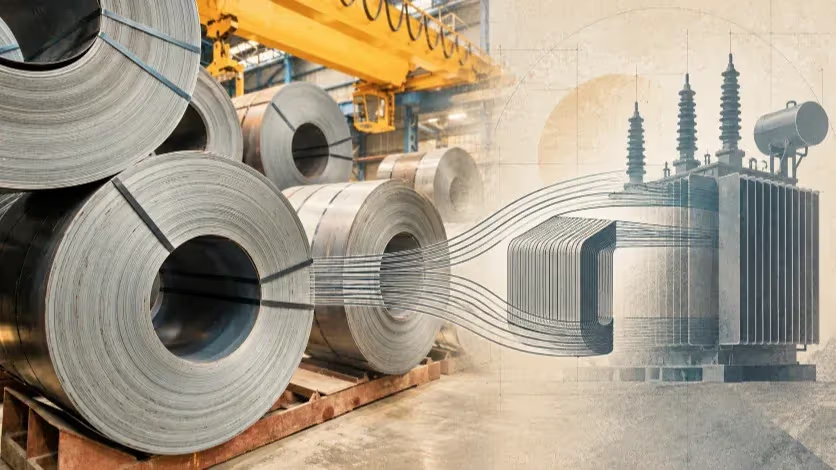
Europe’s Electrical-Steel Safeguard Now Reaches Inside the Transformer
A new EU safeguard follows electrical steel into certain finished transformer...
 NewsSep 14, 2026
Foreign Tourist Spending Is Reshaping Busan’s Nampo District
Foreign spending is making long-empty commercial space valuable again in Namp...
 NewsSep 11, 2026
Busan-Jinhae’s New Industrial Strategy Meets a Jobs Divide
As BJFEZ prepares to add AI, data and advanced energy to its industrial prior...
More from the author
More from this byline
Stay with the same line of reporting through more work from this byline.
 NewsOct 9, 2026
Why “Busan Is Good” Falls Short as a City Brand
 NewsSep 18, 2026
The Other AI Race Is for the Freedom to Change Course
Reader Signal
Community readWhat did this report leave you with?
Choose the signal that best reflects your reading. Select it again to remove it.
One response per article
No response selected
A moderated conversation about the reporting.
One-level replies and newsroom moderation keep the conversation anchored to this article.
Discussion Status
Open
Please sign in to join the discussion.
Newsletter
Weekly reporting and context from Busan and Korea.