Shakespeare’s First Folio and Literary Treasures Arrive in Busan
The Busan Museum launches Secrets of the Masters, presenting 137 works from Shakespeare, Dickens, Austen, Woolf, and Rowling. The exhibition runs from September 30, 2025, to January 18, 2026.

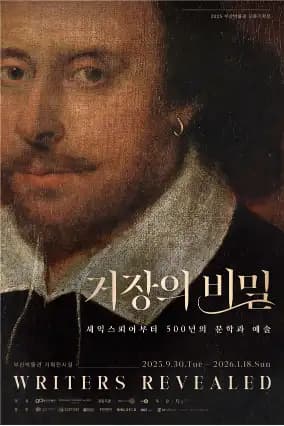
Busan, South Korea — On September 30, the Busan Museum will open Writers Revealed: From Shakespeare to 500 Years of Literature and Art, an exhibition organized with the National Portrait Gallery in London. The show brings 137 works linked to 78 writers, including Shakespeare, Charles Dickens, Jane Austen, Virginia Woolf, and J.K. Rowling. It will remain on view through January 18, 2026.
This is the first time many of the pieces have been shown in Asia. They include portraits, manuscripts, first editions, and letters borrowed from British museums, universities, and private collections. Rather than focusing on size or spectacle, the exhibition places working drafts and portraits at the center, inviting viewers to see how literary works were written, circulated, and remembered.
At its core is Shakespeare’s First Folio, printed in 1623 by two of his fellow actors seven years after his death. Nearly half of his plays, including Macbeth and The Tempest, survive only because of this volume. Fewer than 250 copies are known today. The Busan presentation marks the first time a copy has been exhibited in Korea.
Other highlights include Dickens’s draft of Great Expectations, heavily marked with revisions that trace the process of reshaping chapters before publication; Arthur Conan Doyle’s manuscript of The Veiled Lodger, a Sherlock Holmes story written after he had tried to retire his most famous character; and J.K. Rowling’s annotated first edition of Harry Potter and the Philosopher’s Stone, complete with sketches in the author’s hand.
The portraits anchor the display. They are not presented as decorative additions but as records of how writers were viewed in their own time. John Milton, Jane Austen, Virginia Woolf, James Joyce, and others appear not only as authors of books but also as public figures whose images helped define the idea of English literature for later generations.
The exhibition is organized around five themes. “In Search of the Writer” looks at portraits, letters, and drafts that reveal how authors shaped their identities. “The Journey to Recognition” follows the long route to publication and the role of publishers and readers in a writer’s success. “Censorship and Resistance” recalls moments when authors confronted political power and social prejudice. “Fame: Light and Shadow” explores how recognition brought both security and constraint. “The Power of Writing” places literature in the context of social change, from Thomas More’s Utopia to contemporary works addressing war, gender, and migration.
Shakespeare’s First Folio is an essential reference for textual scholarship, while Dickens’s manuscript reveals his working methods in detail. Seeing these documents without traveling abroad is a rare opportunity for researchers and students. The exhibition also shows how literature and visual culture intersect: portraits shaped reputations just as books shaped ideas.
The exhibition adds a dimension not often present in the city’s cultural calendar. While Busan has gained recognition for its film festival and maritime identity, large-scale literary displays of this kind are rare. By bringing archival material together with public programming, the Busan Museum introduces a format that balances scholarly value with broader cultural interest.
The exhibition runs for 111 days. Admission is 15,000 won, with a 2,000 won discount for Busan residents. During the Chuseok holiday period (October 3–9), tickets purchased on site will be available at 30 percent off the regular price. Alongside the display, a gallery talk by National Portrait Gallery curator Catharine MacLeod will introduce selected works on the opening day.
Continue this reporting
Reporting on the same issue
Related coverage selected from the article's desk, topics and newsroom relationships.
 NewsOct 22, 2026
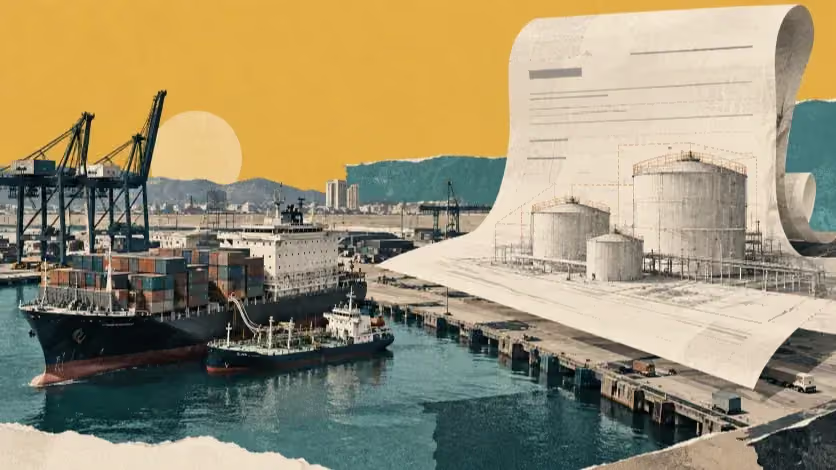
Busan Port’s LNG and Methanol Plan: Who Pays to Keep Fuel Ready?
Busan already supplies ships with LNG and methanol, drawing on regional and i...
 NewsOct 16, 2026
What Is Still Worth Going to See?
Busan’s biennale faces questions of artistic judgment and institutional care....
 NewsOct 14, 2026
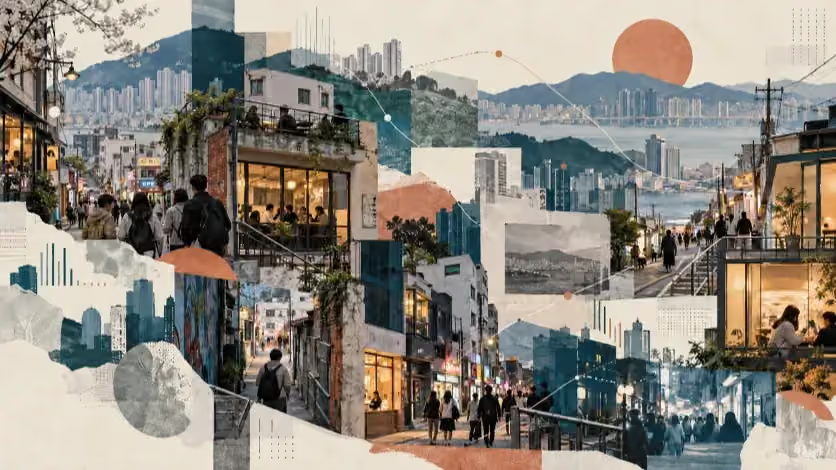
What Became of Busan’s University Streets?
From 2015 to 2023, registered businesses grew near Pusan National University...
More from the author
More from this byline
Stay with the same line of reporting through more work from this byline.
- NewsOct 22, 2026
Busan Port’s LNG and Methanol Plan: Who Pays to Keep Fuel Ready?
 NewsOct 12, 2026
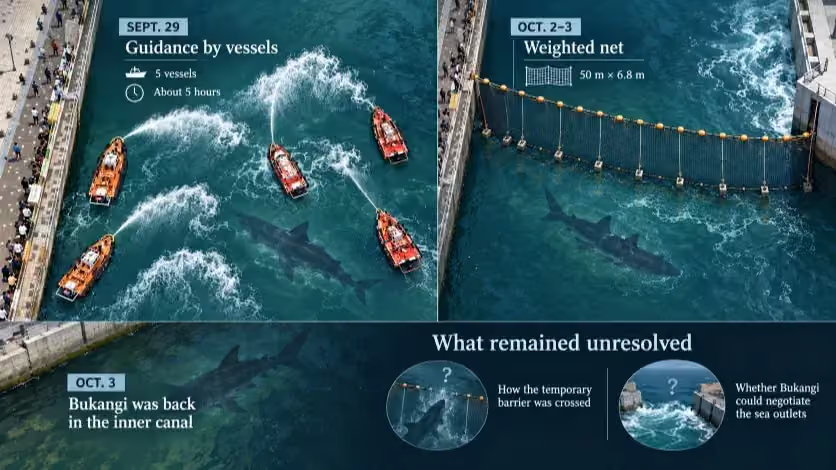
Bukangi, the Shark That Stayed in Busan’s North Port
Reader Signal
Community readWhat did this report leave you with?
Choose the signal that best reflects your reading. Select it again to remove it.
One response per article
No response selected
A moderated conversation about the reporting.
One-level replies and newsroom moderation keep the conversation anchored to this article.
Discussion Status
Open
Please sign in to join the discussion.
Newsletter
Weekly reporting and context from Busan and Korea.