Sea Art Festival 2025 Returns to Busan’s Dadaepo Beach After Six Years
The Sea Art Festival reopens at Dadaepo Beach with 38 artists from 17 countries, exploring ecology and memory along the Nakdonggang River estuary.
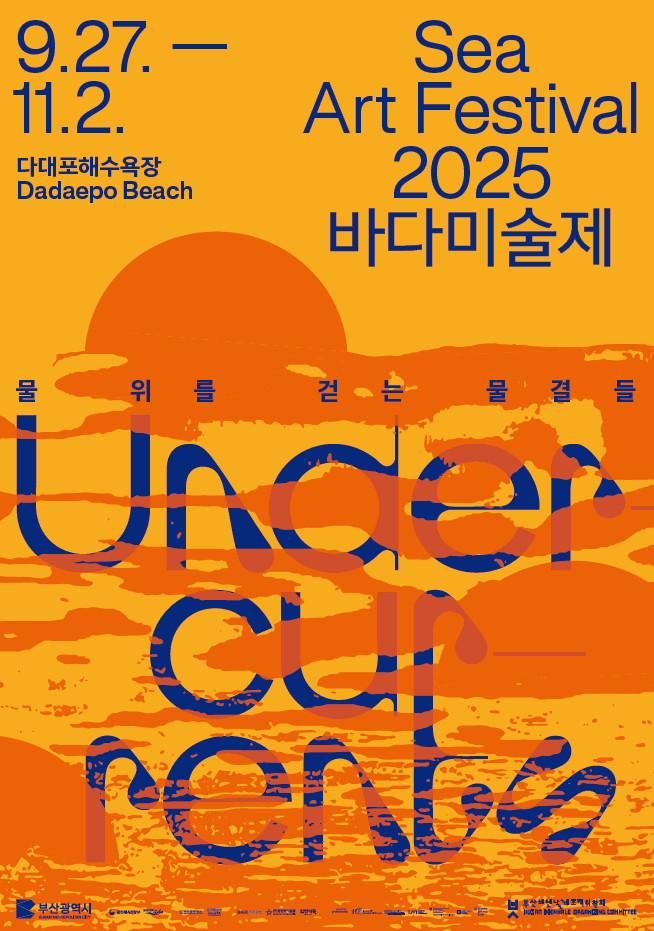
Busan, South Korea — The shoreline at Dadaepo is restless, shifting with each tide. For decades this edge of Busan has been defined by tension: between the river and the sea, between development and preservation, between memory and reinvention. This autumn it becomes something else again. The Sea Art Festival, absent for six years, returns to Dadaepo Beach from late September to early November, transforming the coastline into a public gallery. For 37 days, the sand, tidal flats, and even abandoned structures form the backdrop to works by thirty-eight artists from seventeen countries.
The festival is one of the few in the world to treat the sea as its primary stage. First held in 1987, it has never fit comfortably into conventional exhibition categories. Instead of the white cube or the enclosed museum, the Sea Art Festival builds its identity around open horizons, unpredictable weather, and the impermanence of coastal land. At Dadaepo, where the Nakdonggang River meets the South Sea, this choice is far from neutral. The site has been marked by environmental disruption, from the construction of the estuary bank in the 1980s to waves of reclamation plans in the 1990s. It has also been the site of sustained civic protest, as local communities resisted state-led projects to expand port infrastructure. Dadaepo Beach today is both fragile and symbolic: fragile in its ecology, symbolic in its history of resistance.
This year’s theme, Undercurrents: Waves Walking on the Water, is not metaphor alone. The curators, Keumhwa Kim of Korea and Bernard Vienat of Switzerland, emphasize the hidden exchanges that shape coastal life—flows of water, sediment, and sound, but also the quieter processes of memory, labor, and ecological recovery. They describe the exhibition as a way to look beneath surfaces, to perceive rhythms that are usually obscured. The subtitle, Waves Walking on the Water, suggests both lightness and repetition: the tracks of crabs across tidal flats, the seasonal arrival of migratory birds, the footsteps of visitors, the movements of surfers. Each gesture becomes part of a layered choreography between human and nonhuman actors.
The works are installed across a network of sites that together form a kind of map of Dadaepo’s past and present. On the main stretch of Dadaepo Beach, large-scale installations confront global themes. Plastique Fantastique, the Berlin-based collective known for its inflatable architecture, has erected a translucent structure that swells and collapses with the wind, making visible forces usually felt but unseen. Nearby, the Chilean artist Seba Calfuqueo addresses indigenous understandings of water sovereignty in a region where such claims remain contested. Marco Barotti contributes sound sculptures that translate environmental data into pulsing rhythms, linking the human ear to marine metabolism.
At the eastern shoreline, which has only recently reopened after decades of erosion, the focus shifts to immersion. Here, visitors are invited to swim among submerged works and join underwater observation programs. The choice of site is deliberate: for thirty years this part of the beach was effectively erased, its sand stripped by waves and its access curtailed. Restoration efforts have brought it back, though its stability remains uncertain. By staging art beneath the surface, the festival both celebrates the recovery and underscores its fragility.
The Morundae Observatory Deck Trail, a wooden path clinging to cliffs above the sea, carries another set of works. Suspended between forested slope and crashing waves, visitors encounter sound pieces that fold into the natural acoustics of the site. Walking the trail becomes part of the performance, as footsteps mingle with recordings of underwater environments and the echoes of traditional labor songs once sung in the area. The Gouni Ecological Trail, named after the whooper swan that winters in the estuary, offers a quieter experience. Artworks here emphasize slowness and observation, encouraging visitors to move with the rhythms of reed fields and tidal flats.
Two derelict buildings bring a different register. The former Dadae Incineration Plant, built in 1998 and closed in 2013, once burned household waste for energy while offering amenities like a swimming pool and small park. Its massive concrete shell still dominates the landscape, a monument to an earlier vision of urban metabolism. Now installations inside the cavernous halls address climate crisis and collective responsibility, turning industrial residue into a site of reflection. The former Molwoon Coffeeshop, a modest structure at the entrance to Morundae, tells another story. Though closed and unused, it remains part of daily life for haenyeo divers who shelter there, drying seaweed and changing clothes before entering the tidal waters. For the duration of the festival, artists reanimate the space with performances and discussions, blending its informal everyday use with public programs.
The roster of artists reflects both international reach and local anchoring. From Europe come figures like Anna Anderegg, whose Silver Boom performance mobilizes older women from Busan in an intergenerational dance across subway lines and beach stations, reframing aging bodies as vital cultural agents. From Germany, Raul Walch brings Who Owns the Wind?, a participatory kite workshop that transforms the act of flying into a meditation on commons and ownership. From Latin America, Paula Proaño Mesías stages A Thousand Eyes Beneath the Tide, using sculptural forms to evoke submerged presences. Korea’s own participants include Sangdon Kim, known for sculptural interventions, and the collective OMIJA, whose collaborative methods draw on community ritual. Emerging artist Wonkyo Choi, who first gained recognition in a national competition in 2024, presents new work on the shifting boundary between memory and landscape.
The program extends beyond installation. Workshops and performances run throughout the festival. Children explore the shoreline through ecology-based activities, while adults are invited to weave carpets from plastic debris or take part in collaborative painting exercises. Certified divers can join underwater art observation classes; beginners are offered introductory sessions. Roundtables at the Molwoon Coffeeshop tackle topics ranging from local waste to global plastic accords. On October 3, a discussion titled To Build or to Care: Dadaepo’s Future at a Crossroads addresses looming redevelopment plans. Such programs make explicit the festival’s role not just as an exhibition but as a civic platform, where art intersects with policy and community debate.
The timing of the festival’s return has political weight. In 2025 the Ministry of Oceans and Fisheries announced intentions to transform the former incineration plant into a marine leisure hub, complete with hotel and artificial surfing facilities. Advocates describe this as economic revitalization; critics warn of renewed ecological damage. By temporarily occupying the site for art, the Sea Art Festival foregrounds the question without offering easy resolution. Visitors walk through structures poised between abandonment and reinvention, sensing the tension between industrial memory and speculative development.
For locals, the site carries additional layers. Dadaepo was nearly lost in the 1990s to reclamation plans that would have extended Busan’s port. Public resistance preserved it, making the beach a symbol of civic power against top-down development. The estuary has also been the stage for labor and migration histories, from the songs of fishermen to the seasonal routes of birds. Even today, haenyeo divers maintain traditional practices, their presence a reminder that the sea is not just a view but a livelihood. By embedding works in these places, the festival acknowledges continuity as well as change.
Yet the festival itself is not free from contradictions. Since its inception it has struggled with continuity, frequently interrupted by administrative shifts and changes in funding priorities. The six-year hiatus before this edition underscores an enduring fragility in its organization. While the curatorial ambition is expansive, the event’s infrastructure often lags behind—strained staffing, uncertain budgets, and limited transparency have long fueled questions about its sustainability. Accessibility is another issue: Dadaepo’s distance from the city center makes audience reach uneven, and despite participatory programs, deeper integration with local communities remains limited. The ecological framing also raises tensions: large-scale installations and international logistics sit uneasily beside messages of environmental care.
The Sea Art Festival thus operates on several levels at once. It is a cultural showcase, drawing international artists into dialogue with local contexts. It is an ecological statement, using art to highlight rhythms and disruptions that shape the estuary. It is also a civic gesture, asserting that beaches and disused structures can host debate and imagination rather than being reduced to real estate. But it is also an institution still searching for stability, caught between spectacle and continuity, ambition and capacity.
As the tide rolls in and recedes, the installations shift with light and weather. Some will vanish when the festival closes in November, others will linger in memory. What remains constant is the shoreline itself—unsettled, threatened, but alive with possibility. For 37 days, Dadaepo is not just a backdrop but a protagonist, its currents and undercurrents shaping the experience of art and the future of the city.
Continue this reporting
Reporting on the same issue
Related coverage selected from the article's desk, topics and newsroom relationships.
 NewsOct 22, 2026
Busan Port’s LNG and Methanol Plan: Who Pays to Keep Fuel Ready?
Busan already supplies ships with LNG and methanol, drawing on regional and i...
 NewsOct 16, 2026
What Is Still Worth Going to See?
Busan’s biennale faces questions of artistic judgment and institutional care....
 NewsOct 14, 2026
What Became of Busan’s University Streets?
From 2015 to 2023, registered businesses grew near Pusan National University...
More from the author
More from this byline
Stay with the same line of reporting through more work from this byline.
- NewsOct 22, 2026
Busan Port’s LNG and Methanol Plan: Who Pays to Keep Fuel Ready?
 NewsOct 12, 2026
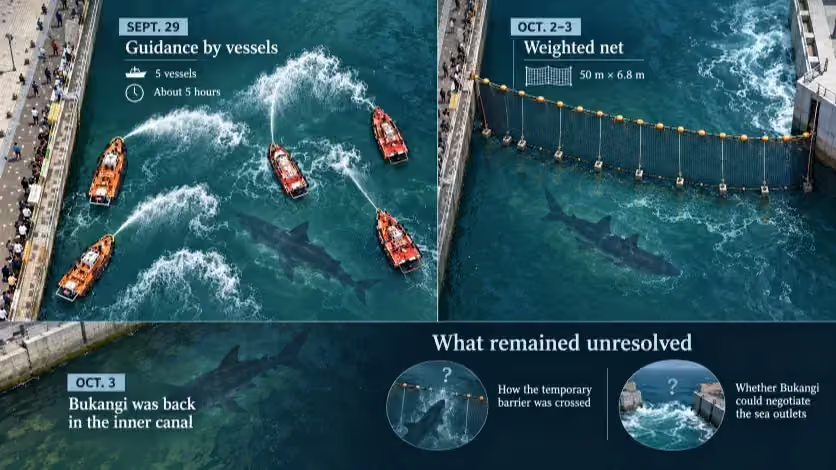
Bukangi, the Shark That Stayed in Busan’s North Port
Reader Signal
Community readWhat did this report leave you with?
Choose the signal that best reflects your reading. Select it again to remove it.
One response per article
No response selected
A moderated conversation about the reporting.
One-level replies and newsroom moderation keep the conversation anchored to this article.
Discussion Status
Open
Please sign in to join the discussion.
Newsletter
Weekly reporting and context from Busan and Korea.