Ministry Relocates to Busan’s Dong-gu, Reviving Historic Urban Core
The Ministry of Oceans and Fisheries has confirmed its full relocation to Dong-gu, Busan, marking the return of central government presence to the city’s original administrative district.

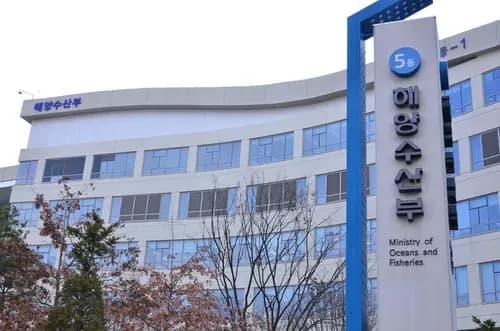
Busan, South Korea — The Ministry of Oceans and Fisheries has finalized its relocation to Busan’s Dong-gu district, a move that places a full central government ministry within one of the city's oldest urban quarters. Slated for completion by the end of 2025, the relocation will involve over 850 ministry personnel and will be housed across two adjacent office towers—the IM Building and Hyopseong Tower—both located near Busanjin Station. Though framed as an administrative transition, the decision also reveals deeper shifts in the geography of governance and raises new possibilities for the physical and economic reconfiguration of one of Busan’s most historically embedded districts.
Dong-gu, or Dong District, holds particular historical and logistical relevance within Busan’s urban structure. Once the administrative and transport core of the city, it served for decades as the primary access point for rail, ferry, and cargo traffic through Busan Station and the North Port. Over time, as the city's commercial and administrative centers migrated eastward—toward Seomyeon, Centum City, and Haeundae—Dong-gu experienced a marked decline in investment, population density, and institutional presence. What was once a civic and logistical hub gradually became peripheral, with aging infrastructure and a shrinking role in city-wide planning.
The ministry’s relocation marks the most significant reintroduction of central government function to the district in several decades. The IM Building, which will serve as the main headquarters, offers 19 floors of office space totaling over 12,000 square meters. The adjacent Hyopseong Tower will serve as the annex, with an additional 3,275 square meters allocated across six floors. Both sites were identified based on criteria of accessibility, capacity, and immediate readiness for occupancy. Their proximity to Busan Station, one of the nation's most important rail terminals, is particularly significant for a ministry whose work routinely involves coordination with national and international agencies located in Seoul, Sejong, and overseas.
From a logistical standpoint, the decision is practical. The concentration of personnel in a single urban cluster allows for operational continuity while broader plans for a permanent headquarters proceed. The temporary use of commercial buildings avoids the delays associated with land procurement and new construction. Additionally, Dong-gu’s infrastructure, though aged, retains dense public transport links and proximity to port-related facilities. For a maritime ministry, the location aligns with core institutional functions.
From a policy perspective, the move is consistent with the administration’s stated goals of decentralization and regional balance. But unlike previous relocations to Sejong City, which were designed to create a new administrative capital from the ground up, the Dong-gu plan involves embedding a ministry into an existing urban context. This difference is significant. Whereas Sejong represents spatial abstraction and long-term vision, Dong-gu reflects a form of functional reoccupation—a return to the physical legacy of state presence, adapted to present-day needs.
It also represents a test case for how legacy urban districts can reabsorb administrative density. The expected arrival of hundreds of public servants and associated daily foot traffic introduces renewed commercial demand, particularly for food, services, and small-scale retail. However, Dong-gu's residential and service infrastructure may not yet be equipped to accommodate a full-scale, stable government workforce. Parking shortages, limited housing stock, and an aging built environment present constraints that will require active policy attention.
The relocation has not been without broader implications. Stakeholders in Sejong and the Chungcheong region have expressed concern about the perceived erosion of the central government’s long-term spatial strategy. The Ministry of Oceans and Fisheries will be the first ministry to relocate entirely to a third city, outside both the capital and the designated administrative hub. This development introduces new complexity into the national distribution of power, especially as some ministries already operate hybrid models between Seoul and Sejong.
Even so, the choice of Busan—and specifically Dong-gu—demonstrates a deliberate recalibration. Rather than dispersing agencies to peripheral greenfield sites, this move reintegrates public function into a historically meaningful, strategically located part of the urban fabric. Whether that reintegration leads to sustained district-level renewal depends not only on the ministry’s presence, but on the city’s broader capacity to align planning, infrastructure, and long-term urban investment around it.
At a moment when many older districts across South Korea face economic stagnation and demographic contraction, Dong-gu offers a measurable opportunity to observe whether high-level government institutions can still serve as anchors of urban recovery. The results will likely shape how other cities interpret the role of governance within mature, built-out urban landscapes—not as temporary tenants, but as agents of enduring civic presence.
Continue this reporting
Reporting on the same issue
Related coverage selected from the article's desk, topics and newsroom relationships.
 NewsOct 22, 2026
Busan Port’s LNG and Methanol Plan: Who Pays to Keep Fuel Ready?
Busan already supplies ships with LNG and methanol, drawing on regional and i...
 NewsOct 16, 2026
What Is Still Worth Going to See?
Busan’s biennale faces questions of artistic judgment and institutional care....
 NewsOct 14, 2026
What Became of Busan’s University Streets?
From 2015 to 2023, registered businesses grew near Pusan National University...
More from the author
More from this byline
Stay with the same line of reporting through more work from this byline.
- NewsOct 22, 2026
Busan Port’s LNG and Methanol Plan: Who Pays to Keep Fuel Ready?
 NewsOct 12, 2026
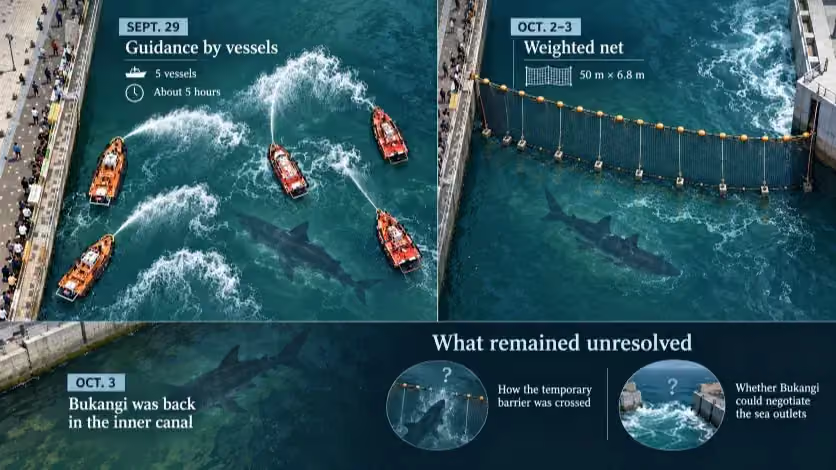
Bukangi, the Shark That Stayed in Busan’s North Port
Reader Signal
Community readWhat did this report leave you with?
Choose the signal that best reflects your reading. Select it again to remove it.
One response per article
No response selected
A moderated conversation about the reporting.
One-level replies and newsroom moderation keep the conversation anchored to this article.
Discussion Status
Open
Please sign in to join the discussion.
Newsletter
Weekly reporting and context from Busan and Korea.