IQ Lab, NFS Anchor East Busan Semiconductor Cluster
IQ Lab opens Korea’s first 8-inch SiC fab, while NFS begins construction nearby, cementing East Busan’s role as a semiconductor manufacturing base.

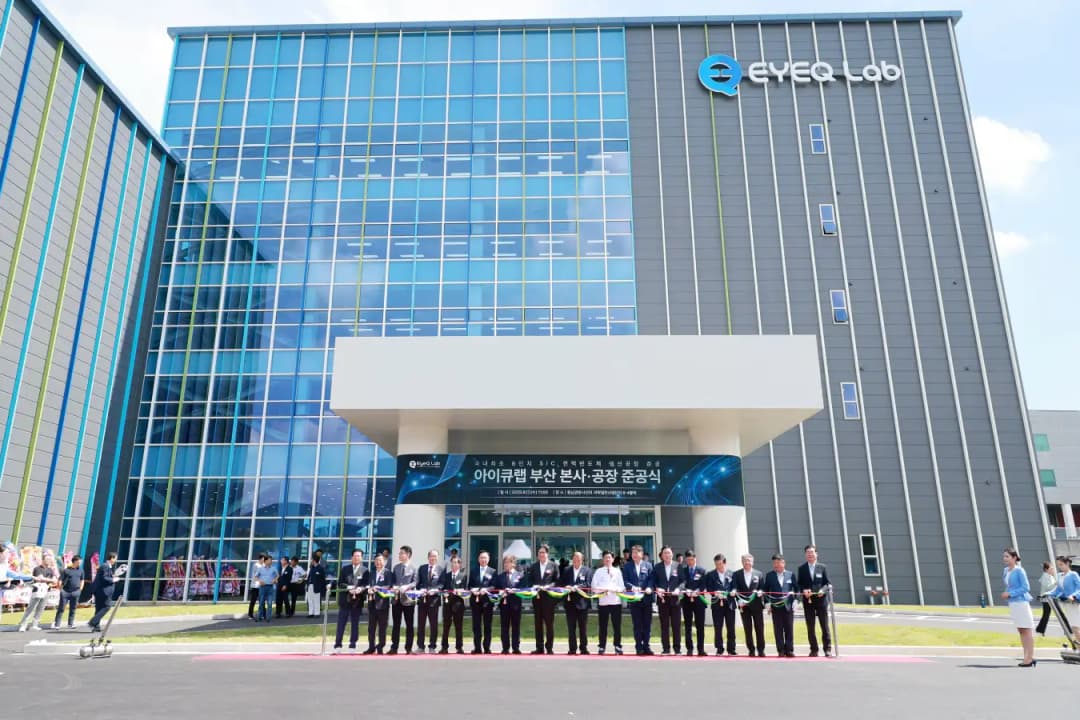
Busan, South Korea — In September 2025, two events in eastern Busan confirmed the city’s emergence as a semiconductor manufacturing base. IQ Lab inaugurated Korea’s first full-process eight-inch silicon carbide fab on September 17, while Nature Flower Semiconductor began construction the previous day on a smaller facility nearby. Together, they marked a visible shift from policy announcements to operational capacity.
At the same time, western districts are accumulating large-scale commitments in data infrastructure and health-related research. Planned AI data centers and a smart health cluster within Eco Delta City point to a different orientation, with most projects still several years from operation.
IQ Lab’s new plant in Gijang-gun is the first facility in Korea designed for complete eight-inch silicon carbide wafer processing. The fab occupies 7,322 square meters on an 8,750 square meter site and was built with an investment of about 100 billion won. Trial runs began in 2025, with production scheduled to reach 30,000 wafers annually from 2026. The company intends to combine its own device output with contract manufacturing services.
One day earlier, Nature Flower Semiconductor, founded in 2022, broke ground on a 1,400 square meter plant on a 4,239 square meter site in the same district. The facility will focus on high-purity silicon wafers, next-generation device design, and packaging, with completion targeted for February 2026.
These projects build on the Ministry of Trade, Industry and Energy’s 2023 decision to designate Busan as a specialized cluster for power semiconductor materials and components. The city government has provided incentives, accelerated permits, and prepared new industrial land through the Dongbusan e-Park complex. IQ Lab has also committed to local recruitment, with about 200 additional positions, and is setting aside part of its office space as a training site linked to the RISE program.
Western Busan is drawing investment commitments in cloud infrastructure rather than fabrication. In June 2025, Busan signed an agreement with IGIS Asset Management to build two AI-oriented data centers in Myeongji–Noksan at a cost of 1.8 trillion won. Construction is scheduled for late 2026, with operations beginning in 2029. Eco Delta City, a national smart city project in the same area, includes a green data center cluster.
The city expects about 20 new centers by 2030, with more than four-fifths located in western districts such as Gangseo, Sasang, and Saha. Four are currently operating. This concentration has already raised questions about electricity supply, as estimated demand from the new facilities exceeds 1,400 megawatts. Officials have acknowledged the need for grid reinforcement before the centers can be commissioned.
Biotech and health projects are also part of the western strategy, though at a different stage of development. Eco Delta City hosts a smart health cluster focused on preventive and digital medicine. Municipal programs provide financial support for validation tests and certification, while forums link local firms with universities and research institutes. These measures outline a framework but remain limited to research and pilot activities rather than commercial production.
The eastern and western districts are taking on different industrial functions. Eastern Busan now hosts plants that are either completed or under construction, with clear production schedules. Western Busan has attracted large investment pledges in data centers and health clusters but remains in the planning and early implementation stage.
The division reflects the distinct requirements of the two sectors. Semiconductors demand cleanrooms, process equipment, and heavy capital investment, while data and health initiatives rely more on digital infrastructure and research partnerships. Separating them by geography allows the city to align land use and regulatory focus with industry needs.
The timelines, however, are uneven. Semiconductor projects are close to output. Data and biotech initiatives may not deliver operating facilities until the end of the decade. Coordination across these tracks will be necessary to avoid imbalances in workforce development, power supply, and regulatory frameworks.
Busan’s industrial geography is being reshaped through deliberate policy choices. Eastern districts already hold new semiconductor capacity, while western districts are preparing for large-scale digital and health projects.
The city’s progress will depend on moving beyond agreements and forums into construction and sustained operation. Semiconductor fabs will require secure supply chains and specialized labor. Data centers will need reinforced power distribution, and health clusters will have to progress from pilot programs to commercial facilities.
What is evident at this stage is a clear division of roles. The east has become a production base for semiconductors; the west is being developed for data and biomedical sectors. The pace at which each side advances will determine how much of Busan’s projected industrial map becomes a durable reality over the next decade.
Continue this reporting
Reporting on the same issue
Related coverage selected from the article's desk, topics and newsroom relationships.
 NewsOct 22, 2026
Busan Port’s LNG and Methanol Plan: Who Pays to Keep Fuel Ready?
Busan already supplies ships with LNG and methanol, drawing on regional and i...
 NewsOct 16, 2026
What Is Still Worth Going to See?
Busan’s biennale faces questions of artistic judgment and institutional care....
 NewsOct 14, 2026
What Became of Busan’s University Streets?
From 2015 to 2023, registered businesses grew near Pusan National University...
More from the author
More from this byline
Stay with the same line of reporting through more work from this byline.
- NewsOct 22, 2026
Busan Port’s LNG and Methanol Plan: Who Pays to Keep Fuel Ready?
 NewsOct 12, 2026
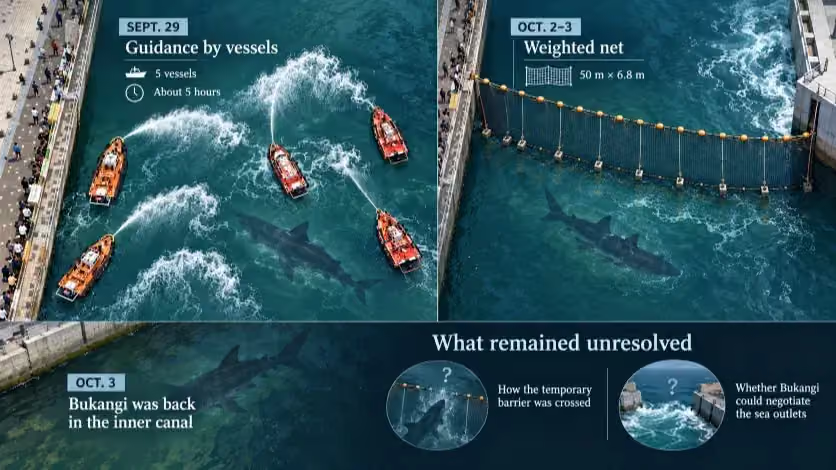
Bukangi, the Shark That Stayed in Busan’s North Port
Reader Signal
Community readWhat did this report leave you with?
Choose the signal that best reflects your reading. Select it again to remove it.
One response per article
No response selected
A moderated conversation about the reporting.
One-level replies and newsroom moderation keep the conversation anchored to this article.
Discussion Status
Open
Please sign in to join the discussion.
Newsletter
Weekly reporting and context from Busan and Korea.