ICSCRM 2025 in Busan to Spotlight Next-Gen Power Semiconductor Technologies
South Korea welcomes the International Conference on Silicon Carbide and Related Materials this September, uniting scientists, manufacturers, and policymakers as silicon carbide moves into large-scale production.

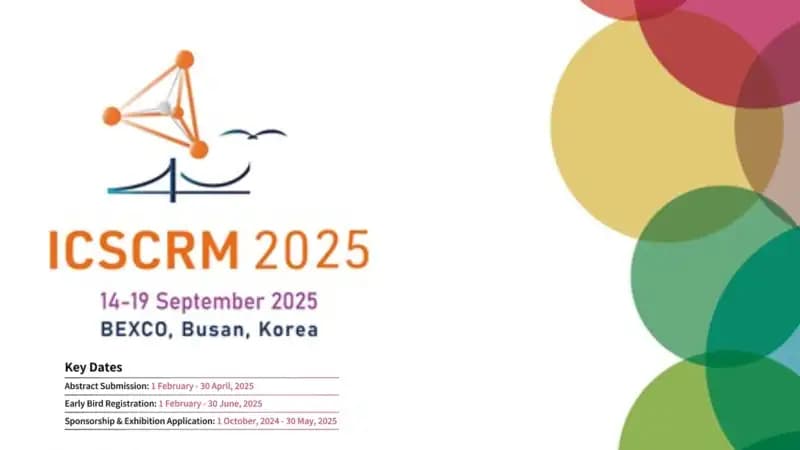
Busan, South Korea — Busan is set to host the International Conference on Silicon Carbide and Related Materials (ICSCRM) this September, marking both the event’s debut in South Korea and its first departure from the usual circuit of the United States, Europe, and Japan.
Scheduled for September 14–19 at the BEXCO convention center, the 2025 meeting comes at a time when silicon carbide technology is moving rapidly from research labs into mass production, drawing researchers, semiconductor firms, and policymakers into one venue.
Launched in Washington, D.C. in 1987, ICSCRM has steadily grown into the world’s leading gathering for the silicon carbide community. Over the decades, it has been the place where key milestones were first unveiled—lower defect rates in crystals, larger wafer formats, improved device designs, and better performance under extreme temperatures.
The Materials Science Forum has carried these findings for years, charting silicon carbide’s progress from a niche research topic to a cornerstone of power electronics now driving electric vehicles, renewable energy systems, aerospace platforms, and modern power grids.
The Busan meeting will draw more than 2,000 participants from around 40 countries, according to organizers, with more than 200 companies confirmed for the industrial exhibition. The program includes plenary lectures, tutorials, poster sessions, and technical presentations covering the full chain of silicon carbide research and development.
Speakers will include senior figures from Samsung Electronics, Ohio State University, Japan’s Central Research Institute of Electric Power Industry, and the French Alternative Energies and Atomic Energy Commission, offering perspectives that span materials science, device engineering, and system-level deployment.
Several research themes are expected to dominate discussions. One is the shift to 200-millimeter silicon carbide wafers, a change that manufacturers see as essential for lowering costs and increasing yields. Recent work has focused on cutting defect densities in bulk crystals and epitaxial layers, as basal-plane and threading dislocations remain a barrier to reliability in high-power devices.
Another topic is long-term performance under electrical and thermal stress. Studies on gate oxide lifetime, avalanche robustness, and high-temperature operation of MOSFETs and Schottky diodes will provide data that automakers and grid developers have been waiting for as they plan the next generation of electric drive trains and power converters. Packaging technologies, including silver sintering and copper clip interconnects designed to handle higher heat loads, will also feature prominently.
Industrial participation this year will be extensive. Wolfspeed, Fraunhofer IISB, Semilab, DB HiTek, and Toyo Tanso are among the firms preparing technical presentations and product demonstrations. Busan-based EYEQ Lab plans to open its new headquarters and production facility during the conference week, aligning a local manufacturing milestone with the presence of the global silicon carbide community.
City officials have linked the event to Busan’s strategy of building a domestic power semiconductor cluster, hoping to attract international investment and expand research collaboration between universities, companies, and government agencies.
Hosting the conference in Busan gives South Korea a platform to show it wants a bigger role in the power semiconductor industry. Silicon carbide is no longer just a research subject; it has become the backbone for technologies that demand efficiency and reliability.
Engineers point to the push toward 200-millimeter wafers, longer device lifetimes, and higher production volumes as the steps needed for the material to compete directly with silicon in cost-sensitive markets. With the global community gathering in Busan, the country places itself where technical progress and industrial strategy intersect.
When the conference closes on September 19, the results will speak for themselves. Researchers will have exchanged new data on defect reduction, companies will have revealed manufacturing plans, and policymakers will have laid out regional goals.
For the international silicon carbide field, Busan offers a meeting point for science, business, and policy. For South Korea, it is an opening to turn laboratory achievements into factories, supply chains, and real economic growth.
Continue this reporting
Reporting on the same issue
Related coverage selected from the article's desk, topics and newsroom relationships.
 NewsOct 22, 2026
Busan Port’s LNG and Methanol Plan: Who Pays to Keep Fuel Ready?
Busan already supplies ships with LNG and methanol, drawing on regional and i...
 NewsOct 16, 2026
What Is Still Worth Going to See?
Busan’s biennale faces questions of artistic judgment and institutional care....
 NewsOct 14, 2026
What Became of Busan’s University Streets?
From 2015 to 2023, registered businesses grew near Pusan National University...
More from the author
More from this byline
Stay with the same line of reporting through more work from this byline.
- NewsOct 22, 2026
Busan Port’s LNG and Methanol Plan: Who Pays to Keep Fuel Ready?
 NewsOct 12, 2026
Bukangi, the Shark That Stayed in Busan’s North Port
Reader Signal
Community readWhat did this report leave you with?
Choose the signal that best reflects your reading. Select it again to remove it.
One response per article
No response selected
A moderated conversation about the reporting.
One-level replies and newsroom moderation keep the conversation anchored to this article.
Discussion Status
Open
Please sign in to join the discussion.
Newsletter
Weekly reporting and context from Busan and Korea.