Global Scientists Unite in Busan for the Climate Fight
More than 1,500 researchers from 45 countries are meeting this week in Busan for BACO-25, a landmark assembly of Earth system scientists focused on the intensifying climate crisis.

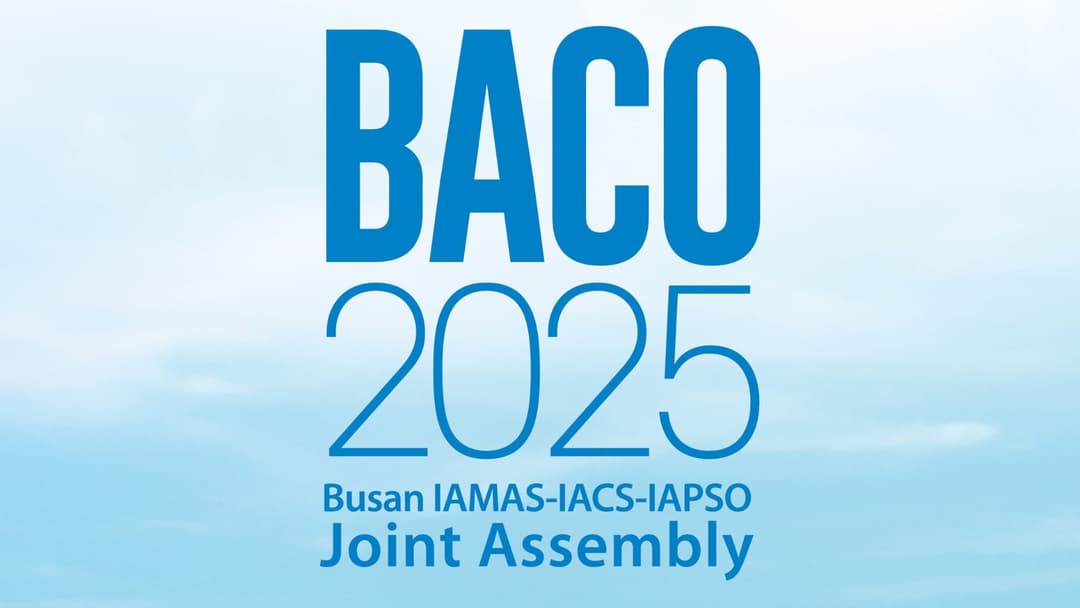
Busan, South Korea — This week, Busan is at the center of a global scientific effort to better understand a planet in flux. The BACO-25 joint assembly, which began on July 20 and continues through July 25 at BEXCO, brings together more than 1,500 scientists from 45 countries. Their focus: confronting the accelerating and intertwined crises of climate instability, oceanic change, and cryospheric decline.
The event is organized under the banner of the International Union of Geodesy and Geophysics (IUGG), with participation from three of its major scientific associations: IAMAS, IAPSO, and IACS. This marks the first time that an IUGG joint assembly has been held in South Korea. Busan was awarded the hosting rights in 2017, prevailing over Manchester, United Kingdom. Originally scheduled for 2021, the event was postponed due to the pandemic.
The theme of this year’s conference—“Our Interconnected Earth”—is not symbolic. It reflects the central thesis of the 68 symposia and keynote sessions unfolding across six days: that climate systems, ocean currents, atmospheric chemistry, and ice dynamics must be understood not in isolation, but as parts of a single planetary system that is warming, shifting, and, in key regions, destabilizing.
In Monday’s opening plenary, Dr. Hoesung Lee, former chair of the Intergovernmental Panel on Climate Change and current president of the Carbon Free Alliance, addressed what he called the “interlocking crises” of our time. His keynote, Climate Action for All, outlined how the feedback loops between energy systems, economic volatility, and climate disruption are tightening. “Evidence is no longer in short supply,” he said. “What is lagging is our ability to respond as one.”
Plenary talks continue through the week. On Tuesday, Dr. Tong Zhu of Peking University is scheduled to present on the health effects of rising air pollution under climate stress. Wednesday will feature a keynote by Dr. Roxy Mathew Koll, who will explore how warming in the Indo-Pacific has disrupted key atmospheric systems like the Madden–Julian Oscillation and altered monsoon behavior. On Thursday, Dr. Ayako Abe-Ouchi of the University of Tokyo will present new findings on ice sheet dynamics and long-term cryospheric feedbacks—research that draws on both paleoclimate records and advanced climate modeling.
Technical sessions cover a wide range of urgent concerns. Presenters are reporting on permafrost thaw and methane release, rapid shifts in polar ice mass, intensifying marine heatwaves, and the emerging use of AI and machine learning in climate forecasting. Discussions around Sub-seasonal to Decadal Prediction (S2S–S2D) tools and cross-disciplinary modeling systems underscore a common demand: more actionable, integrated, and regionally specific science that can feed directly into policy and planning.
Yet BACO-25 is not confined to closed-door research sessions. The conference is deliberately public-facing, featuring multiple outreach events. On Sunday, the Earth Film Festival at the Busan Cinema Center screened Here Now Project, a crowd-sourced documentary composed of first-person footage from climate-affected communities around the world. A panel discussion followed, led by environmental advocate Julian Quintart, who called for deeper emotional resonance in climate communication: “We cannot solve what people do not feel,” he said.
On Thursday, over 230 students and teachers from Korean high schools will participate in Earth Science Day, a dedicated education program hosted at BEXCO. Scientists from Seoul National University, Pukyong National University, and the Korea Polar Research Institute will lead lectures on the Anthropocene, polar fieldwork, and climate modeling. The aim is not recruitment, organizers note, but early exposure to scientific thinking in a moment that demands generational continuity.
To address the enduring inequalities in global science participation, BACO-25 also includes a targeted support program for early-career researchers. Through travel grants totaling $27,600, the conference has supported 24 scientists from underrepresented or economically disadvantaged regions, enabling their full participation in the program. Grant applications were open from December 2024 through February 2025 and were evaluated on both academic merit and regional need.
Sustainability principles are embedded in the event itself. BACO-25 is operating as a paperless conference, offers reusable cup rental stations, and provides on-site poster printing and disposal services to reduce waste. Childcare is also offered to delegates, part of what organizers describe as a broader effort to modernize the culture of scientific conferencing.
The conference will close on July 25. Abstracts and presentation records will be archived by IUGG and shared with partner institutions. But for many participants, the significance of BACO-25 lies less in the data than in the direction. Faced with a climate crisis that is no longer abstract, scientists here are signaling not only what they know—but how fast they believe the world must act.
Continue this reporting
Reporting on the same issue
Related coverage selected from the article's desk, topics and newsroom relationships.
 NewsOct 6, 2026
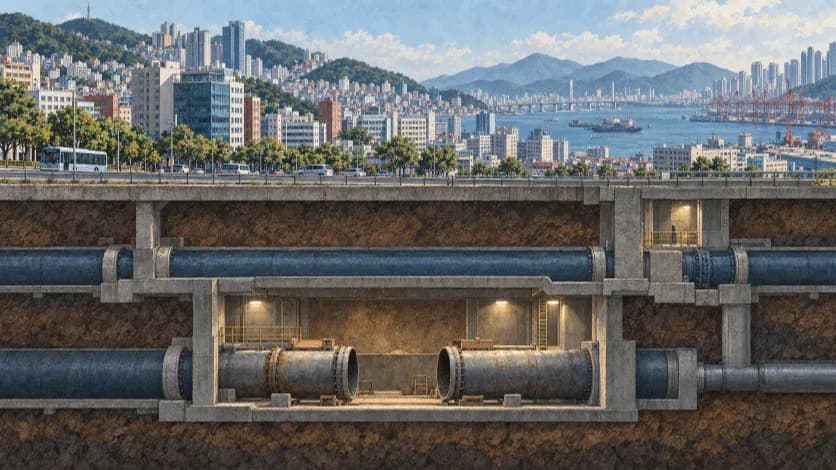
Busan’s Water System Is Entering a Harder Era of Renewal
Busan spent decades building a water system that can absorb major failures. N...
 NewsSep 28, 2026
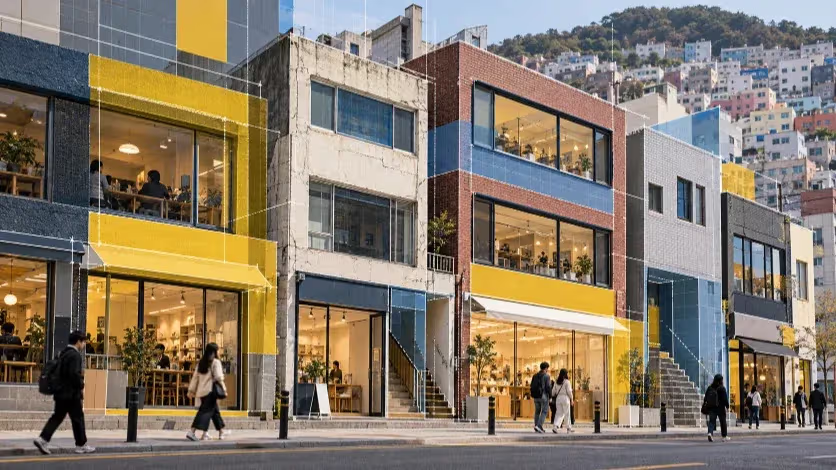
Why Some Commercial Space in Busan Is Hard to Reuse
Two empty commercial spaces exposed to the same broader economy can have very...
 NewsSep 20, 2026
What It Takes for U.S. Navy Repair Work to Become a Busan Industry
HJ Shipbuilding has brought U.S. Navy maintenance work to Yeongdo. Whether it...
More from the author
More from this byline
Stay with the same line of reporting through more work from this byline.
- NewsOct 6, 2026
Busan’s Water System Is Entering a Harder Era of Renewal
Reader Signal
Community readWhat did this report leave you with?
Choose the signal that best reflects your reading. Select it again to remove it.
One response per article
No response selected
A moderated conversation about the reporting.
One-level replies and newsroom moderation keep the conversation anchored to this article.
Discussion Status
Open
Please sign in to join the discussion.
Newsletter
Weekly reporting and context from Busan and Korea.