Free Transfers Across Busan–Gimhae–Yangsan Transit Networks Start Sept. 19
Starting Sept. 19, intercity transfer fees across Busan, Gimhae, and Yangsan will be abolished, saving commuters over ₩5.5B annually.

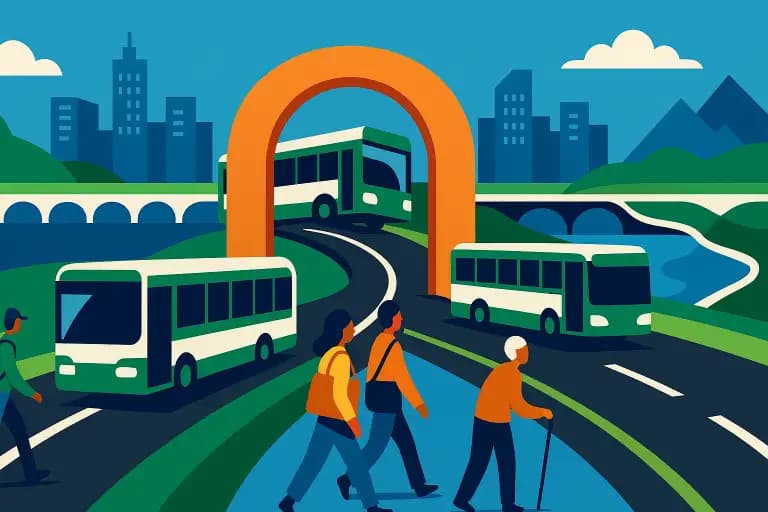
Busan, South Korea — On September 19, 2025, the extra 500 won charged on intercity transfers between Busan, Gimhae, and Yangsan disappears. The change is the product of a three-way agreement led by the Busan Metropolitan Government on one side and Gyeongsangnam-do working with its municipalities—Gimhae and Yangsan—on the other. It is not a region-wide overhaul involving Ulsan or the entirety of South Gyeongsang; it is a targeted fare integration for these three adjoining jurisdictions that share the densest daily cross-border travel flows.
The rule that has been in place since May 2011 was simple and persistent. When a rider crossed a city boundary and transferred—bus to metro, metro to the Busan–Gimhae light rail, or onto a bus operated by a neighboring municipality—an intercity surcharge of 500 won applied on the first such transfer. If a third leg involved yet another jurisdiction, an additional 200 won was added. Over a workweek the numbers were small; over a month they were noticeable for students and low-wage workers whose commutes routinely crossed administrative lines. From September 19, all of that vanishes for users who tap out and transfer within 30 minutes, up to two intercity transfers. The change is automatic for all transit cards; there is nothing to sign up for.
City data puts the annual household benefit at roughly 5.5 billion won. The estimate comes from the same pool of receipts the surcharge used to generate: about 5.5 billion won per year across Busan’s buses, metro, and the Busan–Gimhae LRT. A breakdown provided by Busan shows how that revenue was distributed: approximately 682 million won from city buses, 91 million from village buses, 2.548 billion from the metro, and 2.179 billion from the LRT—figures that sum to the line item now being zeroed out. For regular cross-border riders, the expected saving is more than 10,000 won per month.
The policy scope is intentionally narrow and administrative roles are distinct. Busan is a metropolitan city operating its own large rail and bus systems. Gimhae and Yangsan are municipal governments within Gyeongsangnam-do; their buses and the interconnection with the LRT feed the same commuter market but are planned and funded on a different scale. The new arrangement recognizes that scale difference without pretending there is a single, consolidated authority. Busan waives the surcharge on its side; Gyeongsangnam-do coordinates with Gimhae and Yangsan to do the same on theirs; operators are compensated through local budgets agreed for this program.
Practicalities matter to riders more than governance charts, so the agencies have published concrete examples. A Busan bus → LRT → Gimhae bus trip that would cost 4,600 won as three separate fares fell to 2,300 won under the old transfer regime and will now settle at 1,600 won with the surcharge removed—700 won saved on a single chain. A Busan bus → Yangsan bus → Busan express bus sequence that priced at 5,100 won as separate trips came to 2,600 won with the former transfer policy and will now be 2,100 won, a 500 won reduction. The rules are uniform: a 30-minute transfer window, eligibility for up to two intercity transfers, and automatic application to all cards.
This is not the relaunch of the shelved “special union” proposal that once grouped Busan, Ulsan, and South Gyeongsang under a single framework. Nor is it a blanket program for all of Gyeongsangnam-do. It is a discrete, implement-now measure that fits a corridor where the administrative boundary is crossed most frequently and where small fare frictions produced the greatest cumulative cost for households. Officials in Busan describe it as a commuter-first fix for a real and measurable pain point; officials in Gyeongsangnam-do frame it as an inter-municipal service improvement that does not require re-drawing lines or re-writing statutes.
Whether the numbers work over time will depend on ridership and funding. Eliminating the surcharge removes a dependable revenue stream. The three governments say they will make up the difference from their budgets while they monitor changes in boardings and net operating results. If transfers rise as expected, part of the lost surcharge may be absorbed by base-fare demand. If they do not, more formal support—through provincial or national transport grants—will be needed to keep the operators whole.
For now, the correction is clear on the ground. On September 19, a rider moving from a Busan bus to the LRT and on to a Gimhae or Yangsan bus no longer pays a premium for crossing a line on a map. The decision reflects how the labor and education markets in this corner of the country already function: metropolitan Busan on one side, two smaller cities in Gyeongsangnam-do on the other, stitched together by daily trips rather than by a single charter.
Continue this reporting
Reporting on the same issue
Related coverage selected from the article's desk, topics and newsroom relationships.
 NewsOct 22, 2026
Busan Port’s LNG and Methanol Plan: Who Pays to Keep Fuel Ready?
Busan already supplies ships with LNG and methanol, drawing on regional and i...
 NewsOct 16, 2026
What Is Still Worth Going to See?
Busan’s biennale faces questions of artistic judgment and institutional care....
 NewsOct 14, 2026
What Became of Busan’s University Streets?
From 2015 to 2023, registered businesses grew near Pusan National University...
More from the author
More from this byline
Stay with the same line of reporting through more work from this byline.
- NewsOct 22, 2026
Busan Port’s LNG and Methanol Plan: Who Pays to Keep Fuel Ready?
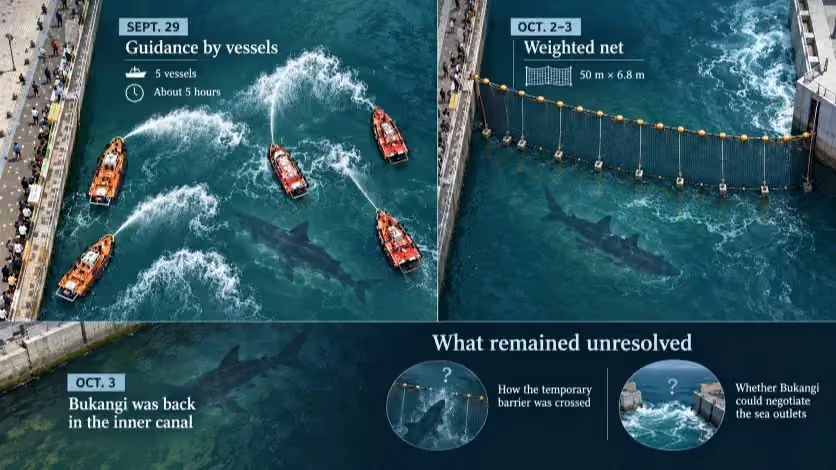 NewsOct 12, 2026
Bukangi, the Shark That Stayed in Busan’s North Port
Reader Signal
Community readWhat did this report leave you with?
Choose the signal that best reflects your reading. Select it again to remove it.
One response per article
No response selected
A moderated conversation about the reporting.
One-level replies and newsroom moderation keep the conversation anchored to this article.
Discussion Status
Open
Please sign in to join the discussion.
Newsletter
Weekly reporting and context from Busan and Korea.