Festival Shiwol 2025 Turns All of Busan Into a Stage for Autumn Visitors
Busan hosts Festival Shiwol 2025 with 26 cultural, business, and tourism events across the city, aiming to attract 3M foreign visitors.

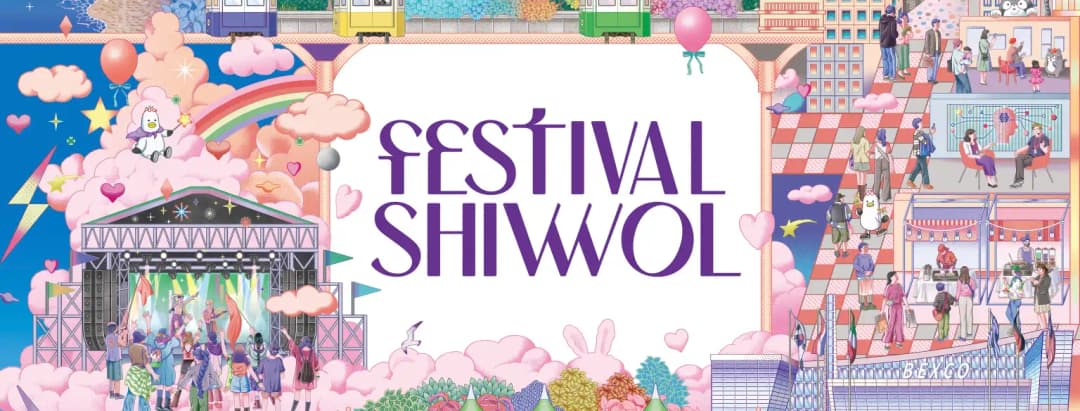
Busan will turn itself into a city-wide stage this autumn. From September 21 to October 3, the port city will host Festival Shiwol, a consolidated campaign that brings together 26 separate events under one brand. Unlike past years when each event operated in isolation, the 2025 edition extends across districts, bridges, parks and convention halls, presenting the city itself as the venue.
The program ranges from large-scale concerts and international conferences to unusual experiences such as dining on Gwangan Bridge and a cycling tour across seven of Busan’s landmark bridges. Officials frame the effort as a response to intensifying competition among Asian cities for tourists and international attention. By unifying its cultural, culinary, and business events under the Festival Shiwol banner, Busan aims to establish a recognizable identity and secure a place alongside global festival hubs.
The festival was first launched in 2024 as an experiment in consolidation. That edition combined 17 events across six sectors. Organizers described it as a trial run: could Busan promote itself more effectively by marketing cultural, business, and tourism activities under one umbrella? Attendance figures suggested the approach worked. The city recorded a sharp rise in both domestic and foreign visitors, with international arrivals up 77 percent compared to the previous year.
This year the scale has expanded. Ten sectors are represented, from performing arts and film to food, design, and entrepreneurship. Events once confined to central districts are now spread across the metropolitan area, involving local governments in Sasang, Geumjeong, and Buk-gu. Officials are keen to emphasize that the program is not a series of isolated performances but a coordinated campaign with shared branding, ticketing, and promotion.
The highlights are designed to create images that resonate beyond Busan. On September 21, a bicycle race across seven of the city’s signature bridges will open the festival. That morning, one thousand visitors will take part in a “Brunch on the Bridge,” an hour-long dining event staged directly on Gwangan Bridge. Later in the week, the North Port waterfront will host the World Drone Festival and Jazz Festa, combining a drone light show competition featuring teams from the United States, Japan, and China with a live jazz program.
Other major components anchor the campaign in established venues. BEXCO will hold FLY ASIA 2025, an Asian startup expo expected to attract 20,000 participants from 14 countries, followed by the Busan International Food Expo and the Craft Beer Masters Challenge. A series of conferences under the brand Shiwol Insight will cover themes from urban branding and artificial intelligence to research and development policy.
The performing arts are also prominent. The Busan International Performing Arts Market will showcase more than 100 productions from 15 countries, staged at multiple theaters and cultural centers. The Busan International Rock Festival, one of Korea’s longest-running music events, will feature international headliners including The Smashing Pumpkins. Concurrently, the Busan International Film Festival and the Asia Contents & Film Market will continue their established programs, adding to the overall concentration of cultural activity.
Officials have invested in creating spaces where participants and organizers can meet across disciplines. Last year there was one such “Shiwol Lounge”; this year there will be three, located at BEXCO, The Bay 101, and the Rock Festival grounds. These lounges will serve as networking venues, offering free drinks to festival pass holders and hosting small exchange events.
The background to this expansion is competitive pressure. Busan’s tourism authorities point to models such as the Edinburgh Fringe Festival and South by Southwest in Austin, where multiple cultural strands are combined into city-wide brands that attract millions. The city’s leadership argues that Busan cannot rely on individual festivals alone to stand out in Asia’s crowded tourism market. By presenting a coherent identity under the Festival Shiwol banner, they hope to establish Busan as a recognizable festival hub.
The timing is also significant. In 2025, Busan surpassed two million foreign visitors in record time and is targeting three million by the year’s end. Mayor Park Heong-joon has publicly linked Festival Shiwol to this goal, calling it a “catalyst” for reaching the milestone. The budget of 9.5 billion won reflects this ambition, with funds allocated not only to event operations but also to branding, marketing, and digital tools such as a dedicated festival application.
The festival is also intended as a platform for business collaboration. Partnerships include Uber, which will provide discounted rides to participants, and Mercedes-Benz Korea, which is sponsoring a “Festival Shiwol & Benz House.” Local banks and food providers are also involved, tying the campaign to both global and regional companies.
What distinguishes Festival Shiwol from traditional festivals is less the individual content — film, music, food, and conferences are already well established in Busan — and more the attempt to integrate them into a single narrative. Organizers frame it as a step beyond the “fragmented” use of public funds for separate events. The challenge will be whether the shared brand translates into sustained recognition abroad and repeat tourism beyond the two-week period.
For now, Busan is positioning itself not only as a host city but as the festival itself. Bridges become dining halls, ports become concert arenas, and the entire urban space is recast as a stage. The experiment reflects a broader shift: in the competition among cities, the festival is no longer a temporary event within the city but a way to define the city’s identity itself.
Continue this reporting
Reporting on the same issue
Related coverage selected from the article's desk, topics and newsroom relationships.
 NewsOct 22, 2026
Busan Port’s LNG and Methanol Plan: Who Pays to Keep Fuel Ready?
Busan already supplies ships with LNG and methanol, drawing on regional and i...
 NewsOct 16, 2026
What Is Still Worth Going to See?
Busan’s biennale faces questions of artistic judgment and institutional care....
 NewsOct 14, 2026
What Became of Busan’s University Streets?
From 2015 to 2023, registered businesses grew near Pusan National University...
More from the author
More from this byline
Stay with the same line of reporting through more work from this byline.
- NewsOct 22, 2026
Busan Port’s LNG and Methanol Plan: Who Pays to Keep Fuel Ready?
 NewsOct 12, 2026
Bukangi, the Shark That Stayed in Busan’s North Port
Reader Signal
Community readWhat did this report leave you with?
Choose the signal that best reflects your reading. Select it again to remove it.
One response per article
No response selected
A moderated conversation about the reporting.
One-level replies and newsroom moderation keep the conversation anchored to this article.
Discussion Status
Open
Please sign in to join the discussion.
Newsletter
Weekly reporting and context from Busan and Korea.