Daewoo Pharm Invests ₩50B in Busan to Expand Eye Drop Production
Daewoo Pharm to invest ₩50B in Busan to expand eye drop production and boost local biotech capacity.

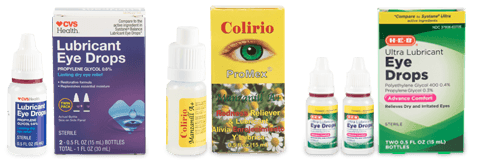
Busan - The city of Busan signed a 50 billion won investment memorandum of understanding (MOU) with Daewoo Pharmaceutical Co., Ltd. on June 23. The agreement, focused on expanding Daewoo’s eye drop production facility in Saha-gu, is part of a growing effort by the municipal government to attract biotech investment and reduce Korea’s long-standing industrial centralization around Seoul and the capital region.
Under the agreement, Daewoo Pharmaceutical will build a state-of-the-art manufacturing complex on unused land adjacent to its current headquarters by 2027. The facility, covering approximately 6,400 square meters, will more than double the company’s current eye drop production capacity. The expansion is expected to create over 100 new jobs, most of which will likely be filled by graduates from nearby universities such as Dong-A University and Kyungsung University, reinforcing the company's longstanding ties to the local talent pool.
Founded in Busan in 1976, Daewoo Pharmaceutical is one of the region’s few homegrown pharmaceutical firms. It has specialized in ophthalmic solutions for decades and now produces over 200 types of prescription drugs. The company has also expanded its contract manufacturing (CMO) services, attracting clients both domestically and abroad. Officials say the new investment will further strengthen its competitiveness in a highly specialized segment of the pharmaceutical market.
Mayor Park Heong-joon, who attended the signing ceremony at Daewoo's headquarters, emphasized the significance of the investment, not only in terms of economic development but also as a message to the industry that firms do not need to relocate to Seoul or Incheon to thrive. “We hope Daewoo Pharmaceutical will become a driving force in Busan’s future bioindustry. The city will fully support the company’s growth,” he said.
Busan has historically lagged behind the capital area in terms of biotechnology infrastructure. Korea’s pharmaceutical R&D and production capacity has long been concentrated in the Osong, Songdo, and Pangyo regions, where government agencies and corporate R&D centers are clustered. In contrast, Busan's industrial profile has been dominated by shipping, automotive, and machinery, leaving its biotech presence comparatively limited.
However, that may be starting to change. Last year, Prestige Biopharma, a Singapore-headquartered biotech firm, opened its Korean R&D headquarters—the Innovation Discovery Center (IDC)—in Busan’s Gangseo-gu. The facility is focused on the development of antibody-based therapeutics. Around the same time, Busan-based synthetic drug manufacturer Binex completed a new cGMP-certified factory in the city.
These investments form part of a broader local strategy to transform Busan into a “secondary biotech hub.” The city has been designated as an Advanced Investment Zone by the Korean government, allowing for preferential administrative and financial support to attract high-value industries like pharmaceuticals and digital health. Local officials argue that the development of a regional biotech ecosystem, while unlikely to match Seoul in scale, could play a complementary role in Korea’s national bioeconomy—particularly in specialized segments like ophthalmology, biosimilars, and advanced manufacturing.
The national government also appears to be pushing in the same direction. Korea’s National Bio Committee, launched in 2025, aims to foster regional diversification of biotech infrastructure and to train over 110,000 skilled personnel in the life sciences by 2030.
While the Daewoo investment marks progress, challenges remain. Busan lacks the regulatory presence, investor networks, and high-volume research institutions that power Seoul’s biotech ecosystem. To compete in the long run, the city will likely need not just local champions but sustained public-private partnerships, talent development, and further infrastructure.
Still, for Daewoo Pharmaceutical, the decision to remain and expand in Busan—rather than relocate or build elsewhere—signals confidence in the city’s potential. For local government, it is an encouraging case study of how targeted support can help a mid-sized city develop sectoral expertise in a high-value industry.
Continue this reporting
Reporting on the same issue
Related coverage selected from the article's desk, topics and newsroom relationships.
 NewsOct 22, 2026
Busan Port’s LNG and Methanol Plan: Who Pays to Keep Fuel Ready?
Busan already supplies ships with LNG and methanol, drawing on regional and i...
 NewsOct 16, 2026
What Is Still Worth Going to See?
Busan’s biennale faces questions of artistic judgment and institutional care....
 NewsOct 14, 2026
What Became of Busan’s University Streets?
From 2015 to 2023, registered businesses grew near Pusan National University...
More from the author
More from this byline
Stay with the same line of reporting through more work from this byline.
- NewsOct 22, 2026
Busan Port’s LNG and Methanol Plan: Who Pays to Keep Fuel Ready?
 NewsOct 12, 2026
Bukangi, the Shark That Stayed in Busan’s North Port
Reader Signal
Community readWhat did this report leave you with?
Choose the signal that best reflects your reading. Select it again to remove it.
One response per article
No response selected
A moderated conversation about the reporting.
One-level replies and newsroom moderation keep the conversation anchored to this article.
Discussion Status
Open
Please sign in to join the discussion.
Newsletter
Weekly reporting and context from Busan and Korea.