Busan’s Geumjeongsan Becomes Korea’s First Urban National Park
Busan’s Geumjeongsan Mountain has been officially designated South Korea’s 24th national park — and the first located entirely within a city.
Busan, South Korea — For almost two decades, Busan’s citizens and civic groups have sought to see the mountain that defines their city’s skyline formally recognized as part of Korea’s natural heritage. On October 31, 2025, that aspiration became reality when Geumjeongsan was designated the nation’s twenty-fourth national park — and the first located entirely within a metropolitan area.
The decision, confirmed by the National Park Committee under the Ministry of Climate, Energy and Environment, marks both the culmination of a 20-year civic movement and the start of a national experiment in how ecological protection can coexist with the daily rhythms of an urban population of 3.3 million.
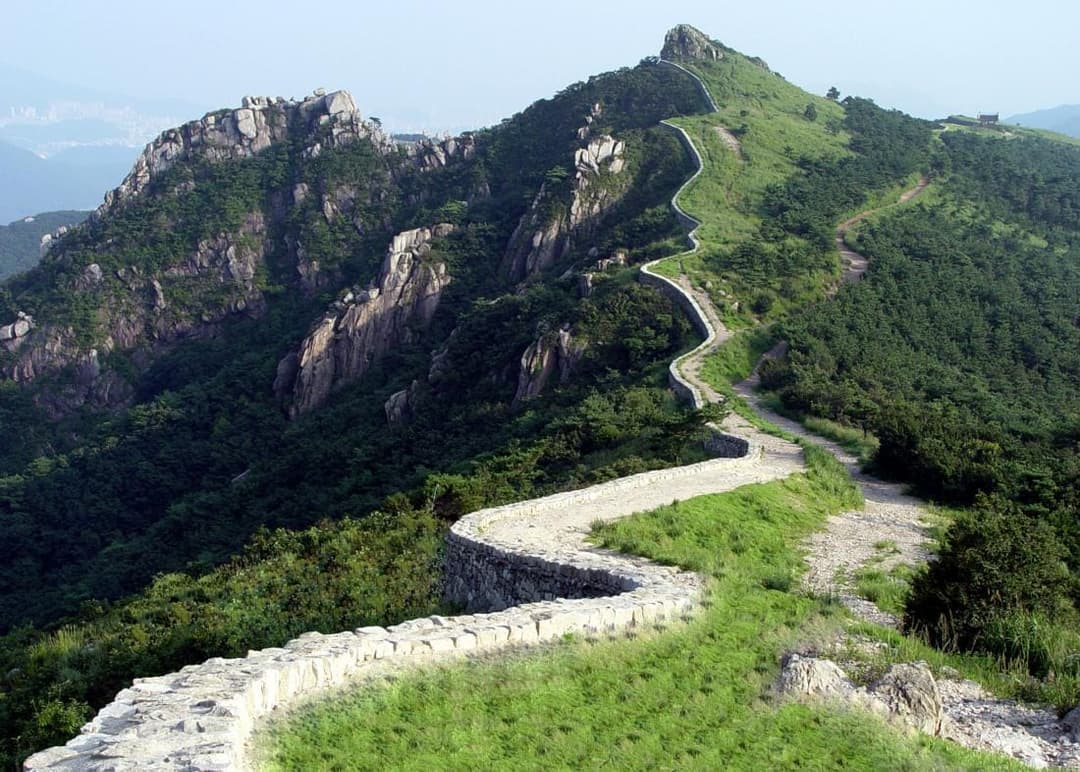
Unlike Korea’s other mountainous parks, most of which sit deep in rural terrain, Geumjeongsan rises from within the city’s fabric. Apartment complexes, schools, and subway lines reach almost to its forested ridges, and centuries-old sites such as Beomeosa Temple and the vast Geumjeong Fortress walls lie within a 30-minute radius of downtown. The park’s boundary, drawn across 66.9 square kilometers, encompasses not only wilderness but entire communities — a deliberate inclusion that reflects Busan’s ambition to make nature part of its urban identity rather than an external refuge.
According to the ministry’s feasibility study conducted from 2020 to 2021, Geumjeongsan meets every criterion for national park status. Fourteen endangered species, including the wildcat Felis bengalensis and the Eurasian otter, inhabit its slopes among a total of 1,782 recorded wildlife species — an average biodiversity density of 23 species per square kilometer, ranking roughly fourteenth among Korea’s national parks.
The mountain’s physical landscape features 17 peaks, 25 distinctive rock formations, 13 wetlands, and a single limestone cave, giving it the ninth-highest count of natural sites among existing parks. Its cultural landscape is even richer, with 127 officially recognized cultural assets — including one National Treasure and 17 nationally designated heritage items — more than any other park in the country.
In economic terms, the Busan Institute of Urban Research estimated the mountain’s total asset value at 6.62 trillion won. Its “preservation value” was placed at 2.52 trillion won annually, ranking nineteenth among Korea’s parks, while its “use value” — reflecting its accessibility to residents — ranked third at 631 billion won per year. These numbers illustrate both the promise and the tension of designating an urban landscape as a protected area: it is simultaneously a conservation zone and one of the most heavily used recreation spaces in the nation.
The civic movement that drove the designation began in 2005 as a call for integrated management of the Geumjeongsan–Baegyangsan ridge. Ten years later, a petition signed by over 100,000 residents propelled the idea into policy debate. After years of inter-agency stalemate, the turning point came in November 2024, when the city, Beomeosa Temple, and a coalition of eighty civic organizations signed a memorandum of understanding pledging joint stewardship. That agreement broke bureaucratic paralysis and gave the project the legitimacy to pass national review.
Within the park’s boundary lie several villages and small commercial zones — Sanseong-maeul near the fortress walls, Hopo-maeul by the Nakdong River, and hillside neighborhoods that merge into hiking routes. Under the National Parks Act, existing homes and businesses remain, but new construction or renovation requires approval. Roughly 79 percent of the area is privately owned, an unusually high figure that complicates land management.
The government estimates it may cost between 2.5 and 3 trillion won to gradually purchase portions of this land, though officials emphasize that most of Geumjeongsan already lies within development-restricted zones. The greater challenge is social: persuading roughly 1,600 private landholders — of whom just 87 own three-quarters of the total area — to align with the park’s long-term conservation goals.
Busan’s administration argues that coexistence, not relocation, will define management. Plans call for “park-village zones,” allowing residents to maintain livelihoods through eco-tourism, traditional crafts, or guided trail operations. The model draws from precedents in Jirisan and Mudeungsan, where local participation reduced conflict, but implementing such flexibility inside a dense urban matrix remains untested.
The park’s proximity to millions of potential visitors magnifies both opportunity and risk. Before its designation, Geumjeongsan already saw about 3.1 million hikers annually, fifth among all Korean mountains; projections now exceed 4 million per year. Such accessibility underpins its tourism appeal but raises fears of congestion, erosion, and waste management issues. Officials are studying timed-entry systems and shuttle links to reduce vehicle pressure at main trailheads, acknowledging that urban convenience can easily become ecological stress.
For Busan, the designation serves multiple agendas. It supports the city’s “Green Urbanism” strategy, complements national carbon-neutral goals for 2050, and reinforces a civic identity that extends beyond its maritime brand. The park transforms Busan from a city ringed by nature to one that lives within it — a symbolic shift toward a new metropolitan ecology where environmental protection and urban design share the same map.
In Seoul, Bukhansan National Park has long served as Korea’s model for balancing access and protection at a city’s edge. Yet Busan’s situation differs sharply. Bukhansan’s boundary runs along the capital’s periphery, separating residential blocks from the granite peaks that attract millions of climbers; Geumjeongsan’s boundary runs through its neighborhoods.
Where Seoul’s challenge has been managing crowds on popular ridges, Busan’s is managing daily life inside a conservation zone — balancing property rights, tourism, and ecological integrity within the same jurisdiction. Bukhansan taught the country how to contain mass visitation; Geumjeongsan will test whether a modern city can absorb a national park without displacing its communities.
Nationally, the park’s creation is significant in another respect: it is the first new designation in 37 years that did not evolve from an existing protected area such as a provincial park. It signals a policy shift from preservation of remote sites toward integration of ecological assets into urban planning. Internationally, it places Busan among a small set of global cities — including Toronto, with Rouge National Urban Park, and Nairobi, with its wildlife reserve at the city’s edge — experimenting with the idea that nature can be part of urban infrastructure rather than its opposite.
Yet the task ahead is formidable. The management authority must coordinate seven local governments, balance state and private ownership, and maintain both ecological stability and resident trust. If successful, Geumjeongsan could provide Korea with a replicable model for reconciling dense development and biodiversity protection in other metropolitan regions. If it falters, it could expose the limits of extending rural conservation logic into an urban setting.
As evening falls over Busan, the ridgeline of Geumjeongsan fades into the city lights — a visual reminder that the frontier between nature and modern life has always been porous. The park’s endurance will depend not on promotional slogans or visitor counts but on quieter measures: the clarity of its streams after the monsoon, the resilience of wildlife along its trails, and the confidence of residents who now live within a protected landscape. If those balances hold, Geumjeongsan will not only redefine Busan’s skyline but also its civic philosophy — showing that a metropolis can evolve not by conquering nature, but by learning to live inside it.
Continue this reporting
Reporting on the same issue
Related coverage selected from the article's desk, topics and newsroom relationships.
 NewsOct 12, 2026
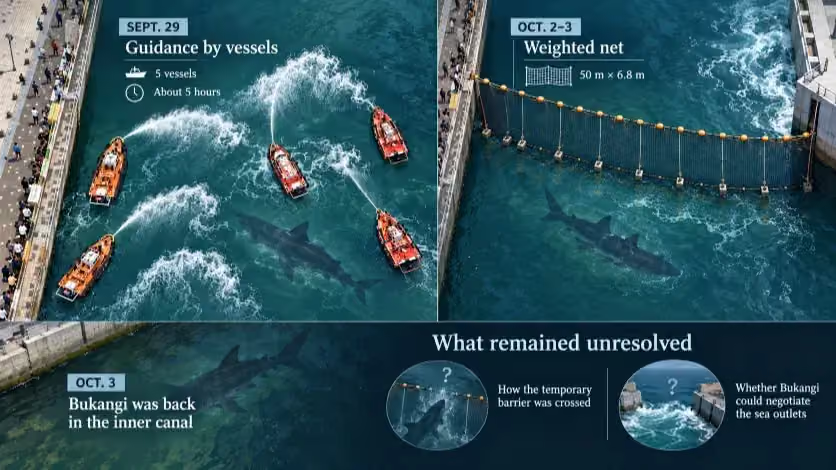
Bukangi, the Shark That Stayed in Busan’s North Port
A rescue net guided Bukangi toward the sea, but the dusky shark returned to B...
 NewsOct 6, 2026
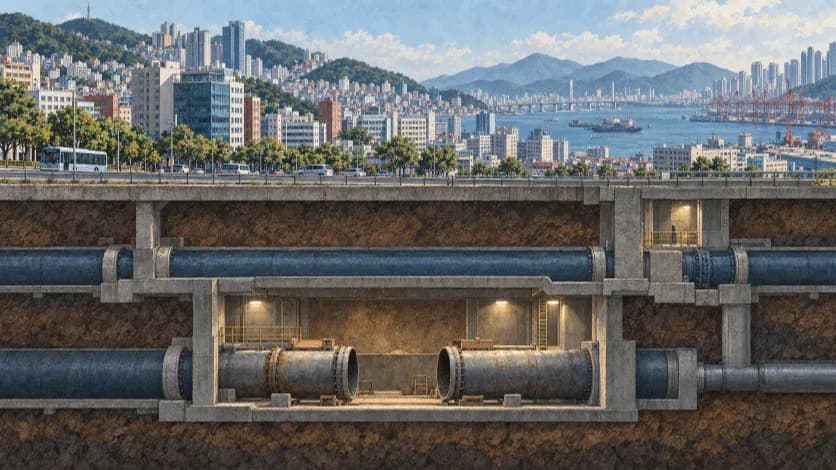
Busan’s Water System Is Entering a Harder Era of Renewal
Busan spent decades building a water system that can absorb major failures. N...
 NewsSep 28, 2026
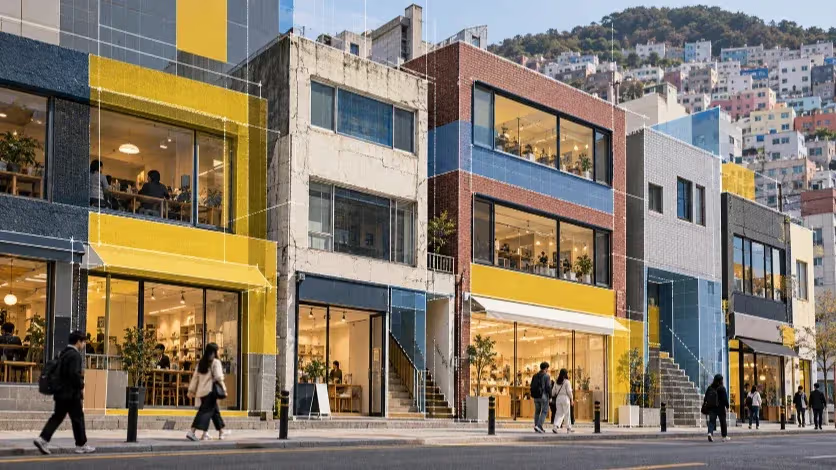
Why Some Commercial Space in Busan Is Hard to Reuse
Two empty commercial spaces exposed to the same broader economy can have very...
More from the author
More from this byline
Stay with the same line of reporting through more work from this byline.
- NewsOct 12, 2026
Bukangi, the Shark That Stayed in Busan’s North Port
- NewsOct 6, 2026
Busan’s Water System Is Entering a Harder Era of Renewal
Reader Signal
Community readWhat did this report leave you with?
Choose the signal that best reflects your reading. Select it again to remove it.
One response per article
No response selected
A moderated conversation about the reporting.
One-level replies and newsroom moderation keep the conversation anchored to this article.
Discussion Status
Open
Please sign in to join the discussion.
Newsletter
Weekly reporting and context from Busan and Korea.