Busan to Develop 500-Bed Medical Complex in Myeongji International City
Busan’s Myeongji Medical Town project, set to open in 2033, will include a 500-bed hospital, residential spaces, and a wellness center.

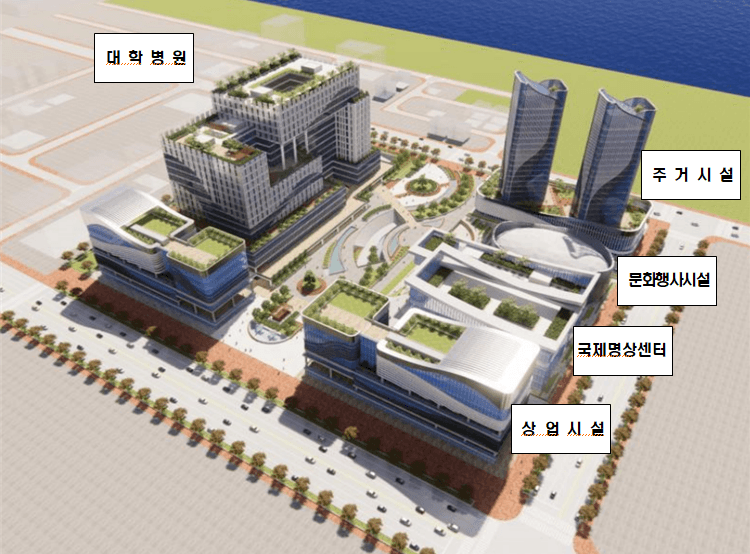
Busan, South Korea – The Busan Metropolitan Government has entered into a four-party agreement with Dongguk University, MKAH Co. Ltd., and the Busan-Jinhae Free Economic Zone Authority to establish a large-scale integrated medical complex in Myeongji International City, located in the city’s western Gangseo District.
The agreement was signed on June 19 at Busan City Hall. The proposed development will include a 500-bed general hospital, to be operated by Dongguk University, alongside residential, cultural, commercial, and wellness facilities. The total site area is approximately 64,331 square meters. Construction is expected to begin in 2026 and be completed by 2033, although this timeline is subject to change.
The project is part of Busan’s broader effort to expand essential infrastructure in rapidly growing districts. Gangseo District has seen a steady population increase in recent years due to developments such as Myeongji International City and Eco Delta City. However, despite ongoing urban growth, the area continues to face limitations in healthcare access. Gangseo currently lacks a tertiary hospital and has one of the lowest hospital bed counts per capita among the city's 16 districts. Residents in need of advanced medical services often travel more than 20 kilometers to reach hospitals in central Busan.
The planned medical town is expected to address these gaps by providing a full-service hospital along with supplementary facilities, including a meditation center. The inclusion of wellness and cultural components reflects the involvement of Dongguk University and MKAH, both of which have ties to the Jogye Order of Korean Buddhism.
The city government will support administrative procedures, including permits and infrastructure connections. MKAH, a special-purpose company established for this project, will lead the physical development of the site. Dongguk University will manage hospital operations, while the Busan-Jinhae Free Economic Zone Authority will assist with regulatory processes within the designated zone.
Local officials have indicated that the development aligns with Busan’s long-term planning strategies, including its “15-minute city” initiative, which aims to improve urban accessibility and decentralize essential services. The location of the site, adjacent to international schools and cultural districts, is viewed as suitable for an integrated development model.
While the project has institutional backing, questions remain regarding MKAH’s experience and financing capacity. The company has not previously led a medical infrastructure project of this scale, and detailed funding plans have not been disclosed as of the agreement date. Similar initiatives in the region have encountered delays in the past due to procedural or financial challenges.
The city administration has stated that the integrated complex is intended to serve both local residents and the broader western Busan region. Whether the project proceeds as scheduled will depend on effective coordination among the parties involved, as well as on external factors such as market conditions and community response.
Continue this reporting
Reporting on the same issue
Related coverage selected from the article's desk, topics and newsroom relationships.
 NewsOct 22, 2026
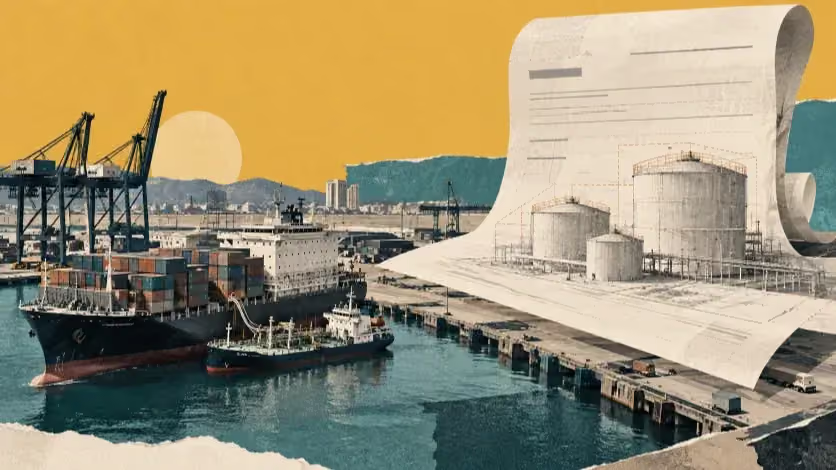
Busan Port’s LNG and Methanol Plan: Who Pays to Keep Fuel Ready?
Busan already supplies ships with LNG and methanol, drawing on regional and i...
 NewsOct 16, 2026
What Is Still Worth Going to See?
Busan’s biennale faces questions of artistic judgment and institutional care....
 NewsOct 14, 2026
What Became of Busan’s University Streets?
From 2015 to 2023, registered businesses grew near Pusan National University...
More from the author
More from this byline
Stay with the same line of reporting through more work from this byline.
- NewsOct 22, 2026
Busan Port’s LNG and Methanol Plan: Who Pays to Keep Fuel Ready?
 NewsOct 12, 2026
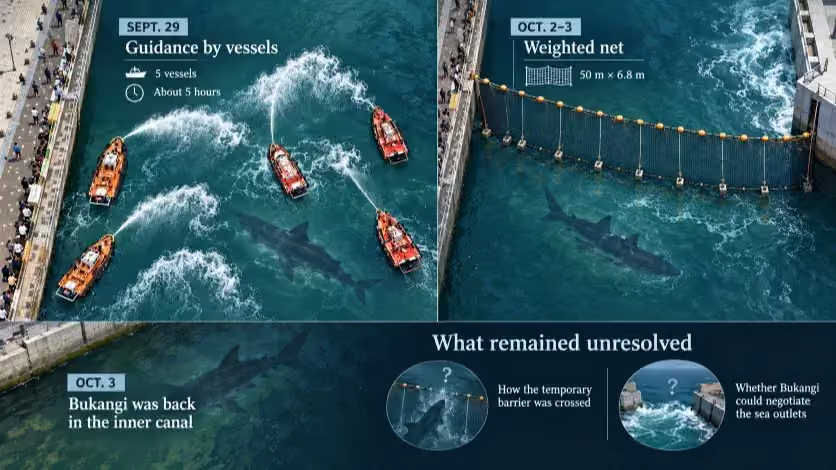
Bukangi, the Shark That Stayed in Busan’s North Port
Reader Signal
Community readWhat did this report leave you with?
Choose the signal that best reflects your reading. Select it again to remove it.
One response per article
No response selected
A moderated conversation about the reporting.
One-level replies and newsroom moderation keep the conversation anchored to this article.
Discussion Status
Open
Please sign in to join the discussion.
Newsletter
Weekly reporting and context from Busan and Korea.