Busan Selected as 2028 World Design Capital by WDO
Busan has been selected as the World Design Capital for 2028, joining a shortlist of global cities recognized for integrating design into urban policy.

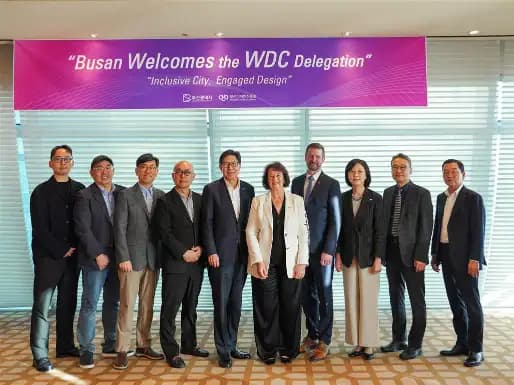
Busan, South Korea — Busan has been named the World Design Capital for 2028. The decision was confirmed in July by the World Design Organization, a non-governmental body headquartered in Montreal. It is the second time a South Korean city has received the title, the first being Seoul in 2010.
This designation is not an award in the conventional sense. It does not come with funding or a trophy. What it offers is visibility—and expectation. The city will be expected to organize a year-long program in 2028 to demonstrate how design plays a role in its public systems, its urban governance, and its everyday life. The WDO, in its statement, pointed to Busan’s “potential for transformation through design culture.” That phrase is as open-ended as it is demanding.
Busan’s bid was submitted under the theme “Inclusive City, Engaged Design.” In practical terms, the city presented projects like the community-led renovation of Bongsan Village, the cultural redevelopment of the F1963 industrial site, and the ongoing work at North Port. Officials also pointed to local design education institutions, particularly Dongseo University, as part of the city’s design infrastructure. These were not blockbuster projects. That may have been the point. Busan framed its bid not around spectacle, but around process.
The World Design Organization does not release evaluation scores or the contents of submitted proposals. This is in line with how the program has been administered in past cycles. The criteria, broadly outlined, focus on a city’s ability to integrate design into governance, support participation, and deliver a year-long program with international reach. In Busan’s case, the organization pointed to the city’s planning capacity and civic engagement efforts as key considerations. What distinguished its proposal from Hangzhou’s is not publicly known.
Planning for the 2028 program is still in its early stages. The city has not yet released details on budgeting, staffing, or operational governance. Such information is typically developed over a longer lead time, as seen in previous WDC cities. In Helsinki, preparations led to the establishment of design-focused offices within municipal departments. Cape Town used the year to expand access to design tools in underserved communities. These examples varied in scope and impact, but each city faced similar pressures: how to align long-term policy with the expectations of a global designation.
Busan’s program will begin formal preparations in 2026, following the signing ceremony scheduled for early that year. The main calendar of events will take place throughout 2028, including exhibitions, public forums, and international conferences. These anchor events are standard for WDC host cities. They are also accompanied by administrative demands, such as coordination across departments and engagement with both local communities and international networks.
How design functions within Busan’s municipal systems remains to be defined. In this context, design refers less to aesthetics than to the ways a city operates—how decisions are structured, how services are accessed, and how residents take part in shaping their environment. These aspects are not always immediately visible. The success of the program will likely depend on how clearly the city can translate its design vision into institutional practice.
Mayor Park Heong-joon described the designation as a turning point. The process ahead will test how that vision takes shape. If Busan builds the systems to support it, the program could help establish a long-term design framework. If the momentum stays within the limits of events, its impact may be more symbolic than structural.
Continue this reporting
Reporting on the same issue
Related coverage selected from the article's desk, topics and newsroom relationships.
 NewsOct 22, 2026
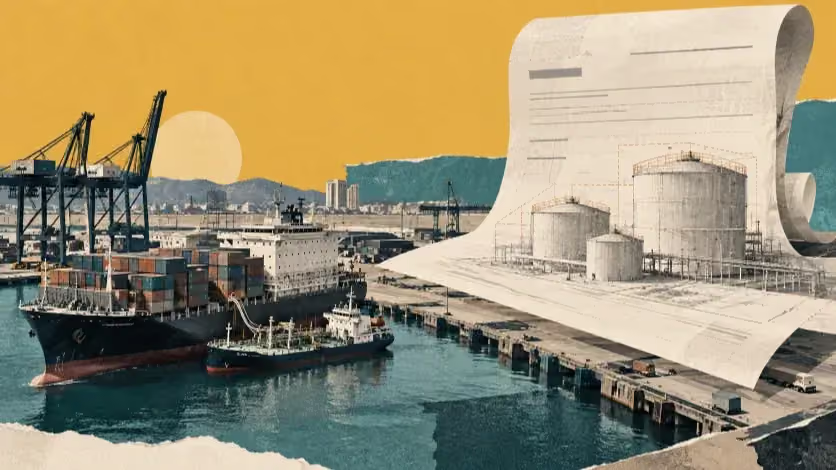
Busan Port’s LNG and Methanol Plan: Who Pays to Keep Fuel Ready?
Busan already supplies ships with LNG and methanol, drawing on regional and i...
 NewsOct 16, 2026
What Is Still Worth Going to See?
Busan’s biennale faces questions of artistic judgment and institutional care....
 NewsOct 14, 2026
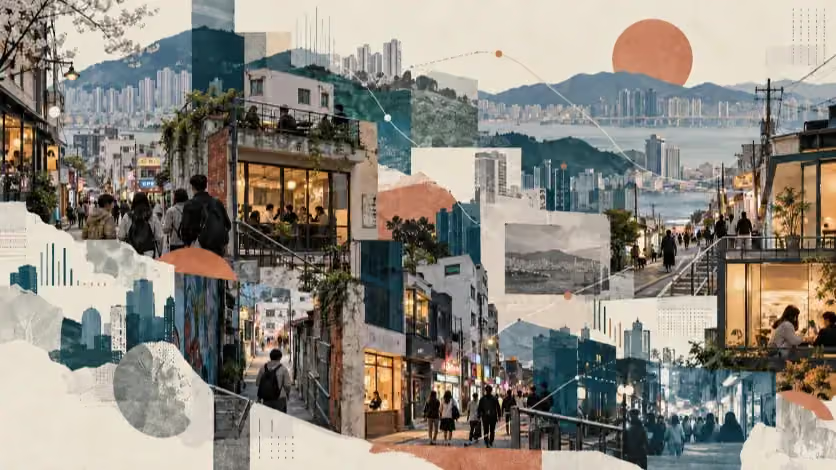
What Became of Busan’s University Streets?
From 2015 to 2023, registered businesses grew near Pusan National University...
More from the author
More from this byline
Stay with the same line of reporting through more work from this byline.
- NewsOct 22, 2026
Busan Port’s LNG and Methanol Plan: Who Pays to Keep Fuel Ready?
 NewsOct 12, 2026
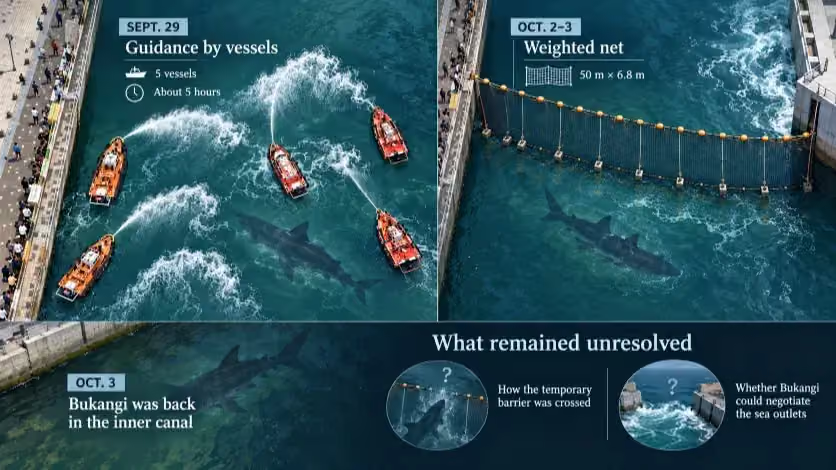
Bukangi, the Shark That Stayed in Busan’s North Port
Reader Signal
Community readWhat did this report leave you with?
Choose the signal that best reflects your reading. Select it again to remove it.
One response per article
No response selected
A moderated conversation about the reporting.
One-level replies and newsroom moderation keep the conversation anchored to this article.
Discussion Status
Open
Please sign in to join the discussion.
Newsletter
Weekly reporting and context from Busan and Korea.