Busan Seeks Inspiration from Boston’s Urban Success Story
Busan, South Korea — As part of its ambitious plans to rejuvenate its waterfront areas, Busan has invited Boston’s urban design expert, Ju Jung-Joon, to share insights from the successful redevelopment of Boston’s South Boston Waterfront. The area, once an industrial zone, was transformed into a bustling mixed-use district following Boston's "Big Dig" project, which rerouted highways underground, reconnecting the city to its waterfront. The South Boston Waterfront, also known as the Seaport Dis

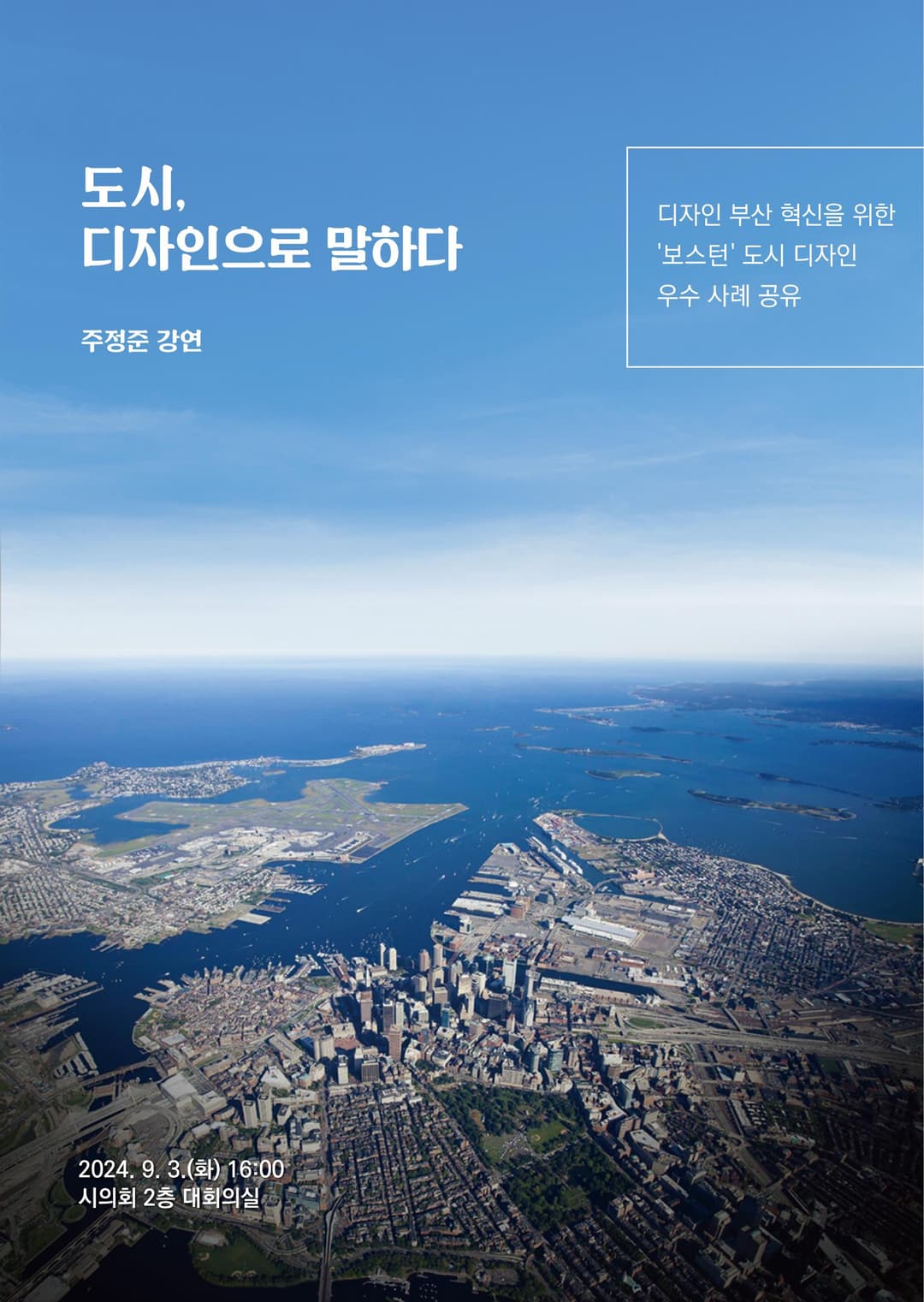
Busan, South Korea — As part of its ambitious plans to rejuvenate its waterfront areas, Busan has invited Boston’s urban design expert, Ju Jung-Joon, to share insights from the successful redevelopment of Boston’s South Boston Waterfront. The area, once an industrial zone, was transformed into a bustling mixed-use district following Boston's "Big Dig" project, which rerouted highways underground, reconnecting the city to its waterfront.
The South Boston Waterfront, also known as the Seaport District, underwent a significant transformation after the Big Dig, one of the largest infrastructure projects in U.S. history. The project rerouted the city’s main highways underground, which freed up the surface space and reconnected the city with its waterfront. This opened up opportunities for the redevelopment of the South Boston Waterfront, an area that had long been dominated by industrial warehouses and rail yards.
Today, the Seaport District is a vibrant area that includes a mix of residential, commercial, and cultural spaces, such as the Institute of Contemporary Art. The success of the redevelopment is attributed to careful urban planning, public-private partnerships, and a focus on sustainability and accessibility. Public spaces, parks, and a waterfront promenade were key features that made the area appealing to residents and businesses alike.
Busan, like Boston, has significant waterfront areas that are underutilized and ripe for redevelopment. By drawing on Boston’s experience, Busan aims to transform its waterfront into a similar hub of activity. Key lessons from Boston include the importance of integrating transportation improvements with urban redevelopment, creating public spaces that are accessible and inviting, and engaging in public-private partnerships to drive development.
Ju Jung-Joon, who played a pivotal role in Boston’s redevelopment, emphasized the importance of having a clear vision and strong governance to guide large-scale urban projects. He also highlighted the need for flexibility and adaptability, as urban projects often encounter unexpected challenges, such as those Boston faced with its complex geotechnical conditions and historic preservation requirements.
Busan continues to evolve, the collaboration with international experts and the application of proven strategies from cities like Boston will be crucial in ensuring the success of its urban renewal projects.
Continue this reporting
Reporting on the same issue
Related coverage selected from the article's desk, topics and newsroom relationships.
 NewsOct 16, 2026
What Is Still Worth Going to See?
Busan’s biennale faces questions of artistic judgment and institutional care....
 NewsOct 14, 2026
What Became of Busan’s University Streets?
From 2015 to 2023, registered businesses grew near Pusan National University...
 NewsOct 12, 2026
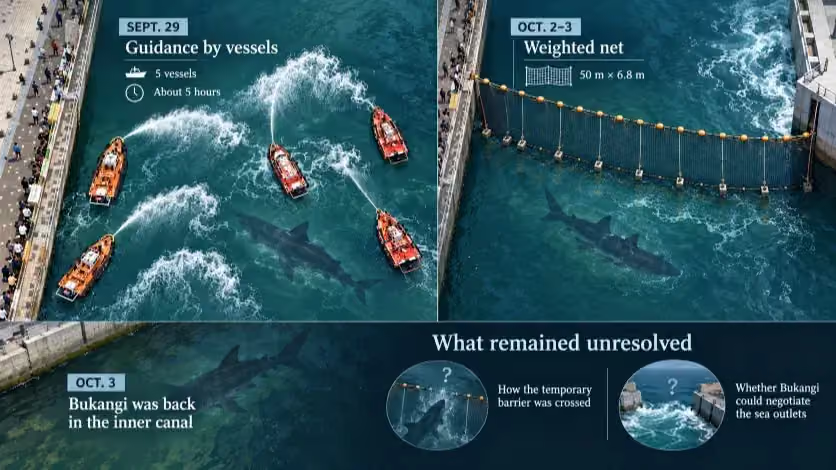
Bukangi, the Shark That Stayed in Busan’s North Port
A rescue net guided Bukangi toward the sea, but the dusky shark returned to B...
More from the author
More from this byline
Stay with the same line of reporting through more work from this byline.
 NewsOct 9, 2026
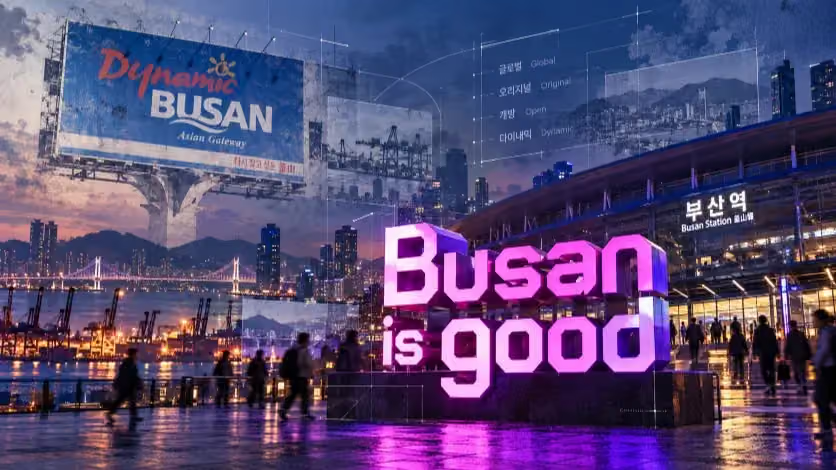
Why “Busan Is Good” Falls Short as a City Brand
 NewsSep 18, 2026
The Other AI Race Is for the Freedom to Change Course
Reader Signal
Community readWhat did this report leave you with?
Choose the signal that best reflects your reading. Select it again to remove it.
One response per article
No response selected
A moderated conversation about the reporting.
One-level replies and newsroom moderation keep the conversation anchored to this article.
Discussion Status
Open
Please sign in to join the discussion.
Newsletter
Weekly reporting and context from Busan and Korea.