Busan Port Pier 1 Shines for 2025 Busan Heritage Night
Busan hosts the 2025 Busan Heritage Night on Aug. 15–16, with night tours, performances, and media art at historic Pier 1 and UNESCO-listed wartime heritage sites.

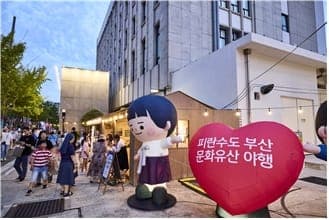
Busan, South Korea — Busan will light up its historic waterfront this summer as the city hosts the 10th “Sites of the Wartime Capital Busan” Heritage Night Festival (2025 Busan Heritage Night) on August 15 and 16, 2025, from 5 p.m. to 10 p.m.
The main stage will be Busan Port Pier 1, newly registered as a Cultural Heritage site in 2024, with additional programs at the Busan Modern History Museum, the Busan Meteorological Observatory, and Woam-dong Somak Village.
From August 1950 to August 1953, during the Korean War, Busan served as South Korea’s provisional capital for 1,023 days. Pier 1 became a lifeline for wartime supplies and refugees, while government offices, schools, and public spaces across the city were transformed into hubs of political and civilian activity.
Today, these locations are collectively recognized as the “Sites of the Wartime Capital Busan,” a group of nine heritage sites currently on UNESCO’s Tentative List for World Heritage recognition.
This year’s 2025 Busan Heritage Night, built around the concept of “8 Nights,” will present 20 programs blending history, culture, and interactive experiences. A media façade show titled “Back to the Wartime Capital” will transform Pier 1’s façade into a massive projection canvas every 20 minutes.
The UN Memorial Hall Children’s Choir will perform peace-themed songs such as Arirang and Beautiful Country. Traditional silent film narrator plays, or Byeonsa-geuk, will be revived for the occasion, while an original musical will tell the story of Busan’s transformation from wartime refuge to a city of peace. Actors in period dress will guide immersive re-enactments at night, offering visitors the chance to step directly into the city’s wartime streets.
To mark the festival’s 10th anniversary, the city will feature a parade of mascots from four participating districts, late-night openings of heritage museums, and collaborative performances by local artists. The program will span three zones — from Pier 1 to the Modern History Museum and the Meteorological Observatory, Busan Citizens Park, and Woam-dong Somak Village — all connected by heritage walking routes where visitors can collect stamps for souvenirs.
In line with Busan’s ESG goals, the 2025 Busan Heritage Night will include environmentally conscious activities such as night plogging, a combination of jogging and litter-picking, and the “1023 Refuge Walk,” a 10.23-kilometer heritage trail promoting carbon reduction.
Local businesses will take part through pop-up vintage cafés recreating the atmosphere of the wartime Milda-won Dabang, a receipt-based souvenir reward program, and welcome kits for guests staying at nearby accommodations.
The city expects around 100,000 visitors to join on-site and online over the two days. English-language guides, maps, and program descriptions will be available on the official website, busan-heritage-night.com. The festival sites are easily accessible via Busan Metro and city buses and are located near popular attractions such as Jagalchi Market, Yongdusan Park, and Gukje Market.
The festival serves as both a commemoration of Busan’s 1,023 days as South Korea’s wartime capital and a celebration of the city’s resilience, aiming to connect historical memory with contemporary urban revitalization and global recognition efforts.
Whether for the history, the performances, or the illuminated night scenery, the 2025 Busan Heritage Night offers a rare opportunity to walk through a city that once stood at the crossroads of war and peace.
Continue this reporting
Reporting on the same issue
Related coverage selected from the article's desk, topics and newsroom relationships.
 NewsOct 22, 2026
Busan Port’s LNG and Methanol Plan: Who Pays to Keep Fuel Ready?
Busan already supplies ships with LNG and methanol, drawing on regional and i...
 NewsOct 16, 2026
What Is Still Worth Going to See?
Busan’s biennale faces questions of artistic judgment and institutional care....
 NewsOct 14, 2026
What Became of Busan’s University Streets?
From 2015 to 2023, registered businesses grew near Pusan National University...
More from the author
More from this byline
Stay with the same line of reporting through more work from this byline.
- NewsOct 22, 2026
Busan Port’s LNG and Methanol Plan: Who Pays to Keep Fuel Ready?
 NewsOct 12, 2026
Bukangi, the Shark That Stayed in Busan’s North Port
Reader Signal
Community readWhat did this report leave you with?
Choose the signal that best reflects your reading. Select it again to remove it.
One response per article
No response selected
A moderated conversation about the reporting.
One-level replies and newsroom moderation keep the conversation anchored to this article.
Discussion Status
Open
Please sign in to join the discussion.
Newsletter
Weekly reporting and context from Busan and Korea.