Busan Picks HJ Consortium to Modernize Nation’s Largest Fish Market
The City of Busan has selected a consortium led by HJ Heavy Industries as the preferred bidder for the modernization of the Busan Cooperative Fish Market.

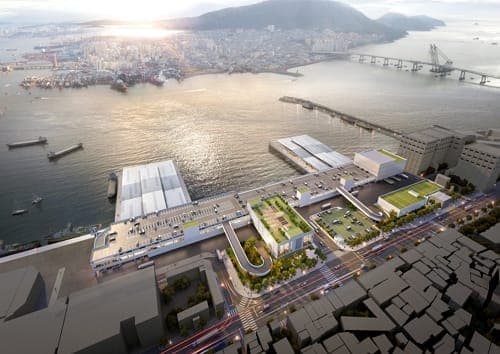
Busan, South Korea — The City of Busan has designated a consortium led by HJ Heavy Industries as the preferred bidder for the redevelopment of the Busan Cooperative Fish Market. The selection follows a technical proposal-based tender process and positions the long-delayed modernization project for full-scale launch later this year.
Originally opened in 1963, the market has operated as South Korea’s primary wholesale platform for coastal fish, particularly mackerel and pelagic species. It remains the largest seafood auction facility in the country by volume. However, the site has faced persistent challenges in recent years, including deteriorating physical infrastructure, outdated auction procedures, and limited compliance with modern hygiene standards. The need for comprehensive renewal was first formalized in a 2014 national feasibility study, which rated the project’s cost-benefit ratio at 2.37.
The redevelopment involves construction of a new market building with five above-ground floors and one basement level, totaling nearly 61,971 square meters in gross floor area. The project site covers more than 60,000 square meters within the Namhang Port district of Seo-gu district. The new facility will include mechanized auction halls, automated logistics and sorting systems, refrigeration infrastructure, and digital transaction platforms. Its design reflects national policy priorities concerning logistics efficiency, food safety, and modernization of fisheries-related infrastructure.
According to the proposal submitted by the HJ consortium, construction is scheduled to begin in December 2025 and will span approximately 47 months, with completion targeted for October 2029. The city has confirmed that the market will continue operating throughout construction. To facilitate this, the project will be executed in three sequential phases. This approach is intended to minimize disruptions to ongoing fish auctions and related commercial activity.
The total investment is estimated at 241.2 billion won. Of this, 165.5 billion won will be provided by the central government, 49.9 billion won by the Busan Metropolitan Government, and 25.8 billion won by the fisheries cooperative and private-sector stakeholders. This financing structure reflects both the national interest in seafood logistics reform and the strategic role of the market within Busan’s maritime economy.
The tendering process, reissued in January 2025 after an initial failed bid in 2024, adopted a design-build model emphasizing technical planning over cost alone. Evaluation criteria included construction sequencing, risk management, engineering feasibility, and integration of automation. Three domestic consortia submitted bids; the selection of the HJ-led team was finalized following a technical review and confirmation by the Public Procurement Service.
In addition to logistics improvements, the city intends for the new facility to serve as a public-facing space. Design elements under review include educational installations, observation zones, and controlled visitor access areas. However, the facility’s primary function will remain wholesale distribution, with ancillary features subject to operational feasibility.
With the preferred bidder now identified, the city will proceed with contract negotiations and finalize technical specifications for implementation. No major delays are expected at this stage. The redevelopment is part of a broader set of port-area infrastructure upgrades planned by the city through 2030, which also include cold chain terminals, marine leisure zones, and intermodal freight links.
The Busan Cooperative Fish Market currently processes more than 3,000 tons of seafood daily. Its modernization is projected to reduce spoilage, improve traceability, and support compliance with international food safety standards. Once operational, the new facility will form a core part of South Korea’s East Sea–South Sea fisheries supply chain.
Continue this reporting
Reporting on the same issue
Related coverage selected from the article's desk, topics and newsroom relationships.
 NewsOct 22, 2026
Busan Port’s LNG and Methanol Plan: Who Pays to Keep Fuel Ready?
Busan already supplies ships with LNG and methanol, drawing on regional and i...
 NewsOct 16, 2026
What Is Still Worth Going to See?
Busan’s biennale faces questions of artistic judgment and institutional care....
 NewsOct 14, 2026
What Became of Busan’s University Streets?
From 2015 to 2023, registered businesses grew near Pusan National University...
More from the author
More from this byline
Stay with the same line of reporting through more work from this byline.
- NewsOct 22, 2026
Busan Port’s LNG and Methanol Plan: Who Pays to Keep Fuel Ready?
 NewsOct 12, 2026
Bukangi, the Shark That Stayed in Busan’s North Port
Reader Signal
Community readWhat did this report leave you with?
Choose the signal that best reflects your reading. Select it again to remove it.
One response per article
No response selected
A moderated conversation about the reporting.
One-level replies and newsroom moderation keep the conversation anchored to this article.
Discussion Status
Open
Please sign in to join the discussion.
Newsletter
Weekly reporting and context from Busan and Korea.