Busan Launches South Korea’s Largest Hydrogen-Powered Waste Truck Fleet
Busan has introduced the nation’s largest hydrogen refuse fleet in a bold move to decarbonize city services. With 65 zero-emission vehicles planned by 2028, the city aims to redefine urban sustainability through clean waste management.

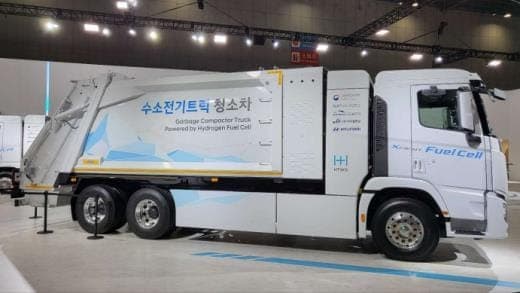
Busan, South Korea — As climate change continues to intensify urban sustainability challenges, cities around the world are under pressure to decarbonize public services, including waste management. In South Korea, the city of Busan has taken a step forward—unveiling the nation’s largest fleet conversion of hydrogen-powered waste collection vehicles. While the public debut on June 5 may have looked like a standard municipal ceremony, the implications stretch far beyond the parking lot of Busan City Hall.
The shift to hydrogen-powered refuse trucks—specifically, two vehicle types known as the compressed refuse collector and the roll-off container truck—forms part of a broader policy pivot toward circular economies and zero-emission public infrastructure. Developed in collaboration with Hyundai and AM Special Vehicles, the vehicles operate using hydrogen fuel cells that generate electricity through the chemical reaction of hydrogen and atmospheric oxygen. This allows for completely emission-free operation, reduced mechanical noise, and significantly less vibration—benefits that improve both environmental impact and worker conditions.
But this transition is not merely technical; it is systemic. Busan currently operates 1,084 diesel-powered municipal waste vehicles, many of which have surpassed their service lifespans. Starting with five hydrogen vehicles in 2025, the city plans to replace a total of 65 by 2028. The decision is as much about carbon as it is about design—Busan envisions a closed-loop energy system in which bio-gas, generated from waste treatment facilities, is refined into hydrogen, which then fuels the very trucks that collect the waste. The infrastructure to support such a cycle is nascent, but the policy blueprint is already in place.
International comparisons provide meaningful context to Busan’s latest move toward clean-energy infrastructure. In Europe, cities such as Oslo and Amsterdam have already implemented refuse fleets powered by electricity or biogas, aligning with their respective net-zero roadmaps. While those models reflect the broader trend toward electrification, Busan’s adoption of hydrogen technology signals a more ambitious, infrastructure-intensive approach.
Despite global debates surrounding the scalability and environmental footprint of green hydrogen, Busan’s investment suggests a strategic long view. The city is not only deploying hydrogen-powered waste vehicles but also exploring the conversion of municipal biowaste into hydrogen fuel. Should public-sector demand for hydrogen grow steadily—as policy incentives and clean energy targets tighten—Busan may position itself as a key hydrogen logistics and production hub in Northeast Asia. In doing so, the city’s waste-to-energy ecosystem could enhance both climate resilience and long-term energy security.
While the move is laudable, challenges remain. Hydrogen production, unless sourced from renewables, still involves considerable carbon emissions. Moreover, hydrogen fueling infrastructure in South Korea is still developing, and public skepticism over cost-effectiveness persists. Yet by embedding this project within larger environmental education efforts—such as the city’s Environment Day exhibitions and citizen academies—Busan is also working to socialize sustainability, not just institutionalize it.
Busan’s latest initiative reflects a coordinated effort among technological development, municipal policy, and community participation. While the deployment of hydrogen-powered waste collection vehicles is a practical upgrade to city services, it also signals a broader strategic direction. For mid-sized cities lacking the scale or financial capacity of global megacities, Busan’s approach may serve as a reference model for implementing sustainable infrastructure. The adoption of hydrogen technology, in this case, represents both an operational shift in waste management and a forward-leaning commitment to low-emission urban systems.
Continue this reporting
Reporting on the same issue
Related coverage selected from the article's desk, topics and newsroom relationships.
 NewsOct 22, 2026
Busan Port’s LNG and Methanol Plan: Who Pays to Keep Fuel Ready?
Busan already supplies ships with LNG and methanol, drawing on regional and i...
 NewsOct 16, 2026
What Is Still Worth Going to See?
Busan’s biennale faces questions of artistic judgment and institutional care....
 NewsOct 14, 2026
What Became of Busan’s University Streets?
From 2015 to 2023, registered businesses grew near Pusan National University...
More from the author
More from this byline
Stay with the same line of reporting through more work from this byline.
- NewsOct 22, 2026
Busan Port’s LNG and Methanol Plan: Who Pays to Keep Fuel Ready?
 NewsOct 12, 2026
Bukangi, the Shark That Stayed in Busan’s North Port
Reader Signal
Community readWhat did this report leave you with?
Choose the signal that best reflects your reading. Select it again to remove it.
One response per article
No response selected
A moderated conversation about the reporting.
One-level replies and newsroom moderation keep the conversation anchored to this article.
Discussion Status
Open
Please sign in to join the discussion.
Newsletter
Weekly reporting and context from Busan and Korea.