Busan Food Expo 2025: Global Rhetoric, Local Identity Still Missing
With 200 booths and nearly 500 chefs, the expo grows in scale but lowers its audience targets. The reliance on celebrity chefs and imported formats leaves Busan’s own seafood traditions and street food in the background.

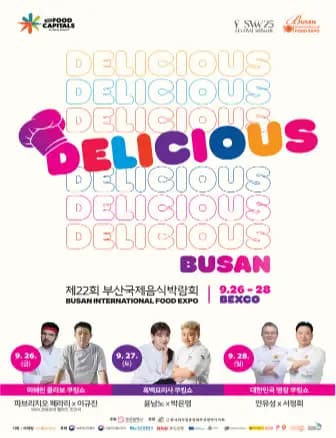
Busan, South Korea — Busan will open the doors of BEXCO this week to the 22nd Busan International Food Expo and the 8th Busan Marina Chef Challenge. The official announcement promises a global feast: two hundred booths, nearly five hundred chefs, and more than thirty thousand visitors. It also speaks of international certification, Michelin chefs, and the glamour of television personalities. Yet behind the superlatives lies a more modest reality, one that raises the question of whether Busan is truly building a food festival that reflects its own character or simply importing borrowed symbols of prestige.
Last year’s figures tell a different story than the marketing line. In 2024 the event drew roughly fifty thousand visitors, a higher number than the 35,000 projected this year. The number of booths has changed little, hovering around two hundred. What has grown is the roster of competitors: from about three hundred chefs in 2024 to almost five hundred this year. The growth in participation contrasts with the more conservative target for audience size. It suggests not a booming global attraction, but an event treading water, steady in scale but still searching for momentum.
The organizers lean heavily on the claim of international recognition. The competitions are sanctioned by the World Association of Chefs’ Societies, and foreign judges from countries such as Switzerland and Thailand have been invited. This lends a measure of credibility, but not necessarily the global reach the language implies. Certification provides standards, not status. Without evidence of significant numbers of overseas chefs or visitors, the description of a “world-class” festival risks being more aspirational than factual.
The program itself reveals the tensions at play. On one hand, the lineup includes a collaboration between a Michelin-starred Italian chef and a Busan-based counterpart, as well as performances by Korean culinary masters. On the other, the stage will also host chefs from the Netflix program Chef vs. Chef—a popular entertainment show better known for spectacle than for culinary heritage. The contrast is telling: Busan, a city with a rich history of seafood, street food, and multicultural exchange, finds itself presenting borrowed television drama rather than the flavors of its own markets and coastline. The symbolism of black and white chefs locked in competition may produce good theater, but it speaks little to the city’s actual culinary identity, which has always thrived on diversity and fusion rather than dichotomy.
This reliance on star power and spectacle is understandable in a crowded festival calendar, but it leaves Busan’s food expo with an unresolved identity. Is it a trade fair, a public food festival, a cooking contest, or simply a stage for celebrities? The most convincing parts of the program are those that hint at larger trends—an eco-friendly competition using leftover salmon trimmings, or a showcase of traditional Korean table settings—but these are overshadowed in the publicity by more marketable faces.
The city government positions the expo as part of “Festival October,” a month of cultural and entertainment events designed to brand Busan as a destination. The strategy is clear, but the results remain vague. Unlike the film festival or the fireworks display, the food expo has yet to demonstrate a measurable economic impact. Data on hotel occupancy, tourist spending, or local restaurant sales are absent. Without them, claims of boosting the local economy remain just that—claims.
After twenty-two editions, the Busan International Food Expo has achieved continuity, which in itself is a strength. But continuity without distinctiveness will not be enough to elevate it beyond a regional fair. To become the international event it aspires to be, it must stop leaning on imported stars and generic slogans and start telling its own story. That story lies in the port city’s markets, in its seafood traditions, in the blend of cultures that has always defined Busan’s table. Until the festival puts those flavors at the center, its ambition to be “global” will ring hollow, a label worn rather than earned.
Continue this reporting
Reporting on the same issue
Related coverage selected from the article's desk, topics and newsroom relationships.
 NewsOct 22, 2026
Busan Port’s LNG and Methanol Plan: Who Pays to Keep Fuel Ready?
Busan already supplies ships with LNG and methanol, drawing on regional and i...
 NewsOct 16, 2026
What Is Still Worth Going to See?
Busan’s biennale faces questions of artistic judgment and institutional care....
 NewsOct 14, 2026
What Became of Busan’s University Streets?
From 2015 to 2023, registered businesses grew near Pusan National University...
More from the author
More from this byline
Stay with the same line of reporting through more work from this byline.
- NewsOct 22, 2026
Busan Port’s LNG and Methanol Plan: Who Pays to Keep Fuel Ready?
 NewsOct 12, 2026
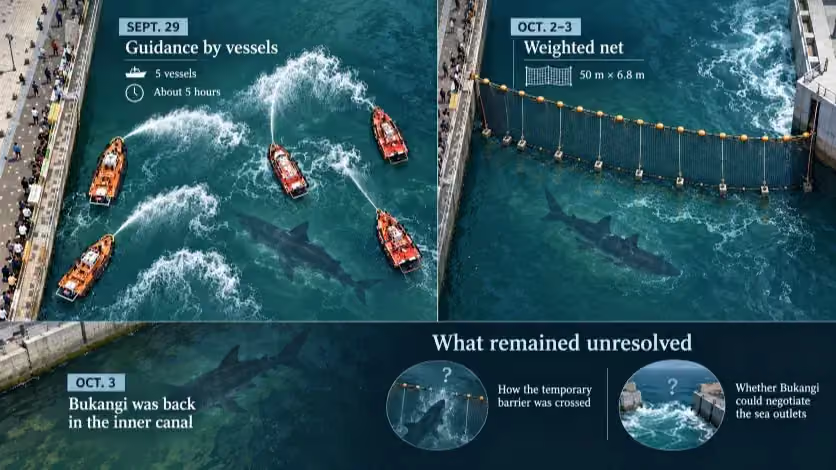
Bukangi, the Shark That Stayed in Busan’s North Port
Reader Signal
Community readWhat did this report leave you with?
Choose the signal that best reflects your reading. Select it again to remove it.
One response per article
No response selected
A moderated conversation about the reporting.
One-level replies and newsroom moderation keep the conversation anchored to this article.
Discussion Status
Open
Please sign in to join the discussion.
Newsletter
Weekly reporting and context from Busan and Korea.