Busan Craft Beer Challenge 2025 Tests Local Brewers
The city’s annual competition returns to BEXCO, offering exposure for small breweries while raising questions about long-term survival.

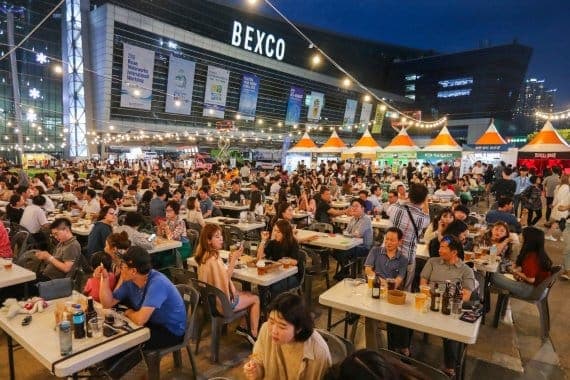
Busan, South Korea — Busan will host the 2025 Craft Beer Masters Challenge this September, setting up tents and taps at the BEXCO outdoor plaza for five days. Visitors will be able to taste, vote, and listen to music under the late-summer sky. The festival runs from September 20 to 24, open daily from 4 p.m. to 10 p.m. with free admission, organized by Busan Metropolitan City.
On paper it reads like another festival in a city that has no shortage of them. What matters, though, is what the gathering might signal for a local beer scene still trying to prove it can last.
The event has been moving around the city since its debut in 2018. It began at the Busan Cinema Center, shifted to Gupo Station the following year, then to the Jagalchi fish market, and eventually circled back to the Cinema Center before finding its current home at BEXCO. Each stop gave the festival a slightly different flavor, connecting beer to train stations, markets, or cultural venues. The latest move, folding it into the city’s larger “Festival October,” is an attempt to anchor it within Busan’s identity as a convention and tourism city.
This year’s format will be familiar: a competition where drinkers cast votes while professional judges do the same, with certificates awarded to the standouts. Around that core are the usual trappings—pop-up shops, food trucks, flea markets, design contests, and live music. The mix is designed to draw in not just beer fans but anyone looking for a lively weekend outing.
For the breweries involved, the exposure is valuable. Busan’s craft beer industry is small but varied: Wild Wave experiments with wild yeast fermentation, Galmegi Brewing is often cited as the city’s pioneer, and Gorilla Brewing has looked abroad for markets. Others rely on neighborhood stories or local ingredients to stand apart. For a few days at the festival, they have a rare chance to put their beers in front of thousands of people at once. That kind of visibility is hard to find in day-to-day business.
The problem is what happens once the tents come down. Most breweries remain tiny operations, dependent on their own pubs or seasonal events. National supermarket shelves and convenience store coolers are still out of reach for many. Production costs are high, margins thin, and consistency can be uneven. Without steady distribution and reliable quality, there’s a risk that these beers will be remembered as souvenirs of a festival rather than drinks that find a place in everyday life.
Consumers do respond with curiosity. Young drinkers and tourists often mention the appeal of trying styles—IPAs, stouts, sours—that differ from the mass-market lagers that dominate Korea. There is also a growing appetite for experiences that combine leisure and consumption: pub crawls, brewery tours, and the act of posting a glass on social media. Busan, with its beaches and nightlife, offers a fitting backdrop. But curiosity has limits. Craft beer is pricier, sometimes inconsistent, and not always easy to buy again. One-time tastings do not automatically turn into repeat purchases, and without repeaters a brand rarely survives.
Sustainability here does not mean greener bottles or recyclable labels. It means staying in business. That requires distribution channels that do not vanish after the festival, beers that taste the same from one batch to the next, and a story that makes sense to drinkers who want to feel they are part of something local. It also requires cooperation—small breweries presenting themselves not just individually but collectively as “Busan craft.” The Masters Challenge can help create momentum, but it cannot carry the industry alone.
For the city, the festival serves a broader purpose. Busan has been looking for ways to diversify its tourism and convention economy, and craft beer offers a tangible, consumable identity to add to that effort. Whether it becomes more than a seasonal celebration depends on how brewers manage the months in between, and how much consumers are willing to come back once the music has stopped.
When the festival opens in September, visitors will cast votes, applaud the bands, and discover new beers. For the breweries, the real challenge begins after the last keg is rolled away. Their future depends on whether a weekend of attention can translate into lasting demand. That, more than any award handed out on stage, will determine whether Busan’s craft beer scene has the stamina to endure.
Continue this reporting
Reporting on the same issue
Related coverage selected from the article's desk, topics and newsroom relationships.
 NewsOct 22, 2026
Busan Port’s LNG and Methanol Plan: Who Pays to Keep Fuel Ready?
Busan already supplies ships with LNG and methanol, drawing on regional and i...
 NewsOct 16, 2026
What Is Still Worth Going to See?
Busan’s biennale faces questions of artistic judgment and institutional care....
 NewsOct 14, 2026
What Became of Busan’s University Streets?
From 2015 to 2023, registered businesses grew near Pusan National University...
More from the author
More from this byline
Stay with the same line of reporting through more work from this byline.
- NewsOct 22, 2026
Busan Port’s LNG and Methanol Plan: Who Pays to Keep Fuel Ready?
 NewsOct 12, 2026
Bukangi, the Shark That Stayed in Busan’s North Port
Reader Signal
Community readWhat did this report leave you with?
Choose the signal that best reflects your reading. Select it again to remove it.
One response per article
No response selected
A moderated conversation about the reporting.
One-level replies and newsroom moderation keep the conversation anchored to this article.
Discussion Status
Open
Please sign in to join the discussion.
Newsletter
Weekly reporting and context from Busan and Korea.