Busan City to Invest KRW 1 Billion to Create Indoor Gardens at Public Facilities
Busan City is planning to spend KRW 10 billion this year to achieve its goal of becoming a leading carbon-neutral city by 2050 and create indoor gardens at two public facilities - Busan Bus Terminal and Gimhae International Airport. The indoor gardens, also known as living forests, are vertical gardens made with air-purifying plants. They are part of a project that has been funded by the Korea Forest Service since 2020 to improve the air quality of public spaces and reduce indoor fine dust. Bu


Busan City is planning to spend KRW 10 billion this year to achieve its goal of becoming a leading carbon-neutral city by 2050 and create indoor gardens at two public facilities - Busan Bus Terminal and Gimhae International Airport.
The indoor gardens, also known as living forests, are vertical gardens made with air-purifying plants. They are part of a project that has been funded by the Korea Forest Service since 2020 to improve the air quality of public spaces and reduce indoor fine dust.
Busan City will invest KRW 1 billion to create these indoor gardens, while the facilities will be responsible for their maintenance. The gardens are expected to offer a green space for citizens to enjoy and improve the air quality in public spaces, promoting good health.
Lee Geun-hee, head of the Environmental and Water Policy Office of Busan City, said that creating more of these indoor gardens in multi-use facilities will help the city become a leading carbon-neutral city by 2050 and address the climate crisis.
This initiative will improve Busan's green infrastructure and help the city become more sustainable. With Busan's continued efforts, the city will take an important step towards achieving its goal of becoming a leading carbon-neutral city by 2050.
Continue this reporting
Reporting on the same issue
Related coverage selected from the article's desk, topics and newsroom relationships.
 NewsOct 22, 2026
Busan Port’s LNG and Methanol Plan: Who Pays to Keep Fuel Ready?
Busan already supplies ships with LNG and methanol, drawing on regional and i...
 NewsOct 16, 2026
What Is Still Worth Going to See?
Busan’s biennale faces questions of artistic judgment and institutional care....
 NewsOct 14, 2026
What Became of Busan’s University Streets?
From 2015 to 2023, registered businesses grew near Pusan National University...
More from the author
More from this byline
Stay with the same line of reporting through more work from this byline.
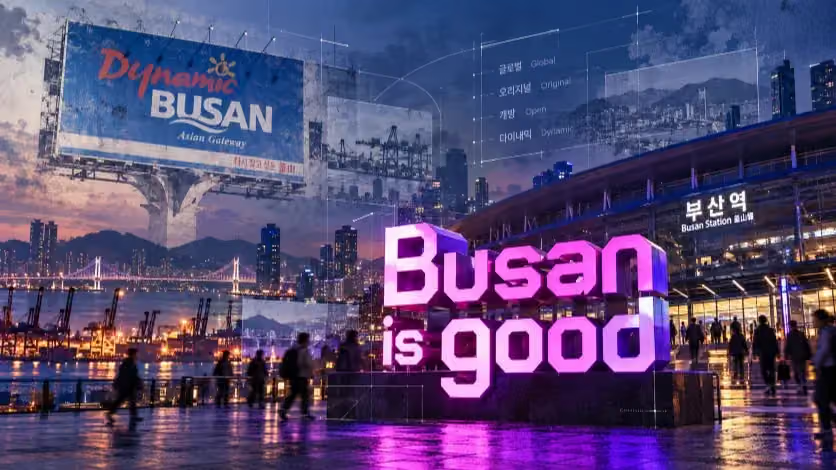 NewsOct 9, 2026
Why “Busan Is Good” Falls Short as a City Brand
 NewsSep 18, 2026
The Other AI Race Is for the Freedom to Change Course
Reader Signal
Community readWhat did this report leave you with?
Choose the signal that best reflects your reading. Select it again to remove it.
One response per article
No response selected
A moderated conversation about the reporting.
One-level replies and newsroom moderation keep the conversation anchored to this article.
Discussion Status
Open
Please sign in to join the discussion.
Newsletter
Weekly reporting and context from Busan and Korea.