Busan Children’s Hospital Targets 2028 Opening Amid Pediatric Care Shortages
Busan plans to open a 50-bed children’s hospital by 2028 to address mounting pediatric care gaps. But questions over staffing, funding, and emergency system integration could determine whether the project meets its ambitious promise.

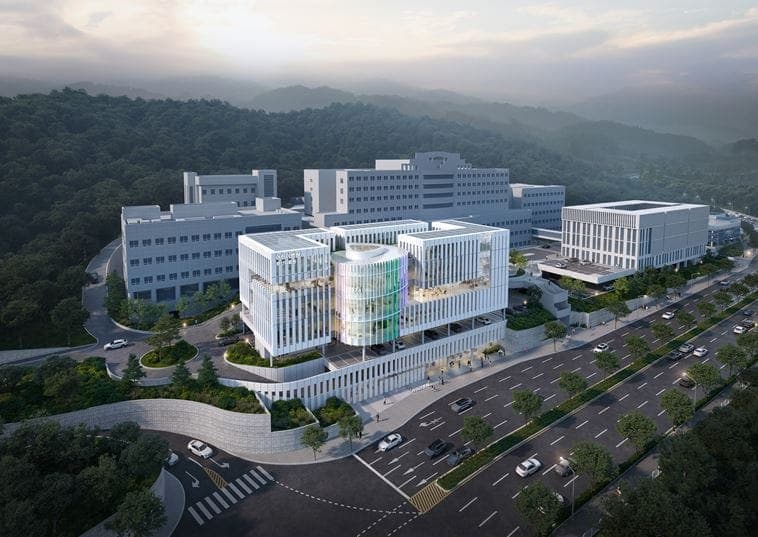
Busan, South Korea — Busan City’s plan to open a public children’s hospital by 2028 carries the weight of both urgent need and high expectation. On paper, the project promises to plug gaps in pediatric care that have widened as staffing shortages, shrinking birth rates, and strained emergency services leave children and families with fewer options.
Yet behind the city’s optimism lies a set of unanswered questions about staffing, funding, and timing that will determine whether the hospital arrives as a turning point—or a missed opportunity.
The blueprint calls for a 50-bed facility on the grounds of Busan Medical Center, designed by Gil Architects & Engineers after winning the city’s design competition earlier this year.
The site plan includes five departments—pediatrics, pediatric psychiatry, rehabilitation medicine, orthopedics, and dentistry—with a round-the-clock emergency unit and a specialized center for children with severe disabilities. A ten-month design phase is set to begin shortly, with construction planned for late 2026 and completion by December 2027, leading to a 2028 opening.
Placing the children’s hospital within the Busan Medical Center rather than as a standalone facility was a calculated decision. Officials argue that sharing operating theaters, diagnostic infrastructure, and administrative systems will streamline costs and make 24-hour coverage possible.
It also reflects lessons from the region’s troubled pediatric care landscape: residency programs have struggled to attract trainees—just two applicants for eleven pediatric slots in 2024—while the area’s only dedicated pediatric emergency center at Yangsan Busan National University Hospital has been forced to reduce services due to staffing gaps. The city wants this new facility to become a public anchor in a system that has been stretched thin.
But the project’s scale and scope have raised eyebrows. With only 50 beds, the hospital is far smaller than existing tertiary children’s hospitals elsewhere in Korea, many of which exceed 160 beds and handle complex cases. Busan’s plans leave unclear whether the new facility will take on those severe cases or focus on stabilization and basic care before referral—a critical distinction for families and for budget planning alike.
The financial picture also demands clarity. The city has secured KRW 22.5 billion in national funding toward the KRW 48.6 billion price tag, but pediatric care in Korea operates at a structural loss under low reimbursement rates and declining birth numbers. No details have been released on how operating deficits will be covered once the hospital opens its doors. Without a sustainable funding model, the project risks becoming yet another public facility struggling to balance mission with money.
Integration into the region’s pediatric emergency network is another missing piece. Busan currently operates a three-tier system leading from community clinics through general hospitals to tertiary care. The city has not explained whether the children’s hospital will function as a front-line hub, a mid-tier stabilization point, or carry its own referral chain—an ambiguity that could complicate patient flows in emergencies.
Timing remains fragile as well. The original plan to open in 2027 has already slipped by a year, and with design finalization, regulatory approvals, equipment procurement, and accreditation all ahead, further delays are possible. Public confidence could waver if the project drifts from one milestone to the next without visible progress.
City officials insist that work is underway to address these issues. Operational planning with the Public Health Support Group has begun, negotiations with university hospitals over rotating staff are in motion, and discussions about securing pediatric emergency center designation continue. Yet none of these efforts has yielded concrete commitments or detailed timelines—leaving questions about whether planning can keep pace with construction.
The potential benefits of a fully functional public children’s hospital in Busan are undeniable: 24-hour emergency readiness, care for children with complex needs, and a strengthened public health system.
But until staffing pipelines, budget guarantees, and emergency integration plans move from intention to implementation, the project remains a promise on paper. For Busan, 2028 will mark not just a construction deadline but a test of whether vision and delivery can finally align.
Continue this reporting
Reporting on the same issue
Related coverage selected from the article's desk, topics and newsroom relationships.
 NewsOct 22, 2026
Busan Port’s LNG and Methanol Plan: Who Pays to Keep Fuel Ready?
Busan already supplies ships with LNG and methanol, drawing on regional and i...
 NewsOct 16, 2026
What Is Still Worth Going to See?
Busan’s biennale faces questions of artistic judgment and institutional care....
 NewsOct 14, 2026
What Became of Busan’s University Streets?
From 2015 to 2023, registered businesses grew near Pusan National University...
More from the author
More from this byline
Stay with the same line of reporting through more work from this byline.
- NewsOct 22, 2026
Busan Port’s LNG and Methanol Plan: Who Pays to Keep Fuel Ready?
 NewsOct 12, 2026
Bukangi, the Shark That Stayed in Busan’s North Port
Reader Signal
Community readWhat did this report leave you with?
Choose the signal that best reflects your reading. Select it again to remove it.
One response per article
No response selected
A moderated conversation about the reporting.
One-level replies and newsroom moderation keep the conversation anchored to this article.
Discussion Status
Open
Please sign in to join the discussion.
Newsletter
Weekly reporting and context from Busan and Korea.