Busan Begins ‘Urban Uncluttering’ at Station Square to Improve Walkability
Busan has launched its first Urban Uncluttering project near Busan Station, aiming to remove or redesign over 300 public fixtures to improve pedestrian safety and city aesthetics.

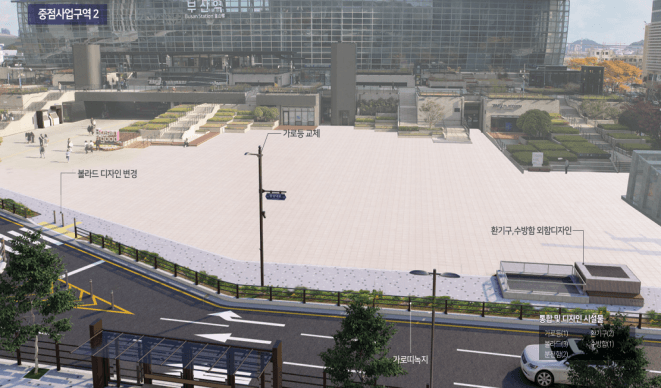
BUSAN, South Korea — The City of Busan has announced that it will commence construction on its first "Urban Uncluttering" pilot project this week, with work scheduled to begin on June 12 around Busan Station Square. The initiative, which aims to remove or redesign unnecessary public fixtures in pedestrian areas, will focus on improving walkability, visual order, and the overall urban environment in one of the city’s busiest transit zones.
The site spans a 700-meter stretch of sidewalks and plazas near the station, a corridor that accommodates thousands of daily users including commuters, tourists, and local residents. According to city data, a total of 560 public installations—including kiosks, bollards, banner poles, and other structures—were identified within the zone. After consultation with 25 relevant agencies, 312 of those installations (approximately 82 percent) will be either removed, consolidated, or redesigned. Key infrastructure elements such as subway entrances and ventilation systems will remain in place.
The project is expected to be completed by September and is supported by a municipal budget of approximately 1.5 billion won. Officials describe the effort as part of a broader urban design initiative aimed at restoring the functional and visual quality of pedestrian environments in the city.
While the current pilot is limited to the Busan Station area, the concept of urban uncluttering was originally reviewed for several other locations during the planning process in 2024. These included zones in Saha-gu, Nam-gu, and Buk-gu Districts. However, no other sites were selected for the 2025 project, and no additional construction schedules, design plans, or funding announcements have been issued as of June 2025.
City representatives have indicated interest in expanding the approach to other areas if the pilot proves effective, but further application of the program remains subject to evaluation outcomes, budget approval, and coordination across local districts.
Older neighborhoods such as Nampo-dong, Gwangbok-ro, and Choryang continue to face challenges related to pedestrian accessibility, including narrow sidewalks, excessive street furniture, and outdated infrastructure. These areas are well-known for their historical and commercial significance but are often cited as difficult to navigate on foot, particularly for elderly residents, individuals with mobility limitations, or tourists unfamiliar with the area.
Public safety and accessibility are central concerns behind the project. In 2024, Busan reported over 11,000 pedestrian-related traffic incidents and more than 100 fatalities, based on national statistics. Improving pedestrian routes and reducing physical and visual clutter are part of a broader citywide agenda to create a safer and more efficient urban environment.
As construction begins at Busan Station, the site will serve as a test case for future action. City authorities have stated that the project’s outcomes—including public response, usage patterns, and visual improvements—will be reviewed before determining whether similar interventions will be applied elsewhere.
At this time, Busan Station remains the only confirmed location under the Urban Uncluttering program. Any decision to extend the initiative to additional areas will require further planning, evaluation, and public funding procedures.
Continue this reporting
Reporting on the same issue
Related coverage selected from the article's desk, topics and newsroom relationships.
 NewsOct 22, 2026
Busan Port’s LNG and Methanol Plan: Who Pays to Keep Fuel Ready?
Busan already supplies ships with LNG and methanol, drawing on regional and i...
 NewsOct 16, 2026
What Is Still Worth Going to See?
Busan’s biennale faces questions of artistic judgment and institutional care....
 NewsOct 14, 2026
What Became of Busan’s University Streets?
From 2015 to 2023, registered businesses grew near Pusan National University...
More from the author
More from this byline
Stay with the same line of reporting through more work from this byline.
- NewsOct 22, 2026
Busan Port’s LNG and Methanol Plan: Who Pays to Keep Fuel Ready?
 NewsOct 12, 2026
Bukangi, the Shark That Stayed in Busan’s North Port
Reader Signal
Community readWhat did this report leave you with?
Choose the signal that best reflects your reading. Select it again to remove it.
One response per article
No response selected
A moderated conversation about the reporting.
One-level replies and newsroom moderation keep the conversation anchored to this article.
Discussion Status
Open
Please sign in to join the discussion.
Newsletter
Weekly reporting and context from Busan and Korea.